
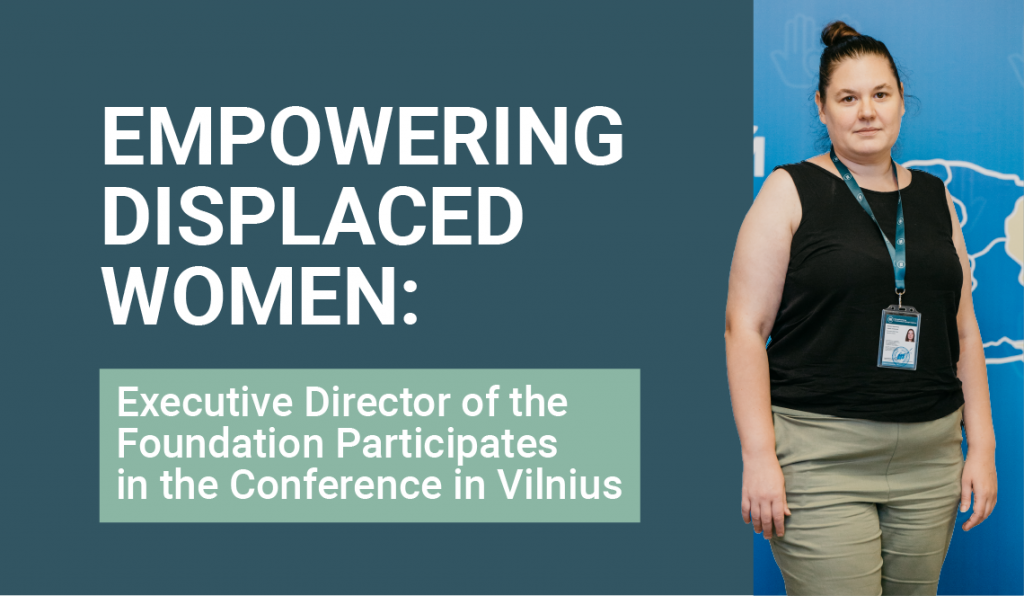
Valeriia Vershynina, Executive Director of the Charity Foundation “Stabilization Support Services,” participated in the expert panel “‘I Am a Refugee’. Researching on Yourself,” which was part of the international conference “The Promise of (Un)Happiness? Gender, Labor, and Migration.” The event was held at the Centre for Gender Studies at the European Humanities University (Vilnius, Lithuania).
The purpose of this meeting was to explore the (un)happiness of women’s migration by examining its connection to labor market conditions. Participants discussed both the negative consequences of displacement, which can turn life in a new place into a trap of alienation, and the positive impacts of migration experiences on women’s lives — offering opportunities for self-realization and opening new doors.
In her speech, Valeriia Vershynina focused on empowering women who have been forced to emigrate and the role of IDP Councils in local democracy and community support in Ukraine. In particular, she highlighted the gender aspects of the functioning of the IDP Councils and the pro bono work in these advisory bodies. Vershynina pointed out that women actively demonstrate leadership qualities in community work and social initiatives but face significant barriers when seeking access to paid leadership roles in state and municipal governance. Analysis shows that women hold 66% of leadership positions in IDP Councils; however, in paid leadership roles (oblast, city, or settlement heads), their share does not exceed 30%.
Valeriia Vershynina: “Our charity foundation’s experience shows that involvement in IDP Councils influences women’s opportunities in the labor market. This work creates important social networks and promotes local democracy, while also highlighting the need for recognition and support of unpaid labor, primarily performed by women.
Women with experience working in Councils and an understanding of local governance can become a valuable talent pool for local communities, helping to address staffing shortages caused by mobilization and emigration.”
She also emphasized the role of IDP Councils in the reintegration of displaced women. Working in these bodies can help women regain their professional identities, acquire new knowledge and skills, build networks, and become active participants in local governance. This not only contributes to their personal development but also aids in adapting to new living conditions.
In conclusion, Valeriia shared several recommendations to strengthen women’s roles in public life:
- Strengthen women’s roles in decision-making processes at the community and oblast administration levels.
- Increase funding and support for women’s NGOs working with IDPs.
- Develop programs to enhance women’s resilience, self-realization, and employment, as well as psychological support programs, especially for women affected by war and displacement, and implement childcare services.
- Support gender equality initiatives at the state level.
- Enhance collaboration between IDP Councils, women’s organizations, and local authorities for more effective implementation of programs focused on supporting women.
Valeriia Vershynina’s detailed article on the gender aspects of IDP Councils’ work will soon be available.