
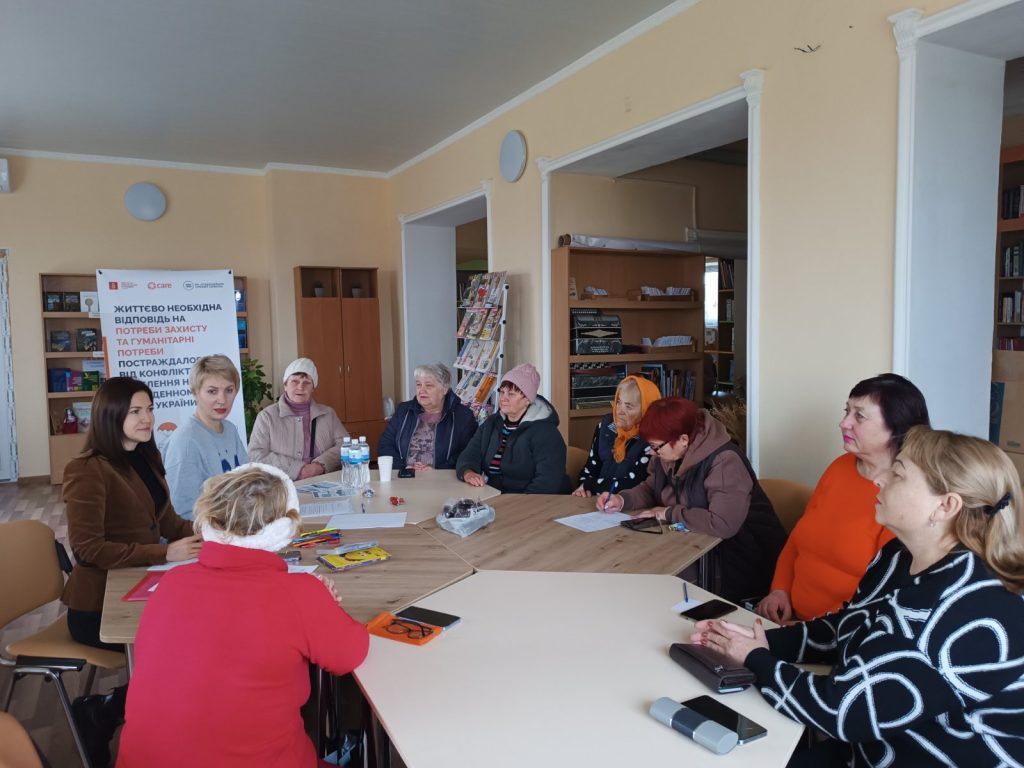
As part of the project “Vital response to the protection and humanitarian needs of the conflict-affected population in southern and southeastern Ukraine,” the first visits of mobile teams to settlements in Zaporizhzhia, Mykolaiv, and Kherson regions took place in November. Our qualified psychologists and lawyers held the first introductory meetings with people. In addition, the first groups for working with psychologists have already been formed, and some project participants have expressed a desire to receive individual consultations with psychologists. Legal experts also provided free legal consultations.
According to Kristina Ivanova, regional coordinator in the Mykolaiv region, as of today, there are many people in the Mykolaiv region who need both legal and psychosocial assistance. This is evidenced by the number of people who come to meetings with the Fund’s specialists.
“Due to constant shelling of frontline territories, people are looking for places to move to. Most do not want to go far from their homes, and sometimes cannot due to health reasons. Therefore, many people are moving to the Mykolaiv region. Our mobile group has visited the shelter, which is a facility that provides temporary shelter to people in difficult life situations, several times. It is located in the Mykolaiv region and is home to many displaced persons who need our help,” — says Kristina Ivanova.
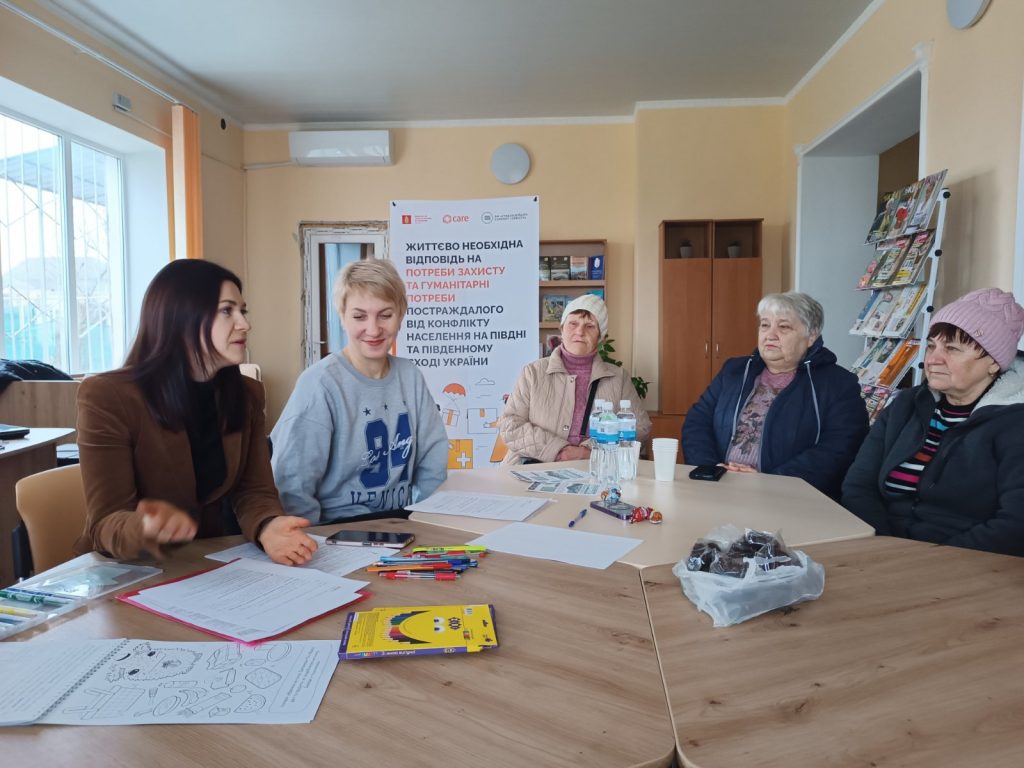
As Tetyana Nomirovska, a psychologist with the mobile team in the Mykolaiv region, told us, people are very interested in meetings with psychologists. They come not just to listen, but also to gain the necessary knowledge that will help them cope with stress and difficult emotional states.
“At the first and second meetings, people listened to us more, got acquainted, and were interested, but they did not want to share their personal experiences or problems. Now the situation has changed. My colleague and I have already held four group sessions, and we have formed a kind of circle of interested people. Of course, new people come, but the main part of the group has remained,”— says Tetiana Nomirovska.
The participants in the group sessions are of different ages and genders. One session lasts up to two hours, depending on the number of participants. The time of the meetings may vary, because the main thing is that everyone who wants to can share their thoughts and personal experiences.
Ms. Oksana (name changed for security reasons) is not attending the group sessions of our Charitable Foundation for the first time. She is an internally displaced person from Kherson. She takes care of her mother, who has a first-degree disability.
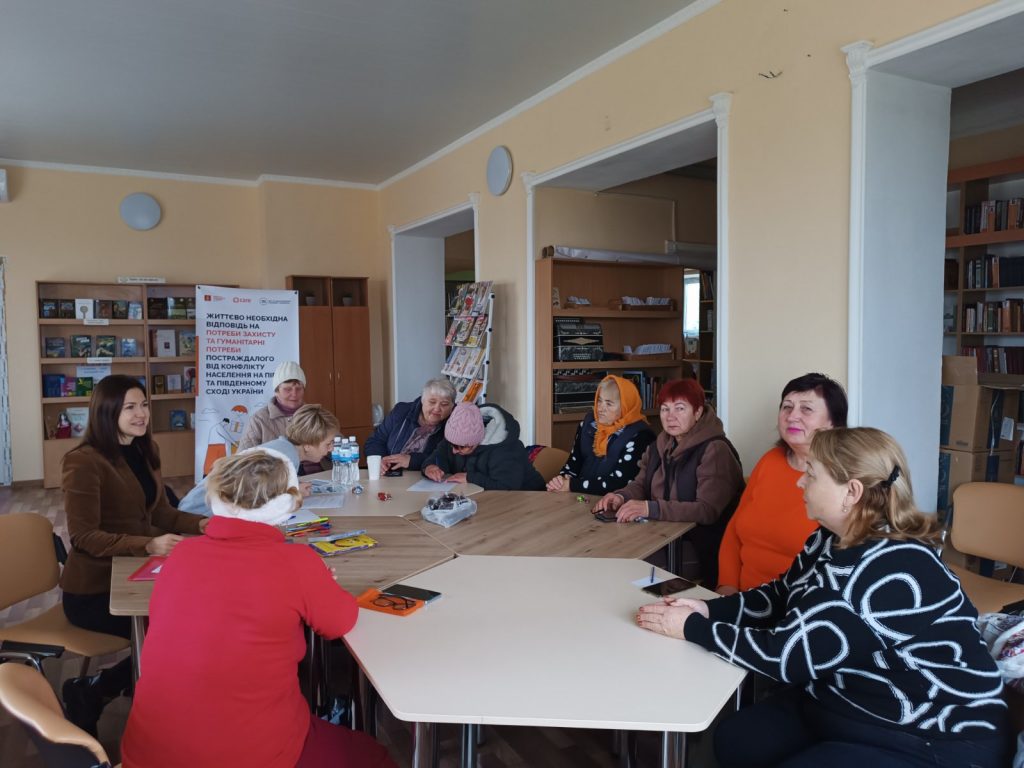
“To be honest, sometimes it gets really hard and you don’t know how to deal with it. It’s just me and my mom now. She can’t walk at all, she just lies there. She can’t even sit up by herself. So she needs constant care. The psychologists are very open. After meeting with them, it’s like a weight has been lifted off my shoulders. There are many people in our group, but the psychologists find time for everyone. We do everything at these meetings—we knit, draw, cry, laugh, and most importantly, we communicate. It’s hard to share personal things. At the first meetings, everyone was silent, but now we are starting to open up,” — says Oksana.
Ms. Olena also attends group sessions with psychologists. She is an internally displaced woman from the Kherson region. Her native village was occupied, and her house was completely burned down. So she simply has nowhere to return to.
“I am a lonely woman. I have no home. Only ashes remain from my former life, just like my home. Everything burned down in the fire. I went to the first meeting with the psychologists just to listen. I didn’t think it would do any good. But when the psychologists came back a second time, I felt that I had to go there. They understood my inner state very well, and for some reason, I feel that they will be able to help me. That’s why I’m already looking forward to the next group session,” — says Olena.
As part of the project, psychologists hold eight meetings with one group. Individual sessions are available for participants who feel uncomfortable talking about personal matters in front of others. In addition to psychosocial support, free legal advice is also available.
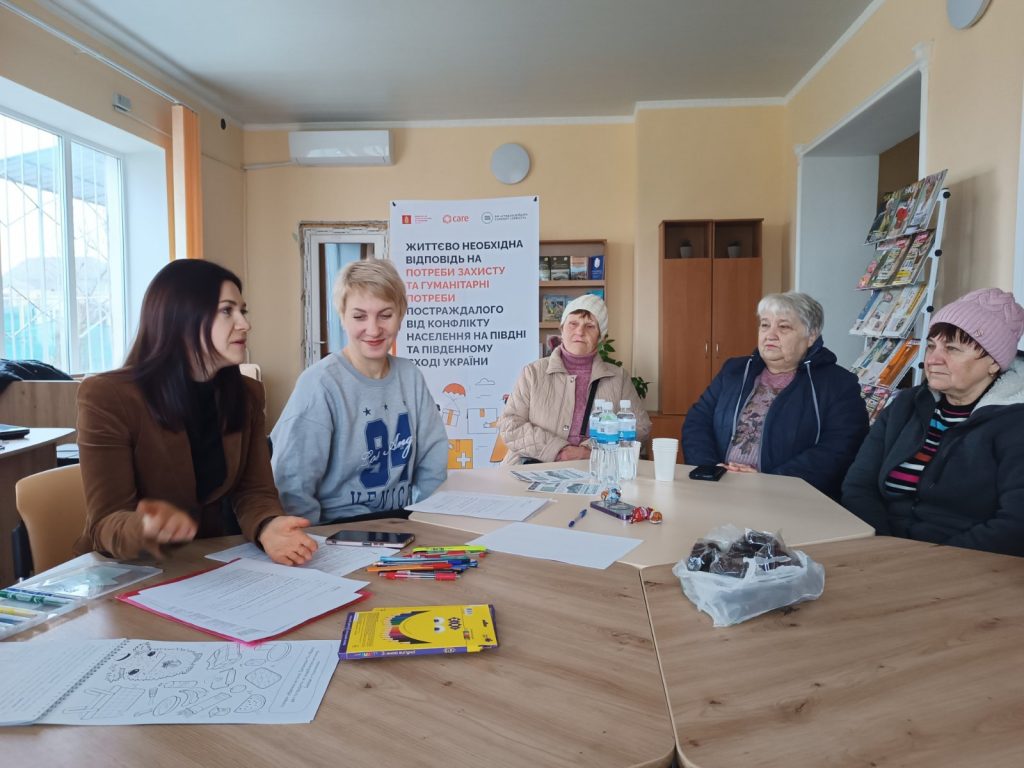
The project “Lifesaving response to protection concerns and humanitarian needs of conflict affected people in the South and South-East of Ukraine” is implemented by the Stabilization Support Services Charitable Foundation in partnership with the international humanitarian organization CARE, with financial support from the Danish Ministry of Foreign Affairs.