
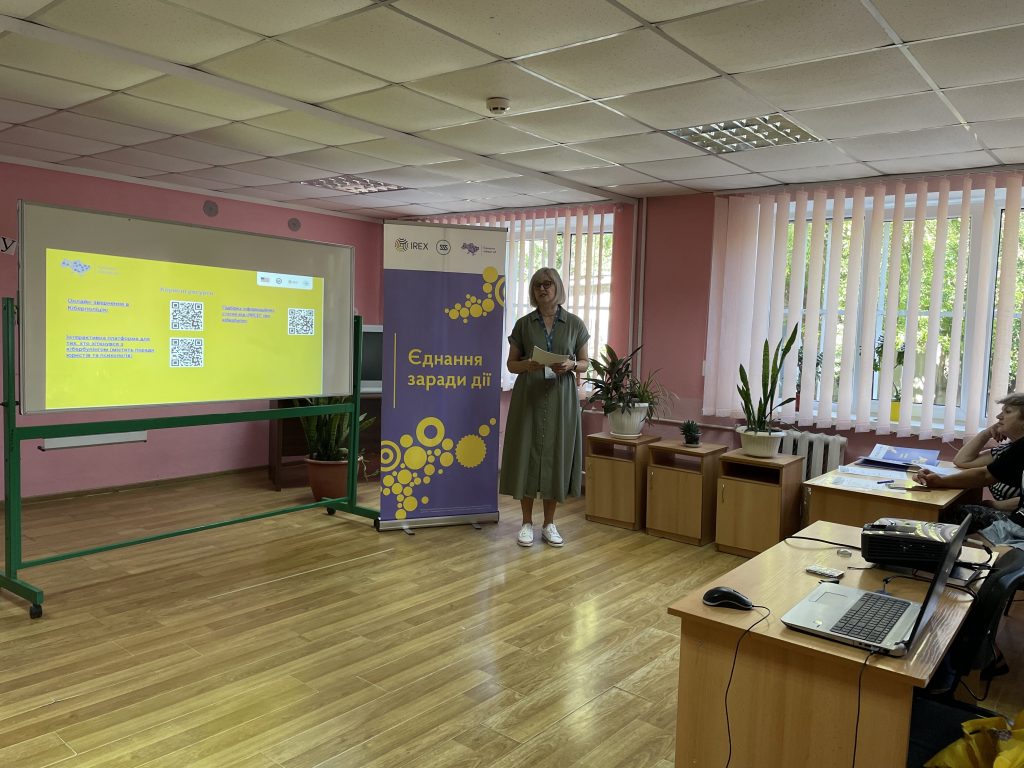
Spotting scams, securing personal accounts, and protecting against cyberbullying were the topics discussed by IDPs during a digital security workshop in Lutsk.
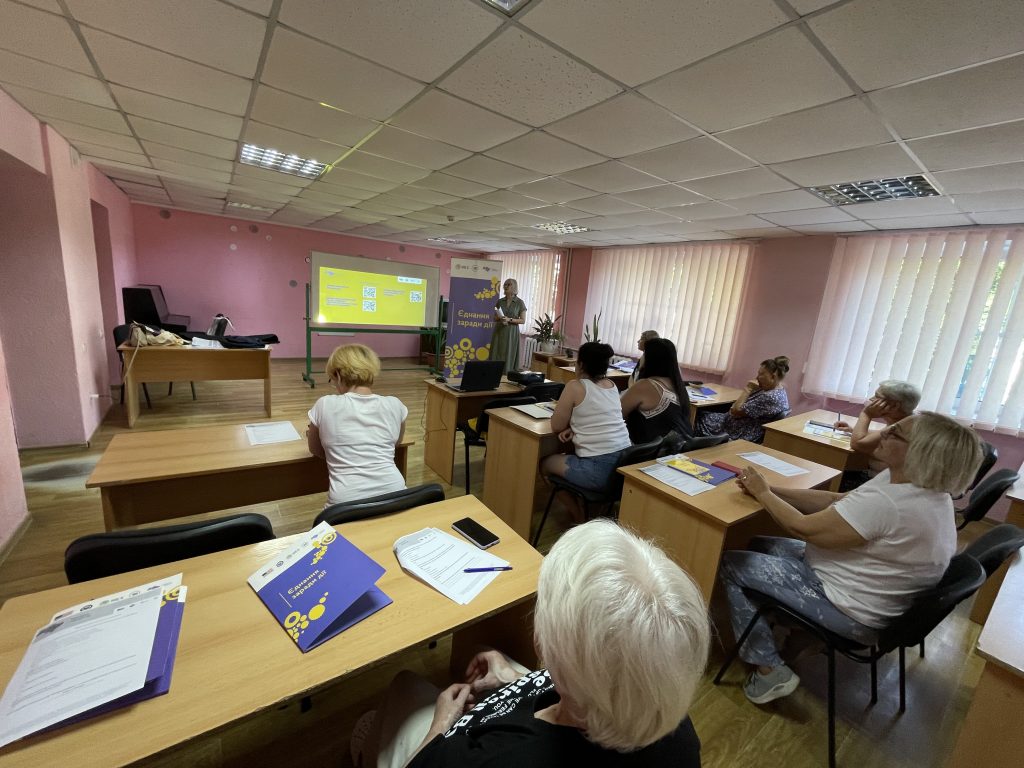
The event, titled “Safety on the Web: Countering Cyberbullying and Online Protection in the Context of Internal Displacement,” was held for displaced persons living in a collective center. The workshop was organized as part of the United Voices in Action program, implemented by the international organization IREX, the Ukrainian Charity Foundation “Stabilization Support Services,” and with support from the U.S. Department of State.
Digital security is a concern for everyone, regardless of age or social status. However, internally displaced persons often find themselves at higher risk. Scammers see them as potential targets, as displaced people must search online for information about aid, housing, or social benefits, often requiring them to share their personal documents. Beyond fraud, IDPs also face cyberbullying on social media.
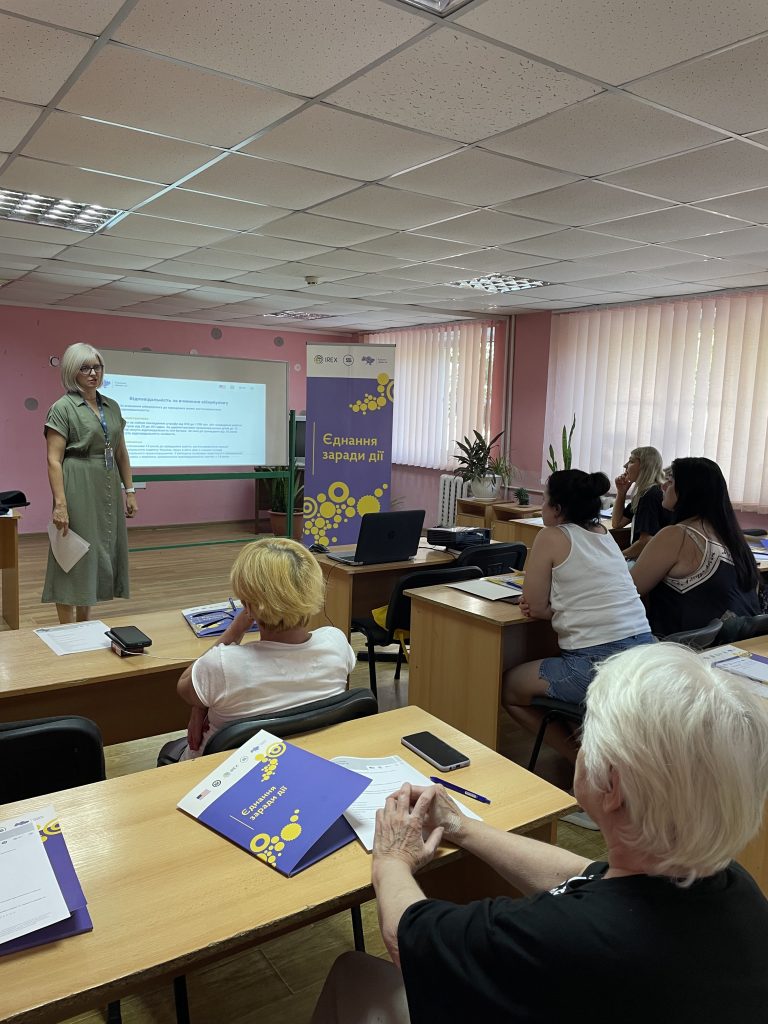
“Cyberbullying is a form of harassment that uses the Internet and mobile technologies to humiliate or harm someone. This can include spreading rumors, posting offensive comments or photos, sharing false information, or excluding people from online communities. Unlike traditional bullying, cyberbullying is amplified by anonymity and the ability to track anyone anywhere, anytime,” explained Iryna Pylypenko, the United Voices in Action program coordinator in Volynska Oblast, who led the workshop.
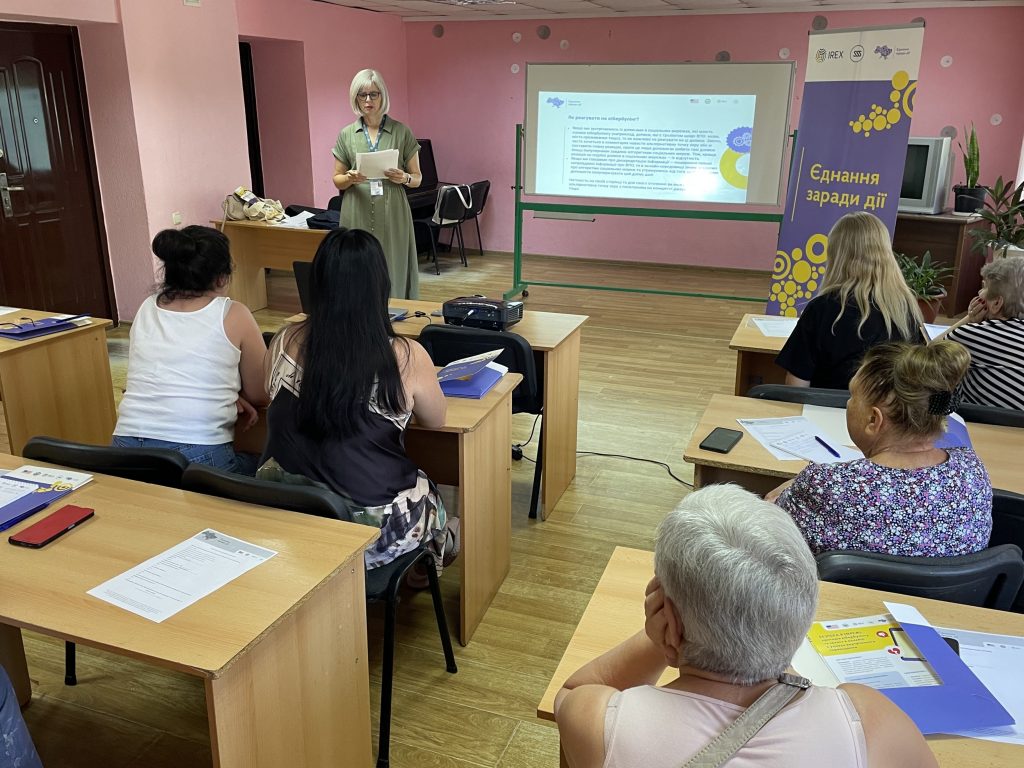
The four-hour event was attended by 15 people of various ages, from young adults to seniors in their 60s and 70s. Participants actively asked questions, shared their own experiences, and learned through practical examples.
“This workshop helps internally displaced persons gain crucial knowledge about safe online behavior and personal data protection. Participants learned how to recognize and counter cyberbullying, which is especially important amid the stress of adapting to a new place,” added Iryna Pylypenko.
The event covered different types of cyberbullying, its warning signs, and how to distinguish it from ordinary jokes or disagreements. The discussion also covered administrative and criminal liability for online harassment.
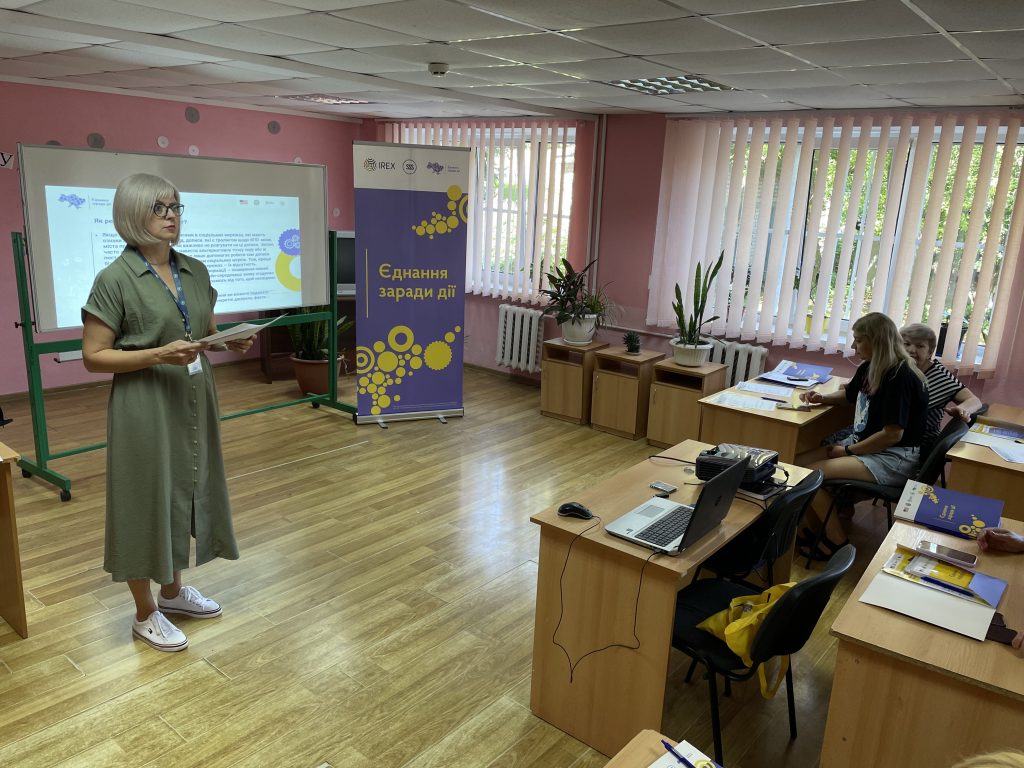
The practical session featured group exercises where participants created “10 Rules of Online Safety for IDPs” and worked through real-life case studies, practicing response strategies for handling attacks, slander, and personal data theft.
Participants emphasized that the knowledge they gained will be invaluable for their daily Internet use.
“I never used to think about how important it is to verify sources of information or secure my accounts. Now I realize that my safety and peace of mind depend on simple actions, like blocking users or knowing how not to react to provocations. I know what to do if my rights are violated online and where to find legal support. It’s empowering,” said participant Liubov Matsnieva.
Another participant, Yevheniia Vysotska, also shared her impressions:
“The workshop was very helpful. I learned how to protect my data online and respond appropriately to cyberbullying. The advice on safe online communication was especially valuable.”
The organizers noted that such events not only enhance the digital literacy of those forced to leave their homes but also foster a space of trust and mutual support. Ultimately, knowing how to stay safe online is a vital tool for adaptation, self-protection, and psychological resilience during the war.
This publication was made possible within the framework of the United Voices in Action program, implemented by the international organization IREX together with the Ukrainian Charity Foundation “Stabilization Support Services” and with the support of the U.S. Department of State. The content is the sole responsibility of the Ukrainian Charity Foundation “Stabilization Support Services” and does not necessarily reflect the views of IREX and the U.S. Department of State.