
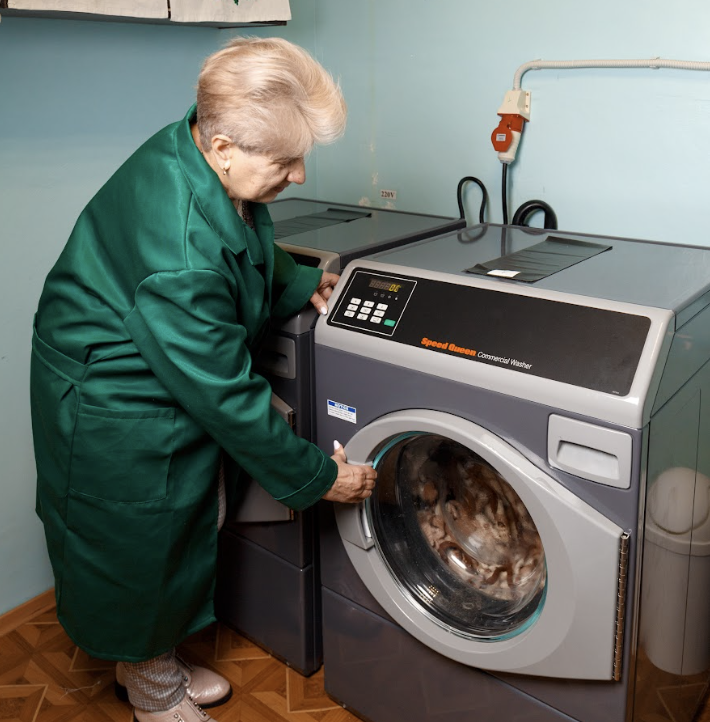
Within the framework of the Rapid Response in the South of Ukraine, Kherson Flood Response project, the Charity Foundation “Stabilization Support Services” has opened six social laundries. Two of them are located in Mykolaiv and operate at territorial centers, three more are located in villages of Khersonska Oblast, and one in Kherson.
The city authorities of Mykolaiv received a lot of positive feedback on the performance of the social laundries in the city, which resulted in allocating budget funds to cover electricity and water supply. People with disabilities, internally displaced people, and those who are under the regular care of social workers continue to receive services at the laundries free of charge.
“After the project was completed, we are pleased to see that all the laundries continue to operate, meeting the needs of their communities,” says Yuliya Suchok, project manager at the Charity Foundation “Stabilization Support Services.” “It is important for our team to be sure that the activities we plan are relevant to the community. They continue to operate even after the project is completed without our financial and administrative support.”
According to Yuliya, IDPs who have moved to Mykolaiv usually rent the cheapest housing in the city to save money. These apartments often lack washing machines, so being able to wash and dry their clothes is important to them. It is equally important that single people with limited mobility who struggle to care for themselves can also use these services.
“The municipal laundry guarantees the quality of services because the equipment is new and meets all standards. Hypoallergenic detergents are purchased to avoid harming users,” says Yuliya.
The social laundries also solved the problem of power outages in Khersonska Oblast. The communities where we installed them are close to the frontline. Due to constant shelling and damage to critical infrastructure, they have problems with water and electricity supply. Together with the village councils of these settlements, we installed the equipment in a way that would provide alternative water supply methods and increased the water pressure with pumps to make the equipment work.
So far, the heads of these communities have found an opportunity to pay for the work of social laundry workers and to compensate for electricity and water costs.
“We are proud that this project is so relevant and valuable. Therefore, we continue to look for opportunities to expand the network of social laundries in areas that require it and ways to support the existing ones,” summarized project manager Yuliya Suchok.