
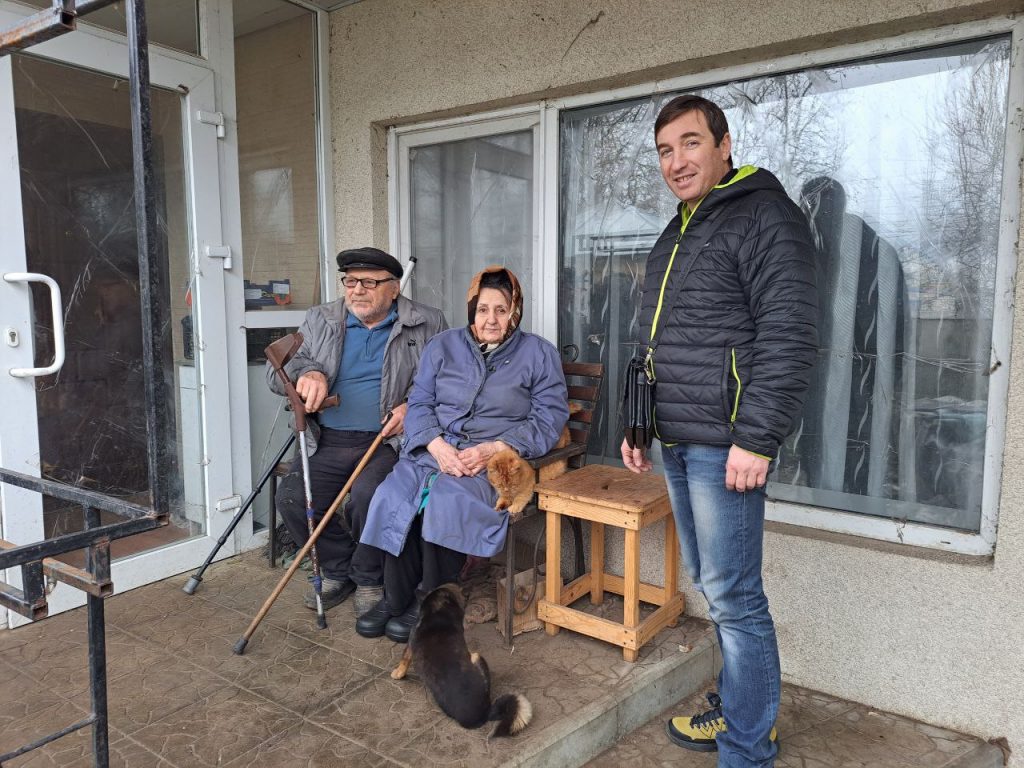
We plan to conduct 340 light repairs on homes damaged by shelling in Zaporizka Oblast and Kryvyi Rih as part of the Humanitarian Assistance to Besieged Cities and IDP-Hosting Locations Inside Ukraine project. Here’s how our experts organize and oversee every stage of the process.
Our regional coordinators are responsible for organizing work on the ground. They coordinate project participants’ actions and respond promptly to the needs of the affected people.
Oksana Levada, Regional Coordinator in Zaporizhzhia, “This project is crucial for our cities suffering from shelling. Regional coordinators interact with local authorities, and together, they identify the most critical needs and the most vulnerable groups in need of light home repairs. Elderly people, large families, and individuals with disabilities are unable to rebuild on their own during these difficult times.
A unique aspect of this project is that we provide charitable assistance through repairs. Not all affected individuals can find a contracting organization or travel to a home improvement supermarket, monitor the quality of construction work, or choose materials that meet modern standards. Our Foundation’s team of professionals does all of this. Connecting beneficiaries with contractors and restoration professionals to make homes livable again is the primary task of the regional coordinator.”
Nadiya Oleksandrova, Regional Coordinator in Kryvyi Rih, “The first task is to contact the local authorities to inform them about the type of assistance we provide and who receives it. Next is the selection of beneficiaries: we receive lists from local authorities, distribute announcements on our own, informing people about how we can help them. It is important to select the right beneficiaries and assist those who need it. We provide consultations on the necessary documents and where to obtain them. Many lack the required documents, and in such cases, we refer them to our lawyers for consultation on the procedures to obtain these documents. Only with all the appropriate documents can we provide charitable assistance. We then conduct site visits with our engineers and move on to the next stages of the project implementation.”
The housing restoration manager coordinates all stages of light repairs.
Yuriy Hordon, Housing Restoration Manager, “The project implementation begins with the preparatory stage, which involves developing the necessary documentation, such as forms for collecting data from beneficiaries, applications, contracts, acceptance certificates, memoranda, relevant instructions, process flow charts, quality control documents, and many others. The project includes tasks like installing window systems, doors, and repairing roofs. These tasks must be completed on time, or people will just freeze in winter. Our engineers ensure not only the quality of the construction work but also the quality of the building materials, as quality is one of our priorities.
A contractor selected through a tender process performs all construction work at the sites. As a restoration manager, I prepare the necessary technical documents, provide our tender department with comprehensive information, and calculate the cost of construction work and materials.
To understand the budget for each household, my team and I participate in preliminary cost assessments of construction work. The project implementation process also involves site monitoring visits, which I regularly carry out with the team. The result of our work is not only the physical implementation of the project but also reporting. To prepare the report, my team and I provide all the necessary information to the relevant department.”
Housing restoration specialists conduct technical inspections of damaged homes, develop repair plans, and oversee their execution.
Yevhen Rasulov, “During the first visit to a household affected by hostilities, I assess the damage to the living quarters and take appropriate measurements. I must evaluate the condition of windows, interior and entrance doors, walls, roofing, floors, electrical systems, water supply networks, gas supply, and sewage systems. This analysis results in the BoQ [Bill of Quantities] document. After this, work with the contractor begins. At this stage, my task is to oversee the quality of the construction work.”
Ihor Onishchenko, “Housing restoration specialists have many functions. First, we receive the addresses of damaged homes, arrange meetings with the homeowners, and explain which documents are needed for repairs. Then, I assess the damage, collect the prepared documents, take measurements, and prepare preliminary estimates, based on which I inform the contractor about what needs to be done. After that, the actual restoration work begins. During this process, my task is to monitor quality continuously.”
We are grateful for the support of all those who care and encourage you to join our projects. Together, we can achieve more! The Humanitarian Assistance to Besieged Cities and IDP-Hosting Locations Inside Ukraine project is being implemented by the Charity Foundation “Stabilization Support Services” with the support of the humanitarian organization CARE.Ukraine.