
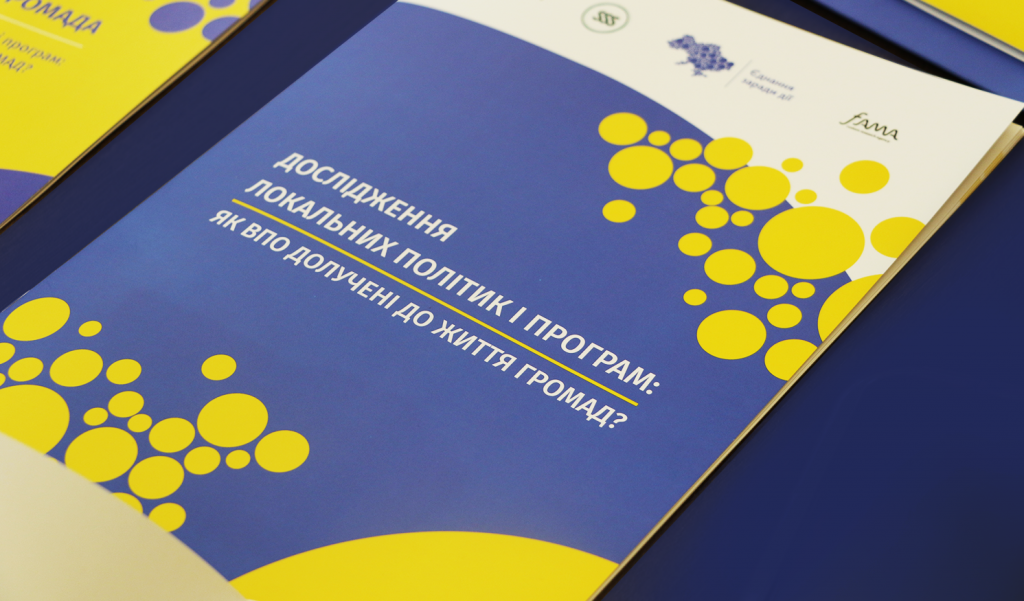
In Kyiv, experts from the United Voices in Action program, implemented by the international organization IREX in Ukraine in collaboration with the Ukrainian Charity Foundation “Stabilization Support Services” and with the support of the U.S. Department of State, unveiled a large-scale study on local policies and programs highlighting the rights observance of IDPs and their integration into new communities.
Overall, legal professionals examined 193 legal and regulatory acts across 25 communities in 15 oblasts of Ukraine. These include community statutes, programs, and decisions regarding the social protection of specific citizen categories, notably IDPs. The researchers aimed to find out whether IDPs faced discrimination in terms of participation in local decision-making, recognition as members of host communities, and access to local social support.
In Kyivska Oblast, the experts analyzed situations in the Kyivska, Obukhivska, and Bilotserkivska communities.
“The research was conducted in multiple phases. Initially, lawyers analyzed documents published on official websites and responses to inquiries. Subsequently, expert interviews were conducted with local authorities in three communities,” said Olesia Liashchuk, the regional coordinator for the United Voices in Action program in Kyivska Oblast.
The study revealed that displaced individuals have limited opportunities to participate in local decision-making.
“For instance, the Kyiv statute specifies that only members of the city’s territorial community can participate in general meetings, initiate consideration of any local issues in the Council, and establish local self-organization bodies. However, the statute does not clearly define the criteria determining membership in Kyiv’s territorial community,” noted Nataliya Chuyko, legal adviser of the Charity Foundation “Stabilization Support Services”.
Some statutes, like the Obukhiv one, define IDP membership within the territorial community. However, only those with registered residency within the community’s territory are entitled to participate in local decision-making.
Tayia Avram, an analyst and lawyer from the Donbas SOS NGO, emphasized the significance of this study, especially for human rights defenders.
“Everyone has the right to receive equal assistance, but in practice, there are barriers. This research offers a comprehensive understanding of where human rights activists can assist the displaced and how local authorities can improve the situation. I also appreciated examples of successful practices that can be considered when developing local regulations,” Tayia Avram pointed out.
As for positive findings, currently, IDP Councils have been established in two Kyiv districts, Obolonskyi and Darnytskyi, as well as in Obukhiv, serving as self-governance bodies for IDPs. The researchers did not identify any discrimination in accessing social services. However, in the Kyivska and Obukhivska communities, there are no targeted social support programs intended specifically for IDPs. In contrast, the Bilotserkivska community has a distinct support program for the displaced, offering psychological support, retraining, as well as rehabilitation services for people with disabilities.
Nadiya Stratiy, a member of the initiative group for the establishment of an IDP Council in Bila Tserkva, believes that the study will serve as a roadmap for the future Council’s work.
“The presentation has gathered and consolidated data about territorial communities, including Bilotserkivska. There’s an analysis of local regulations and targeted programs. Experts’ observations can be taken into account and utilized in the IDP Council’s future operations,” Nadiya Stratiy emphasized.
The researchers provided recommendations for local authorities on refining local policies and programs to improve the lives of IDPs in the communities. Specifically, they suggest making amendments to community statutes, local targeted programs, and regulations that determine the procedures to access benefits and assistance for specific categories of citizens.
This activity was made possible as part of the United Voices in Action program, implemented by the international organization IREX in Ukraine together with the Ukrainian Charity Foundation “Stabilization Support Services” and with the support of the U.S. Department of State.