The issue of employment during the war is one of the biggest challenges for people forced to move. Even qualified professionals aren’t always able to find a job in their field of expertise in their new residence. The main factors that prevent them from getting an acceptable job are the professional skills level or high competition. In both cases, advanced training can be a solution.
The car diagnostics courses organized by the Stabilization Support Services Charity Foundation and supported by the Choose Love humanitarian organization proved to be a crucial tool for helping IDPs adapt to new communities. Training in this area opens up prospects for employment or starting their own business.
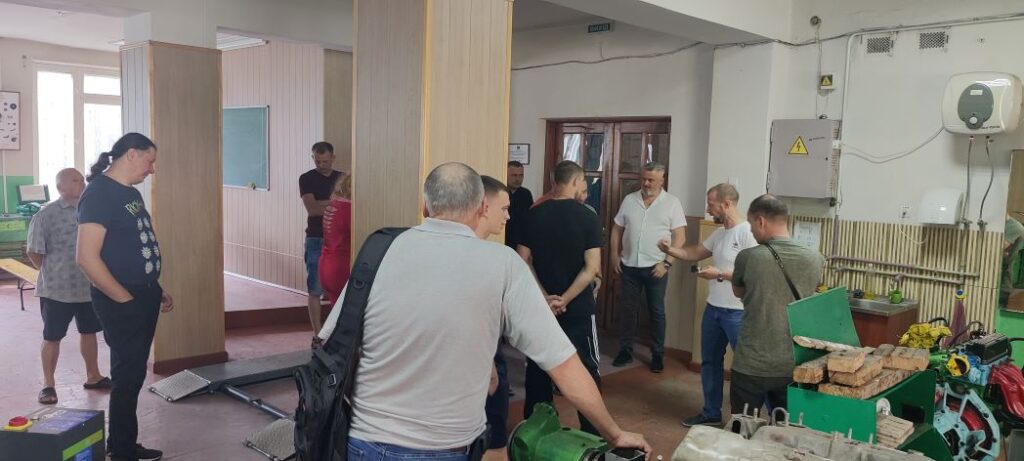
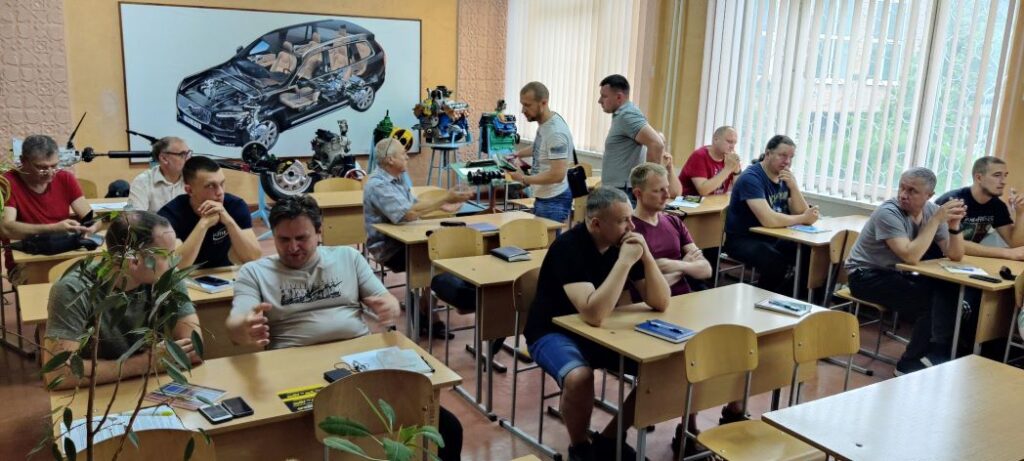
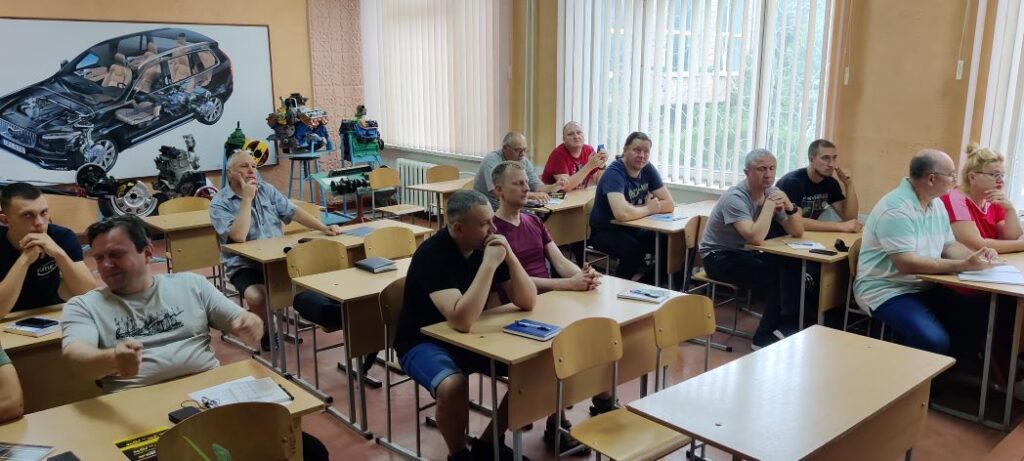
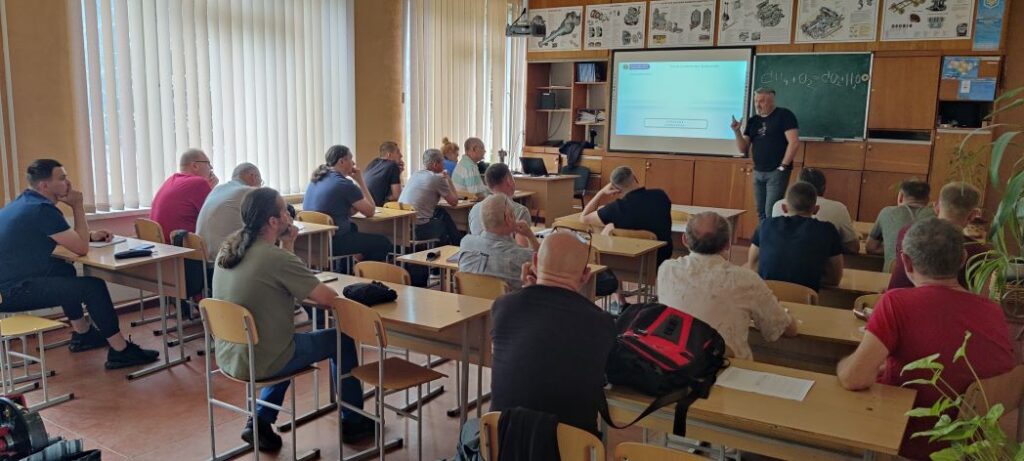
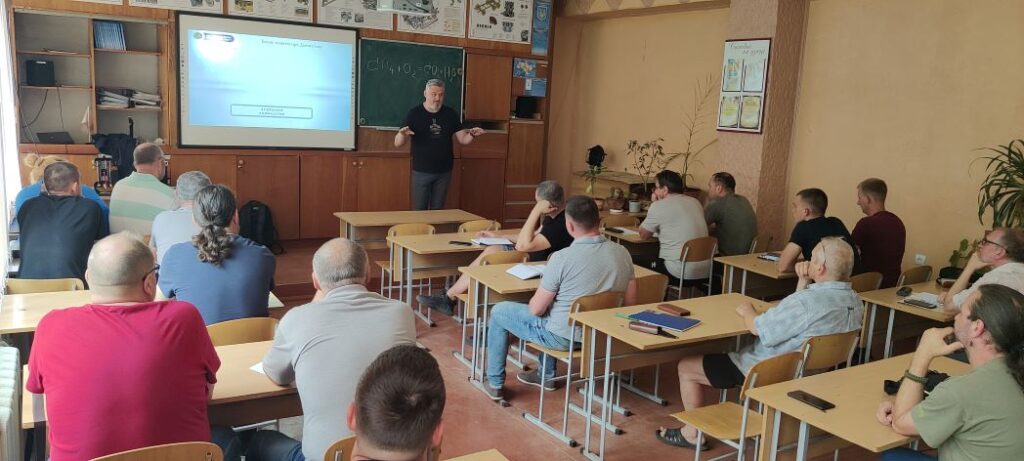
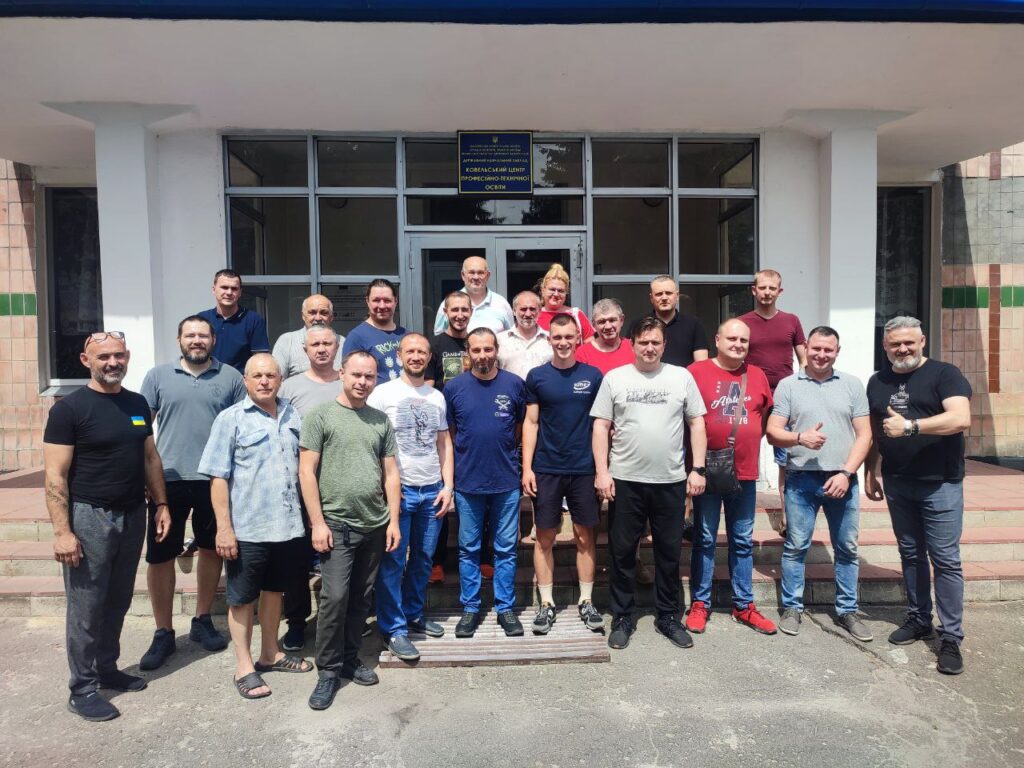
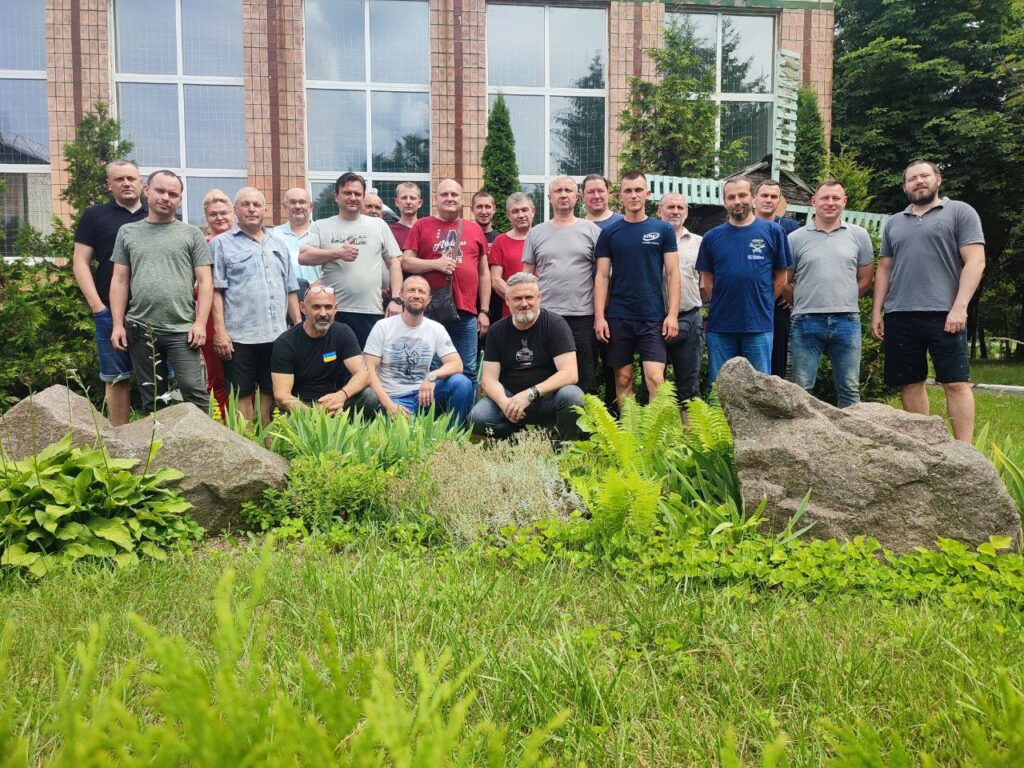
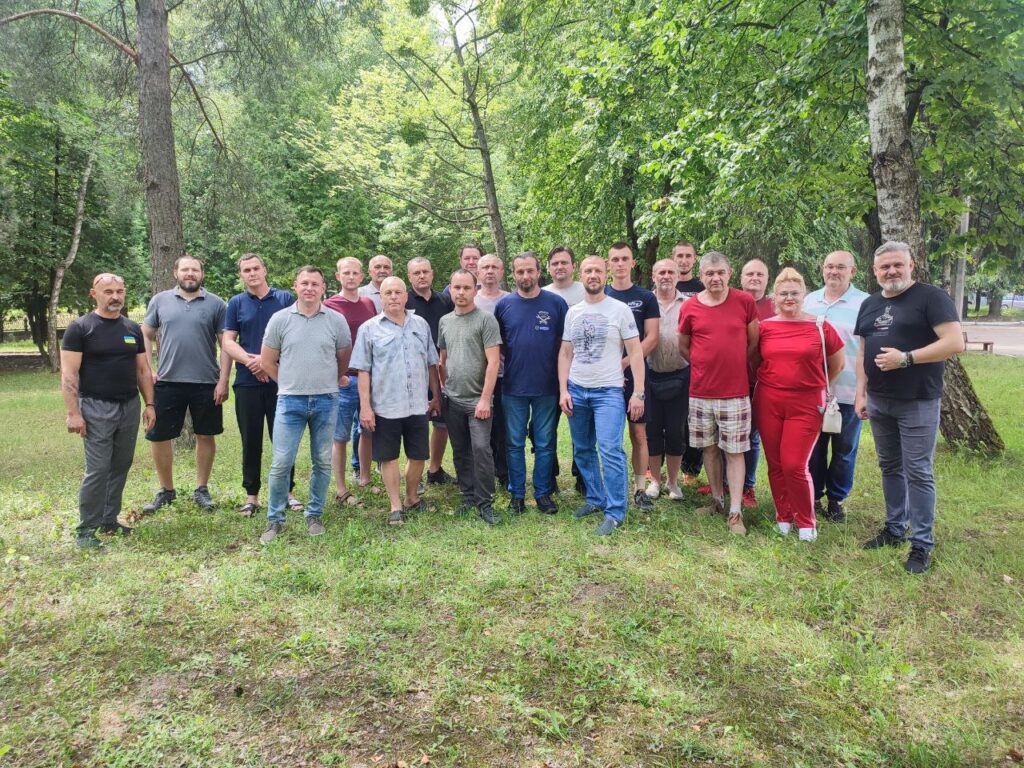
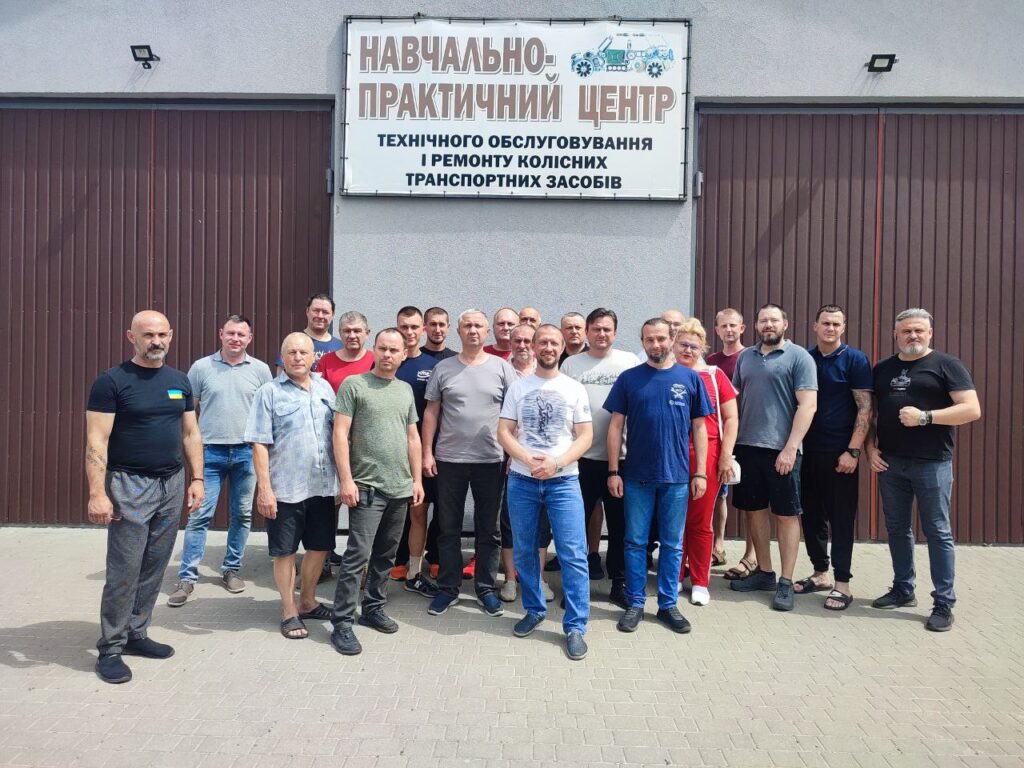
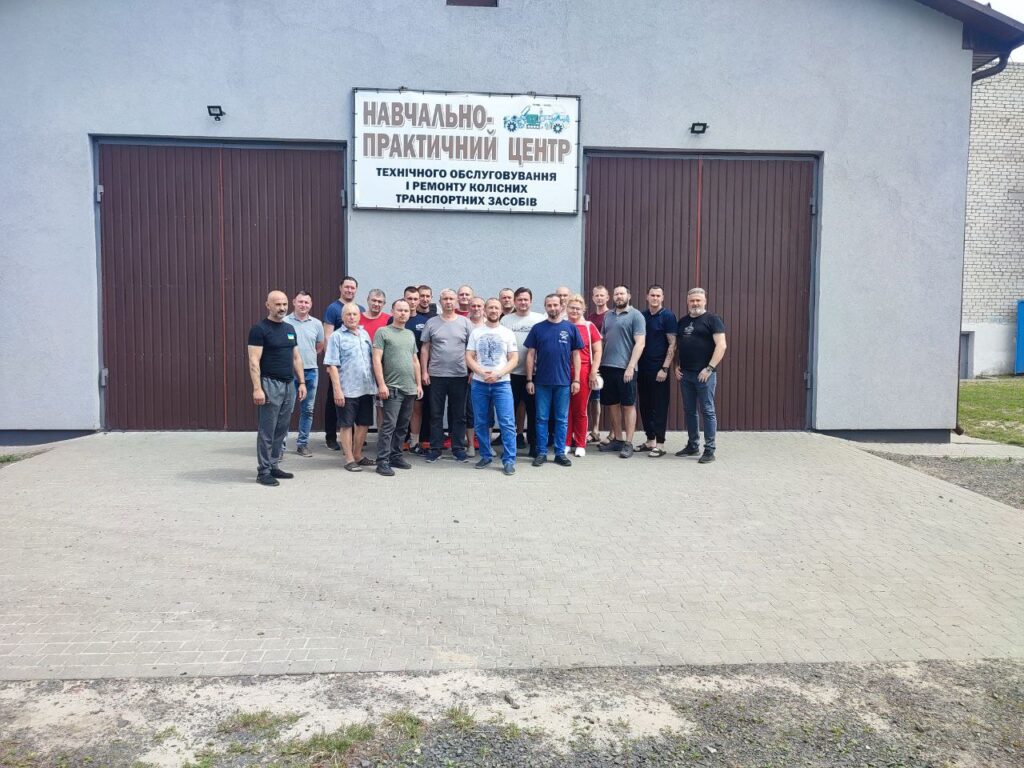
In July, 17 people joined the car diagnostics courses in Kovel. They come from various Ukrainian cities: Kharkiv, Zaporizhzhia, Kyiv, Bila Tserkva, etc. Many of these participants are from eastern Ukraine, and their hometowns are currently in the war zone. Some of them are mid-level specialists or professionals in car diagnostics. Each of them came to Kovel to improve their knowledge. Here is the story of the participants of the July stage of the free car diagnostics courses.
The story of Volodymyr Bezverkhyi, an internally displaced person from Enerhodar
Volodymyr is 48 years old and has lived all his life in Enerhodar, Zaporizhzhia oblast. He worked at the local nuclear power plant in the radiation safety department. In his spare time, he was a car repairman. He had two car workshops in the city where cars were repaired and restored.
On March 3, 2022, Russian occupation forces captured Enerhodar. Volodymyr and his family were under occupation until June. After de-occupation, they decided to leave. So Volodymyr moved first his son, then his wife and daughter to the territory controlled by Ukraine. His son went to live with relatives in Lviv, where he started school in the 11th grade. This year, before the car diagnostics course, Volodymyr attended his son’s graduation party.
Later, in August, he managed to take his daughter and wife, who were transferred to work in Kyiv, out of the occupation. Volodymyr returned to Enerhodar in October to free more relatives, but constant city shelling, outgoing convoys, and the lack of green corridors prevented this.
“At that time, the Russians were no longer letting out the nuclear power plant workers, and later Putin declared the occupied territories under Russian control. Searches and shelling intensified. So, my relatives were afraid to leave. I decided to go anyway. On the way out of the city, Russians shelled the convoy: we moved along but could hear explosions nearby,” Volodymyr recalls.
After moving out, Volodymyr spent two months recovering. He says it was morally tough, because Russian rocket launcher systems stood in their garden, and Russian occupation troops were walking around, intimidating them.
Later, Volodymyr got a job at a service station in Kyiv. After some time, he saw an announcement about the possibility of free training in car diagnostics courses from the CCC. He decided to take the chance.
“I had two car workshops in Enerhodar: one was for repairs, and I planned to convert the other for diagnostics. I even bought some equipment. But I learned diagnostics on my own: on my cars, my friends’ cars, watching YouTube videos, so this training is useful because it will help me to improve my knowledge,” says Volodymyr.
After Ukraine’s victory and the liberation of Enerhodar, Volodymyr plans to return home and restore his car repair business. So he recommends anyone interested in the subject study because good specialists will be in need in the liberated cities.
The story of Inna and Yevhen Streltsov, two-time IDPs
Inna Streltsova came to the car diagnostics courses with her husband. For 25 years, they have been developing their family business — they used to own a motorcycle shop and a motorcycle repair shop.
Russia destroyed their business and lives twice. The first time was in 2014. Inna and Yevhen are from Ilovaisk, Donetsk oblast. In July 2014, Russians began shelling the city, and the couple left. In August 2014, one of the worst battles for the Ukrainian army in the war in Donbas unfolded near Ilovaysk. The city is still under occupation.
Later, Inna and Yevhen moved to Georgia, where they helped a local entrepreneur build a motorcycle business. It was in Georgia that they got acquainted with the profession of car diagnostician.
“During work, we often crossed paths and communicated with car diagnosticians. They were high-quality specialists who came from abroad to study. They even had training programs for Harley-Davidson employees. We were very interested in car diagnostics because modern cars and motorcycles are not just wheeled vehicles — they are computers on wheels,” Inna says.
So, the couple decided to study car diagnostics to deepen their knowledge in the field they liked.
On February 11, 2022, Inna and Yevhen bought a house in Berdiansk. In this city, they planned to start a new chapter in their lives and resume their family business, selling and repairing motorcycles. On February 24, Russians already shelled the city, and on February 28, occupied it.
Inna says that they are eager to return home and restart their business. They came to the car diagnostics course to learn and continue building a competitive business. Nevertheless, they still plan to work with motorcycles.
“We want to return home and continue doing what we love, but first we need to get our feet on the ground. For the past ten years, we have been living in the car and own no home. But we believe we will get everything back and rebuild,” says Inna.
The story of Viktor Mykhalko, an IDP from Dnipropetrovsk oblast
Viktor Mykhalko and his wife have a family-type children’s home and are currently raising ten children. Before the full-scale invasion, they lived and worked in Bilozerske, Pokrovsk district, in the Dnipropetrovsk oblast.
After several Russian missiles hit the city, Viktor’s family moved to another region. That’s how they ended up in Cherkasy. Viktor is an electrician by training — he repaired high-voltage transmission lines in his hometown but couldn’t find a job in his field in Cherkasy. Car diagnostics courses became an opportunity to get additional education and find a job.
“After we arrived in Cherkasy and settled in a bit, I went to a service station to find out if I could get a job. They needed workers, but first of all, I had to learn and get a certificate. Previously, I had only repaired my cars and those of my friends. So I am interested in developing further in this direction. After completing the course, I plan to work at a service station,” says Viktor.
Viktor is impressed with the quality and content of the courses. He says he was sure he knew a lot, but after the first lecture, he realized there was still something to learn.
“I thought I knew something about these topics because I had practiced diagnostics on my car. But at the first lecture, they told me so many useful details and nuances that only practitioners know that I realized I knew nothing,” Viktor shares his impressions of the course.
Despite no active fighting in Bilozerske, where Viktor and his family moved from, they decided to stay and settle in Cherkasy. Viktor says such moves are quite difficult for children: they need to re-enroll in new schools and kindergartens, which is an additional stress for everyone. Therefore, the car diagnostics courses are an additional opportunity for Viktor to acquire a profession and find a job in the city where they plan to build a future with their family.
The story of Serhiy Pavlenko, an IDP from Tokmak
Serhii Pavlenko is from Tokmak, Zaporizhzhia oblast. On February 25, the Russian occupation forces entered the city and announced that it was under Russian control. Almost immediately, the Russians damaged power and communication lines in the city.
Serhii and his family spent almost two months under occupation. In April 2022, he heard that a green corridor was being arranged and managed to move to Zaporizhzhia with his family
There, Serhii immediately joined volunteer initiatives that raise funds for the army’s needs.
“I have relatives who serve in the Ukrainian Armed Forces, so we started raising money for drones. Raising funds is quite a difficult job, you need to talk a lot, write, and remind people to donate. And later I realized that I could be more effective and help both volunteers and the military more if I did what I do best — repair cars. So I started repairing damaged and broken cars,” says Sergiy Pavlenko.
In Tokmak, the man owned a service station. He knows that the Russians conducted searches, damaged equipment, and destroyed documentation there. But after Ukraine’s victory and the liberation of his hometown, Sergiy Pavlenko plans to return to his service station to resume work there. Thanks to CCC’s car diagnostics courses, he will deepen his knowledge to provide better services.
The man is also developing various business plans for business recovery ideas to apply for grant competitions. Not only to return to work himself but also to create jobs for his fellow countrymen.
“I want to deepen my knowledge and improve my skills. Since there are no car diagnosticians in Tokmak, I realize I can fill this niche. And in the long run, I can provide jobs not only for myself but also for my employees,” says Sergey Pavlenko.
About free car diagnostics courses
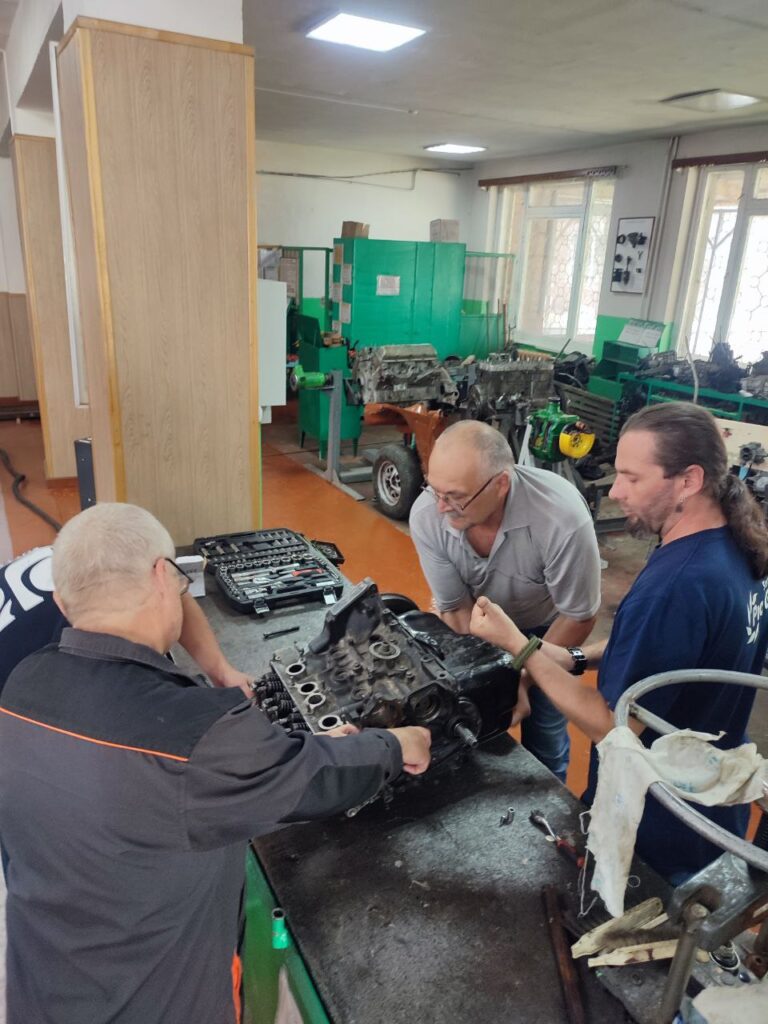
Our foundation helps people from temporarily occupied territories and war zones. We also have programs to support IDPs, e.g., car diagnostics courses. Such courses help them to learn a profession, get a job, or start their own business. The advantage of such training is that it is fast – just a month of theory and intensive practice — and you can already work. This profession is relevant because modern cars require different repairment approaches, and “mobile” — it’s needed in every community where there are people with cars: both in Ukraine and abroad,” says Viktor Velivchenko, coordinator of humanitarian projects at the Stability Solutions Support Services Charitable Foundation, about the car diagnostics courses project.
In general, the car diagnostics courses project consists of three stages. The first stage ran in June 2023 and involved 17 participants with basic knowledge of car diagnostics. All of them completed the course and received state-issued certificates. The second stage will take place in Kovel from July 3 to 28 of the same year and will be attended by medium and high-level specialists who want to improve their skills. The third stage is scheduled for August 1-28 and is tailored for novices in car diagnostics.