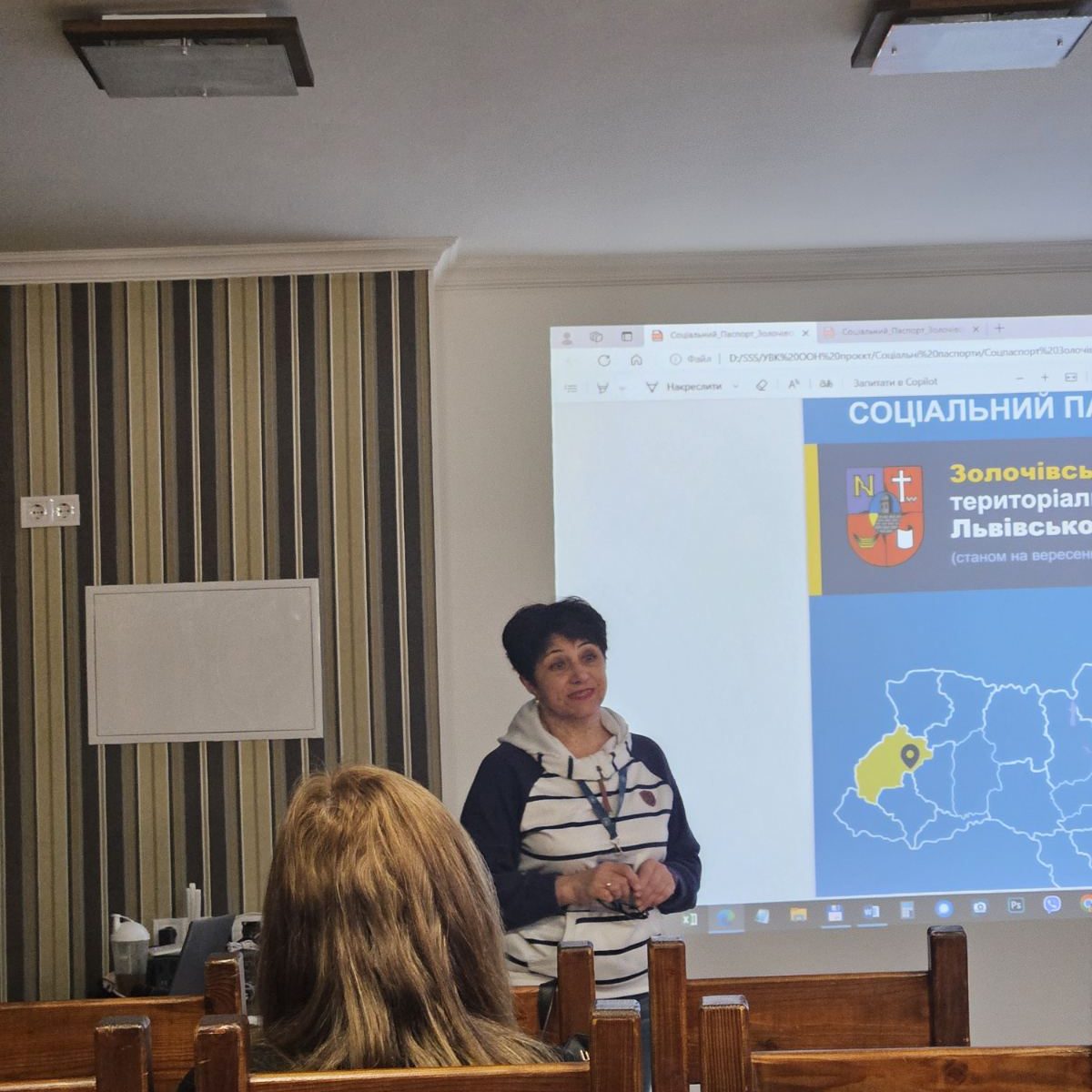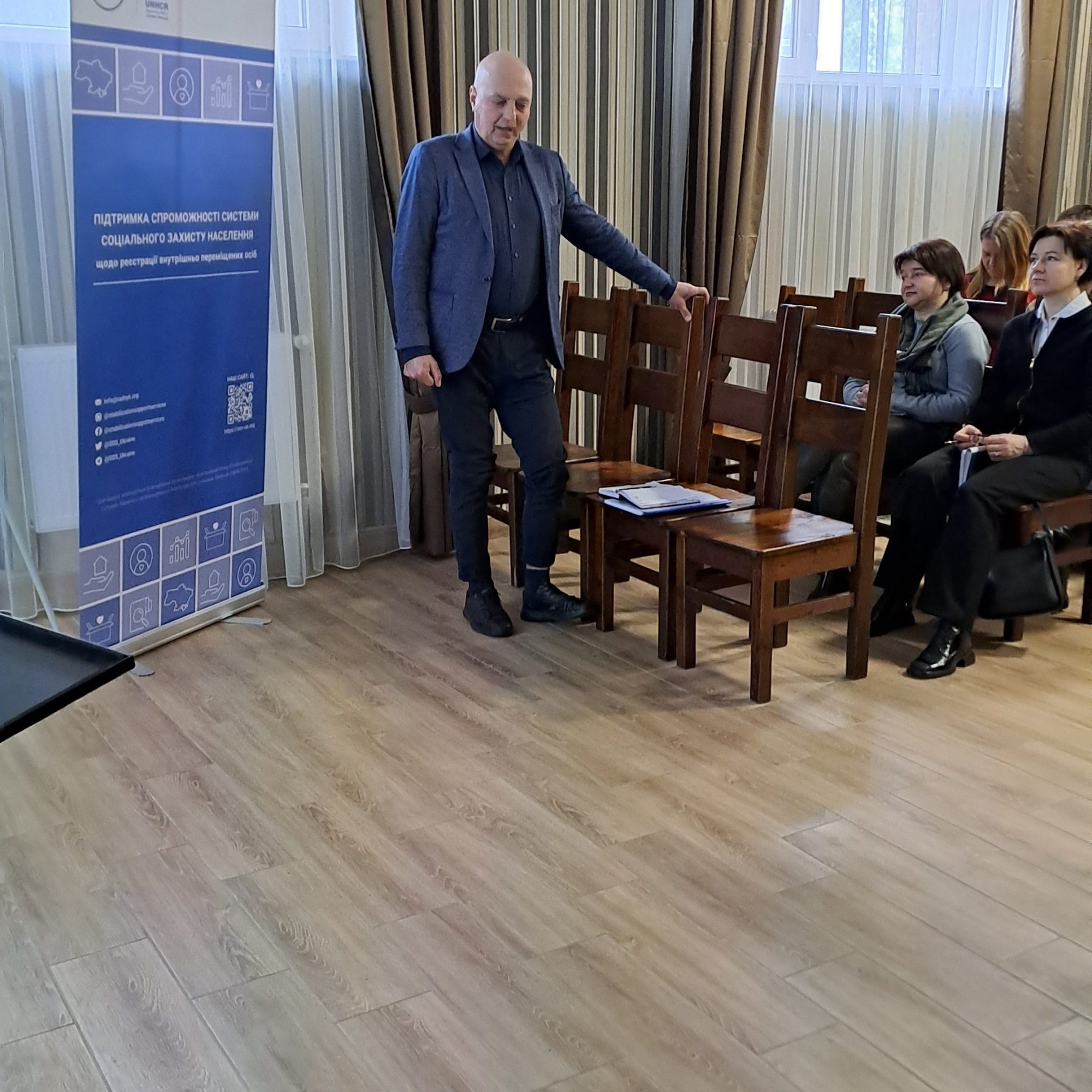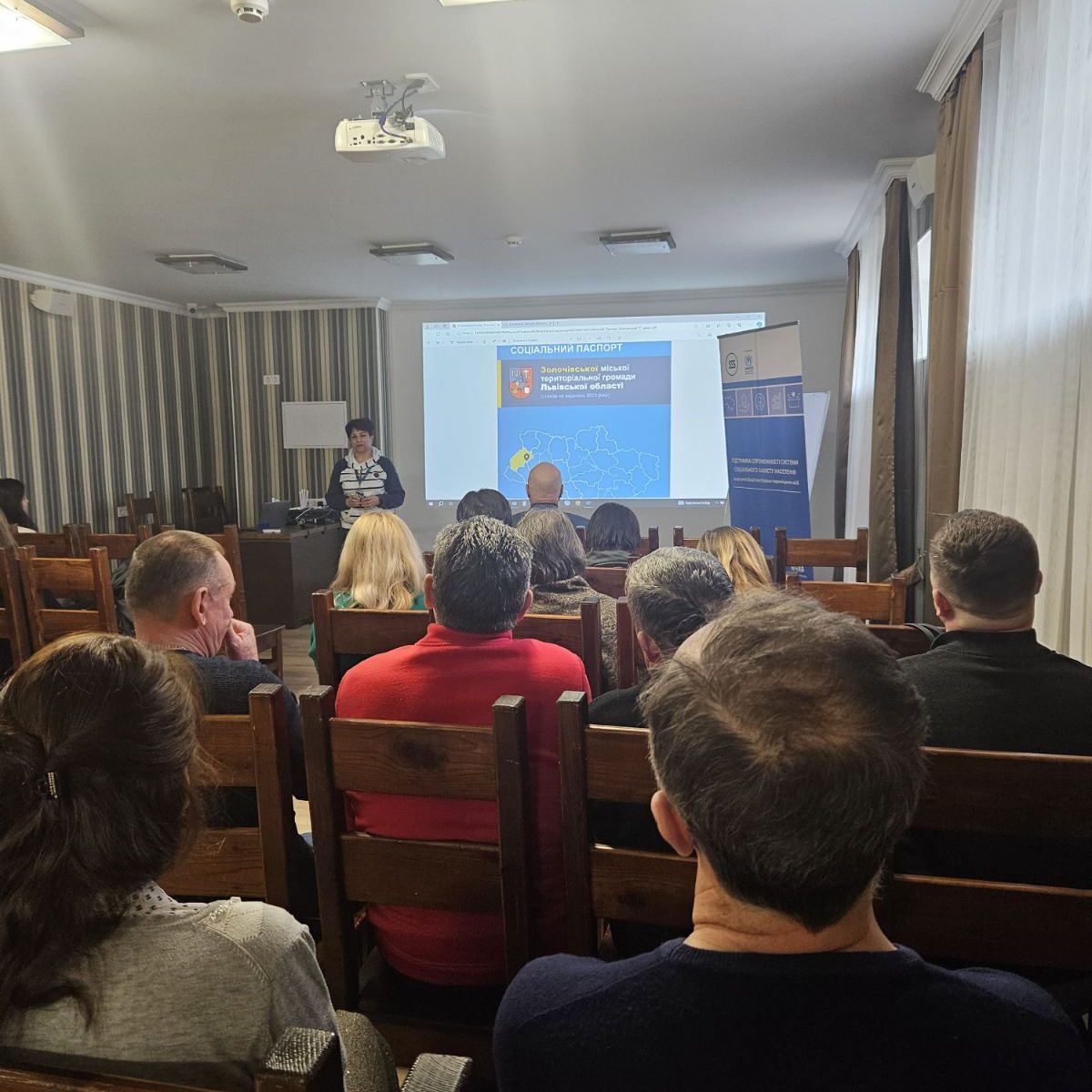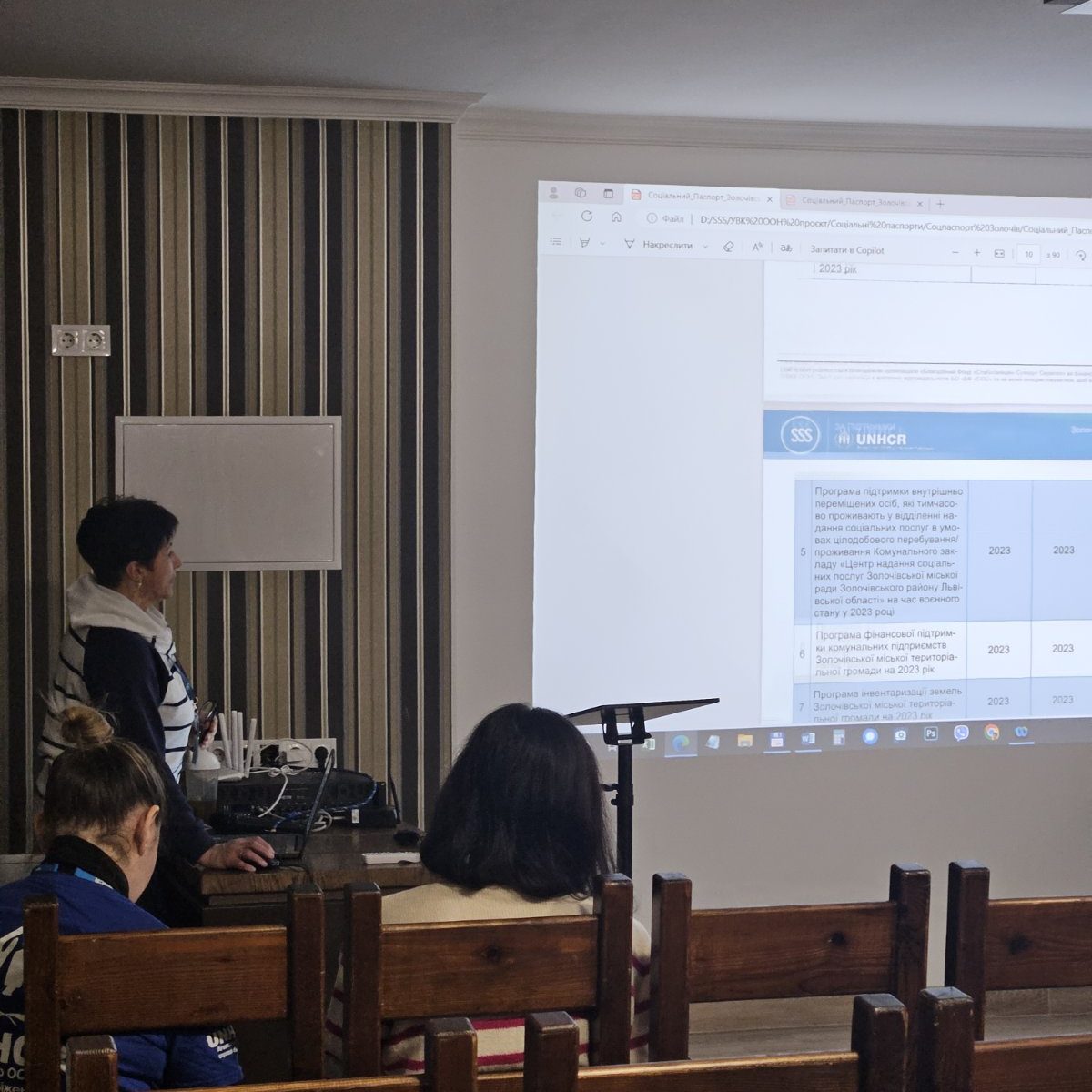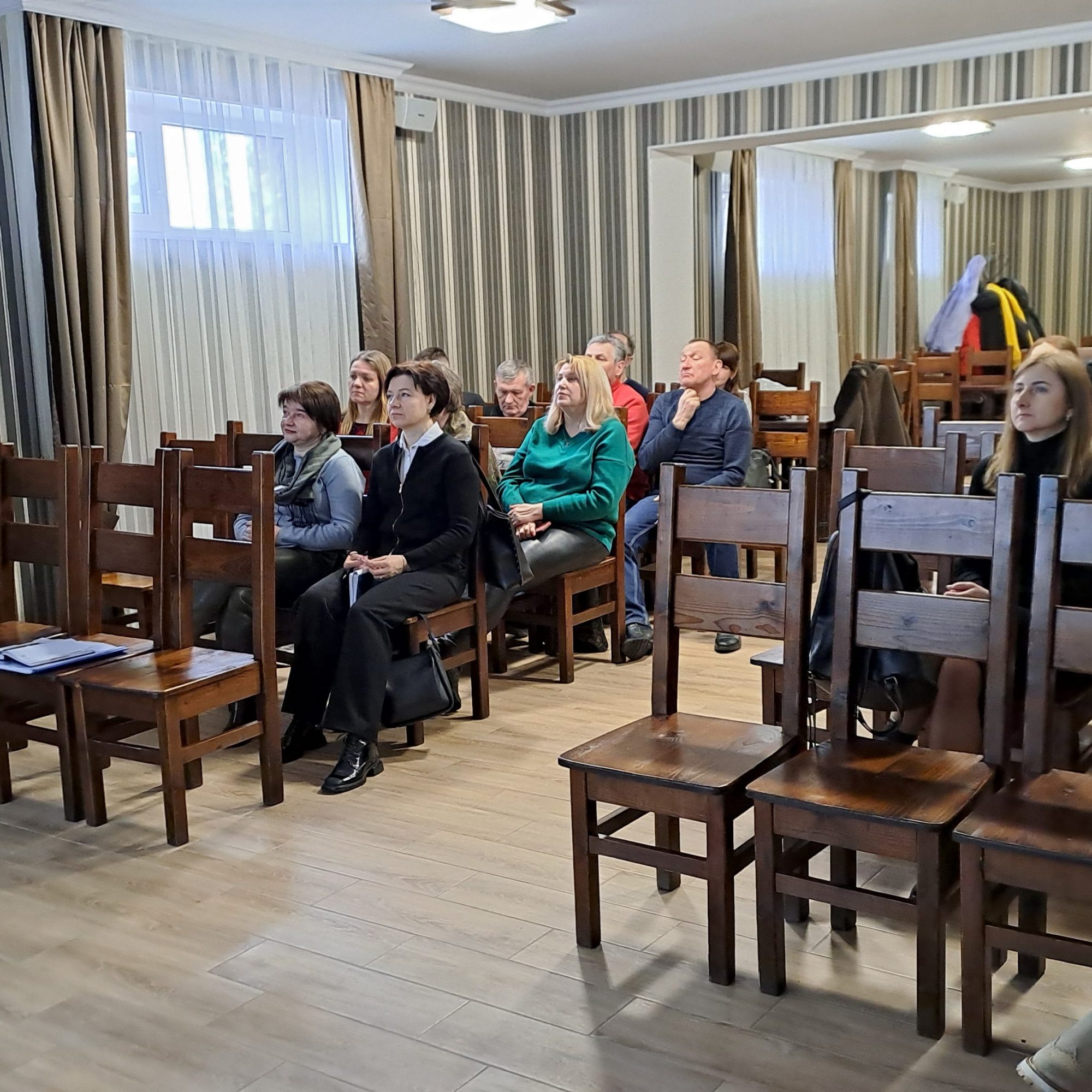
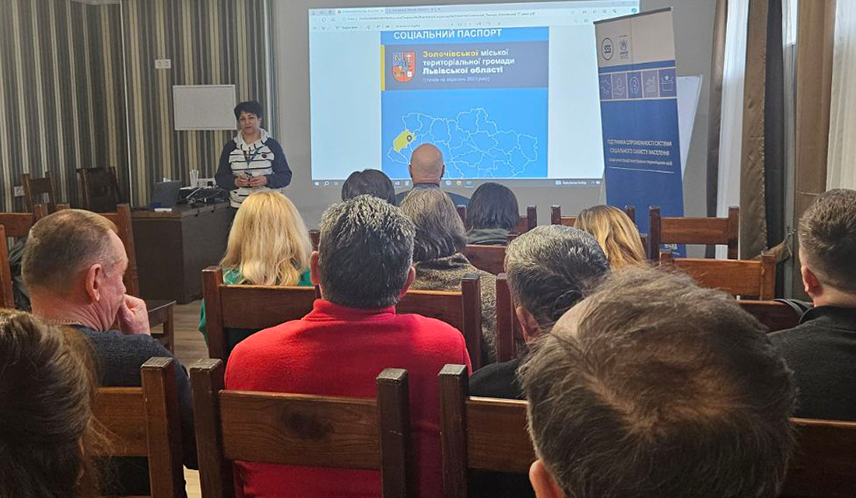
On March 19, our regional team in Lvivska Oblast took part in a roundtable discussion with representatives of the city council and starostas of the Zolochivska community.
Three documents were presented at the event to help the community manage local development:
- A social passport;
- A report on the results of a social survey on the availability and quality of social and administrative services;
- A medium-term plan for the development of the community’s social protection system.
These important public image documents help assess the community’s potential, stimulate the expansion of the range, improve the quality of social services, and increase the community’s ability to solve problems at the local level and at the expense of the local budget. In addition, they help to attract grant proposals and develop a strategy for socioeconomic development.
“It was really a big undertaking. On behalf of the city authorities, I would like to thank my colleagues from CF ‘Stabilization Support Services’ for their perseverance and motivation because, without their participation, we would not have been able to do it. The community needs a social passport if only to systematically assess its development opportunities, availability of resources, and the need to attract extra-budgetary funds,” said Vasyl Havryshkiv, Deputy Mayor.
Lesia Horhota, Head of the Department of the City Council, said, “This presentation clearly and in great detail demonstrates the entire social fabric of the community. I am pleased that the system is able to provide almost all basic social services. We can use external interventions for those we cannot provide on our own. In particular, sign language interpretation.”
The participants also discussed the community’s social development plan for the medium term.
Oksana Duzha, Head of the Children’s Service, said, “The implementation of certain tasks of the proposed development plan should be consolidated and implemented in cooperation with other structures, in particular the Department of Culture, on a mandatory basis, and not only with the Center for Social Services, because children are not alone, but have families.”
“We are aware that there are some shortcomings. In particular, there is no social protection department in the structure of the city community. Administrative services of a social nature are entrusted to the Center for the Provision of Social Services, while the Department of Social Protection of the Population of Zolochivskyi Raion Military Administration is responsible for the appointment and payment of state benefits. But these are the current management decisions, arrangements, and financial situation,” said Vasyl Havryshkiv.
“The first operational goal is to inform the community residents about everything that is being done for them, how the community lives, what issues it is addressing and working on. According to the analysis, almost 40% of residents do not visit the city council website. Bulletin boards and information stands are also ineffective ways to provide information. We need to develop a communication plan and work systematically on its implementation,” added Lesia Horhota.
At the end of the meeting, the community signed the resolutions of the roundtable, including the annual updating of social passport data and the implementation of the social protection system development plan.
Last year, with our support, 56 target communities developed social passports and medium-term plans for the development of the social protection system based on our studies of the accessibility and quality of social and administrative services.
All passports are available on our website: bit.ly/4ggkSi5.
This year, our cooperation continues: we advocate for communities to implement plans for the development of the social protection system.
We are implementing these initiatives as part of the Supporting the Capacity of the Social Protection System to Register Internally Displaced Persons project with funding from the UN Refugee Agency in Ukraine (UNHCR).