
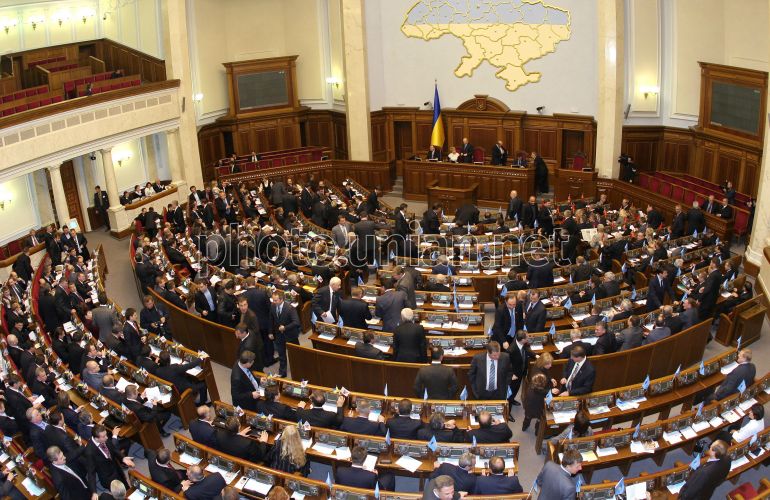
The full-scale war launched by the Russian Federation in February 2022 has had a significant impact on various aspects of society and institutions. The Verkhovna Rada of Ukraine is no exception. Almost immediately after the invasion began, access to parliamentary sessions and the lobby was denied to journalists. The meetings of almost all committees were switched to an online format without involving experts from civil society organizations.
Access to some of the information on the website of the Verkhovna Rada and parliamentary committees has become restricted. For example, information on the list of MPs, committee contacts, information on meeting agendas, etc. is no longer available. Although some information (e.g., the list of MPs and committee members) has been restored to the Parliament’s official website, the Verkhovna Rada remains quite closed to the media and the public.
In 2022, the restrictions could be explained by national security interests and the need to ensure the security of the Verkhovna Rada of Ukraine. However, the closed-door operation of the parliament in 2024, after almost two years since the beginning of the full-scale invasion and ten years since the beginning of the Russian war against Ukraine, raises many questions.
The lack of access to the Verkhovna Rada for journalists is detrimental to democracy. What’s the point of talking about the danger of media presence in the parliamentary hall when the public learns about the progress and results of consideration of bills from MPs’ live broadcasts on social media? Moreover, the Parliament is too large in terms of the number of people involved for its meetings to go unnoticed.
Therefore, instead of continuing to deny journalists access to the parliament building, we should discuss security measures, such as setting up shelters.
Allowing journalists to enter the Verkhovna Rada building and publishing a list of bills to be considered in advance will provide Ukrainians with information of public importance.
It is equally important that civil society representatives have the opportunity to join meetings of parliamentary committees and express their views on registered bills and initiatives to be developed.
A sign of democracy being preserved despite the war will be when the public regains the ability to communicate with MPs in a clear and transparent manner. The media should be able to inform the public about the issues being considered by the country’s only legislative body and the arguments being raised during discussions. The openness of the parliament implies that information about its procedures is available to the public, as well as the creation of conditions for comprehensive communication between MPs and Ukrainian society.
On the opening day of the eleventh session of the Verkhovna Rada of the IX convocation, we call on the Parliament to return to the principles of openness of its activities, namely:
Ensuring that journalists can be present during the Verkhovna Rada’s sessions and communicate with MPs in the lobby of the Parliament
Publishing the agendas of the Verkhovna Rada of Ukraine in advance;
Facilitating and supporting the involvement of civil society organizations in the meetings of the Verkhovna Rada committees.
The Verkhovna Rada of Ukraine should once again become a place for debate, open communication, and media work and for finding solutions to the complex challenges facing the country as a result of Russia’s armed aggression. Provided that security measures are in place, such openness of the Parliament will increase public confidence in its activities and facilitate active cooperation between civil society organizations and MPs.
ZMINA Human Rights Center
Institute of Mass Information
Mediarukh Media Movement
Crimea SOS NGO
Donbas SOS NGO
East SOS Charitable Foundation
NGO “Civil holding “GROUP OF INFLUENCE”
Media Initiative for Human Rights
CO CF “Stabilization Support Services”
Ukrainian Maritime Bar Association
Automaidan All-Ukrainian Association NGO
Kyiv Educational Center “Tolerspace” NGO
Social Action Centre NGO
Daryia Hirna, journalist and author of the Faces of Independence channel at Novyny Donbasu
Center for Civil Liberties
Ukrinform
Women in Media NGO
Souspilnist Foundation
Ukrainian Center for Independent Political Research
Pylyp Orlyk Institute for Democracy
UKRAINEPRIDE NGO
Civil Network OPORA
Graty media
International Society for Human Rights – Ukrainian Section
Educational Human Rights House Chernihiv
Crimean Process NGO
Institute for Peace and Common Ground NGO
Truth Hounds NGO
Helsinki Initiative-XXI NGO
Espreso
Almenda Centre of Civil Education NGO
Yevhen Spirin, journalist, host
Sova Expert Group NGO
Kharkiv Anti-Corruption Center NGO
Hromadske Radio NGO
Crimean Human Rights Group
Human Rights Platform NGO
Detector Media NGO
Assosiation of Relatives of Political Prisoners of the Kremlin NGO
Democratic Initiatives Incubator NGO
Right Cause Human Rights Organization NGO
National Union of Journalists of Ukraine
Commission on Journalism Ethics (CJE)