
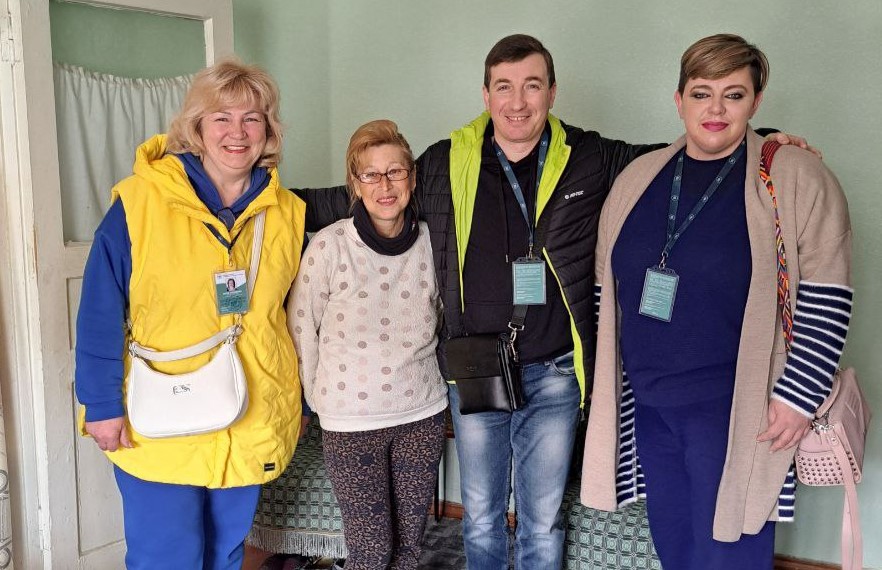
Humanitarian aid is one of the key components of Ukraine’s resilience in the war against Russia. That is why our Foundation’s team applies advanced international experience — particularly in the realm of humanitarian response principles, approaches, and standards. The key guidelines for our work are the four protection principles*, which uphold the rights outlined in the Humanitarian Charter and are successfully implemented worldwide. Today, we begin sharing insights about these principles and how they are applied to our Foundation’s projects.
The first principle is to enhance security, dignity, and the protection of people’s rights while avoiding situations that expose them to further harm.
“This principle is crucial because humanitarian aid should not only meet basic needs but also safeguard the dignity and rights of those in crisis. In our project, we ensure that assistance contributes to safety and recovery rather than making recipients more vulnerable. This strategy involves a careful approach to each situation, risk minimization, and consideration of the needs of all vulnerable groups,” explains Khrystyna Oliynyk, manager of the Improving Hygiene Access in Shelling-Affected Areas in Sumska and Chernihivska Oblasts by Installing Social Laundries project. “The dignity of those we help is important to us!”
The protection principle in humanitarian work focuses on enhancing safety, ensuring rights, and preserving human dignity. Its core idea is to avoid actions that could cause additional harm or increase existing risks. This becomes especially relevant during wartime. To implement this principle, the Foundation analyzes the regional context in which it operates, considers the needs and vulnerabilities of different population groups, and anticipates the consequences of every step in the humanitarian program. Our organization places great emphasis on information dissemination, the safe organization of aid, careful handling of personal data, and the development of mechanisms that help prevent unintended negative consequences.
The application of the first principle in our Foundation is based on a comprehensive approach: we design initiatives not only to meet the basic needs of those affected but also to prevent conflicts or hazardous situations.
Furthermore, we recognize the importance of supporting ongoing resilience-building initiatives and ensuring conditions that enable people to reduce their own risks independently. People’s initiatives should not be obstructed or replaced by external aid, as such interference could weaken their ability to cope with risks in the future. This approach allows us to focus not only on physical survival but also on preserving self-respect, equality, and security.
The Improving Hygiene Access in Shelling-Affected Areas in Sumska and Chernihivska Oblasts by Installing Social Laundries project is financed within the framework of the Localization project by the Polish Humanitarian Action (PAH).