
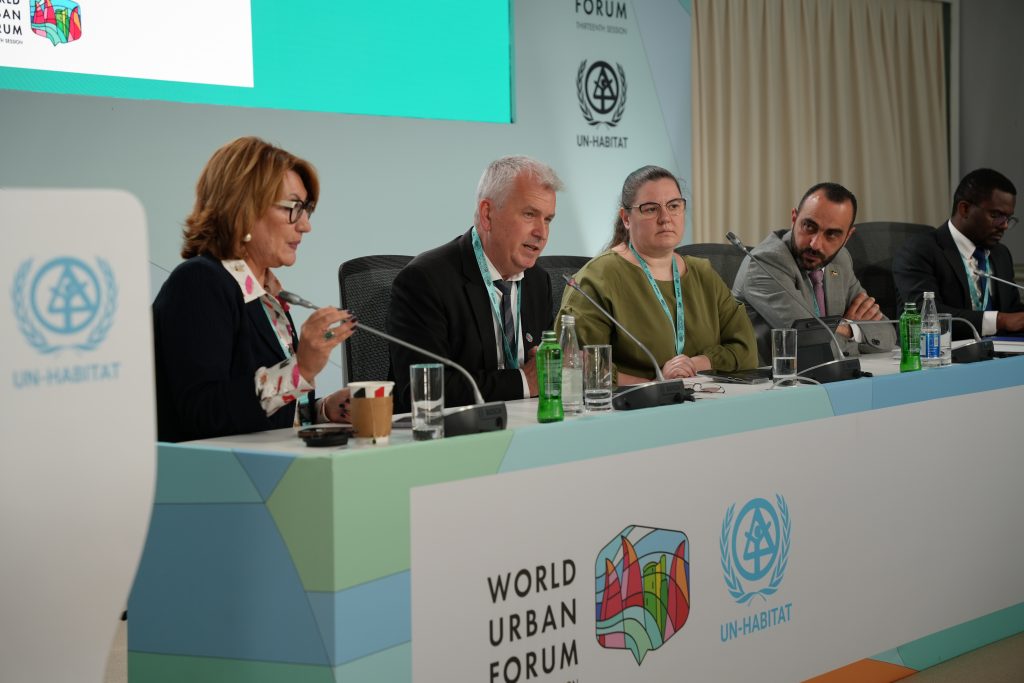
The foundation’s Executive Director, Valeriia Vershynina, took part in a discussion on the role of communities and internally displaced persons in urban recovery.
“When I left occupied Donetsk with my newborn daughter, we had no home, no winter clothes, and almost nothing for our new life. At that moment, it was impossible to talk to me about participating in decision-making—I was simply trying to survive,” Valeriia Vershynina said during the international event.
The event brought together experts, community representatives, researchers, and practitioners from various countries to discuss how cities and communities are responding to internal displacement, destruction, and the challenges of recovery.
During her speech, Valeriia spoke about the Ukrainian experience—from the first waves of displacement after 2014 to the full-scale invasion and millions of new IDPs after 2022.
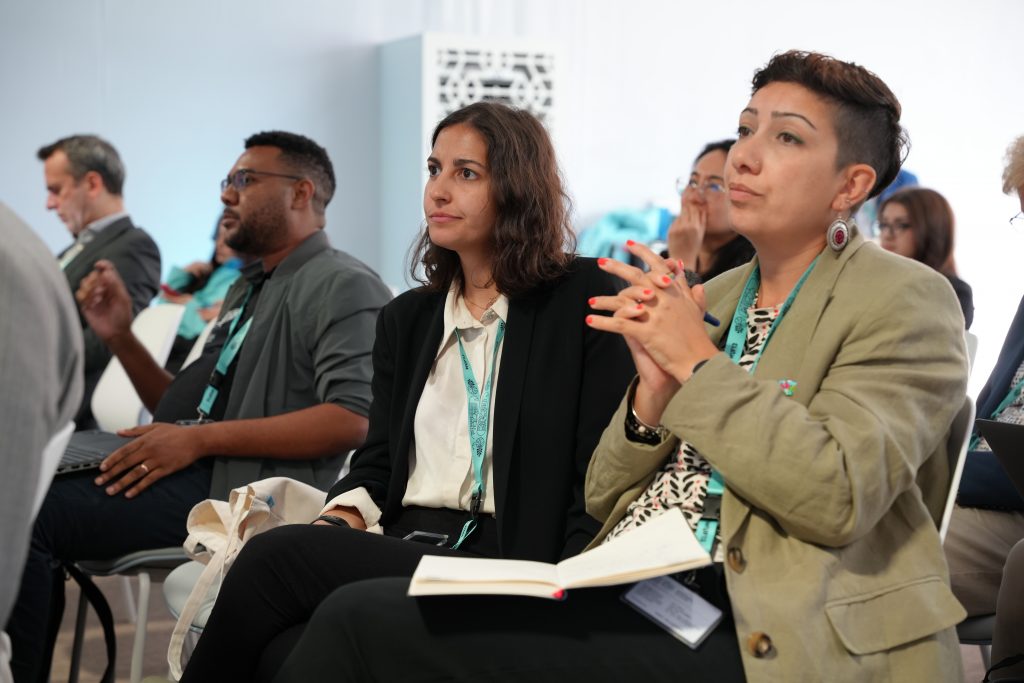
One of the key messages was that integration and recovery begin with very simple things: access to information, housing, work, a sense of security, and the opportunity to be heard in the community.
That is why IDP Councils began to develop in Ukraine—a mechanism that allows displaced people to participate in local life and influence decisions regarding housing, services, integration, and recovery planning.
“You can’t expect people who are still in survival mode to participate. But once people begin to regain stability, they must have the opportunity to influence decisions that affect their lives,” Valeriia emphasized.
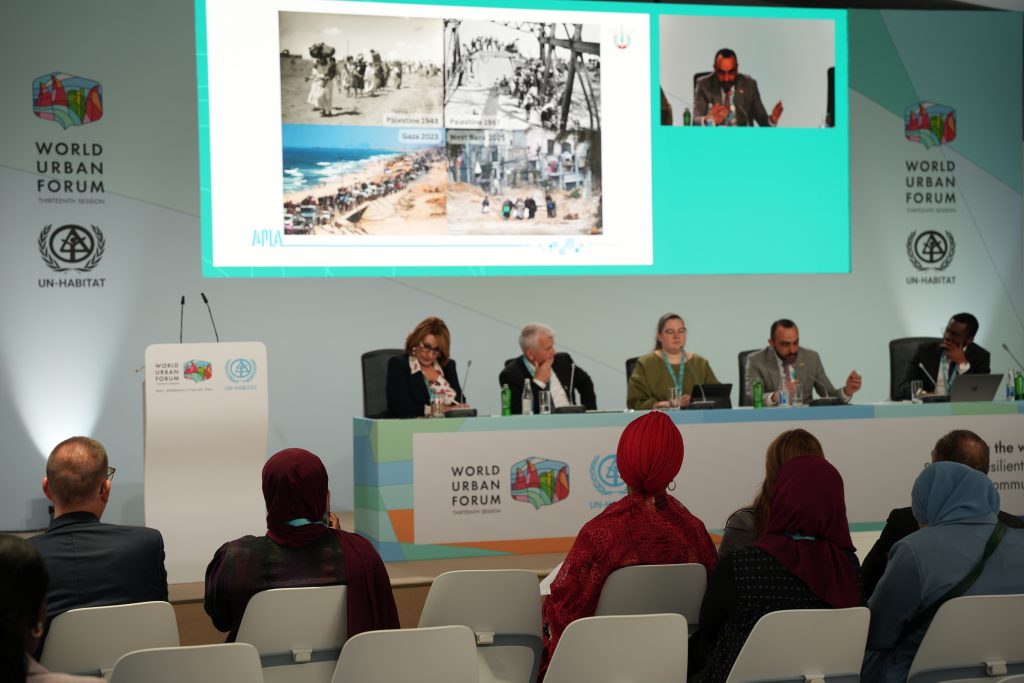
The experience of Voznesensk in the Mykolaiv region was presented as an example of how this works in practice. The local IDP Council established communication channels for displaced persons, helped people find information about housing, jobs, and local services, and organized forums on employment and housing opportunities. As a result, dozens of displaced persons gained access to jobs and housing solutions.
The discussion also addressed the main challenges facing communities today: limited resources, strain on local systems, the need for long-term support, and the importance of trust between IDPs, local authorities, and host communities.
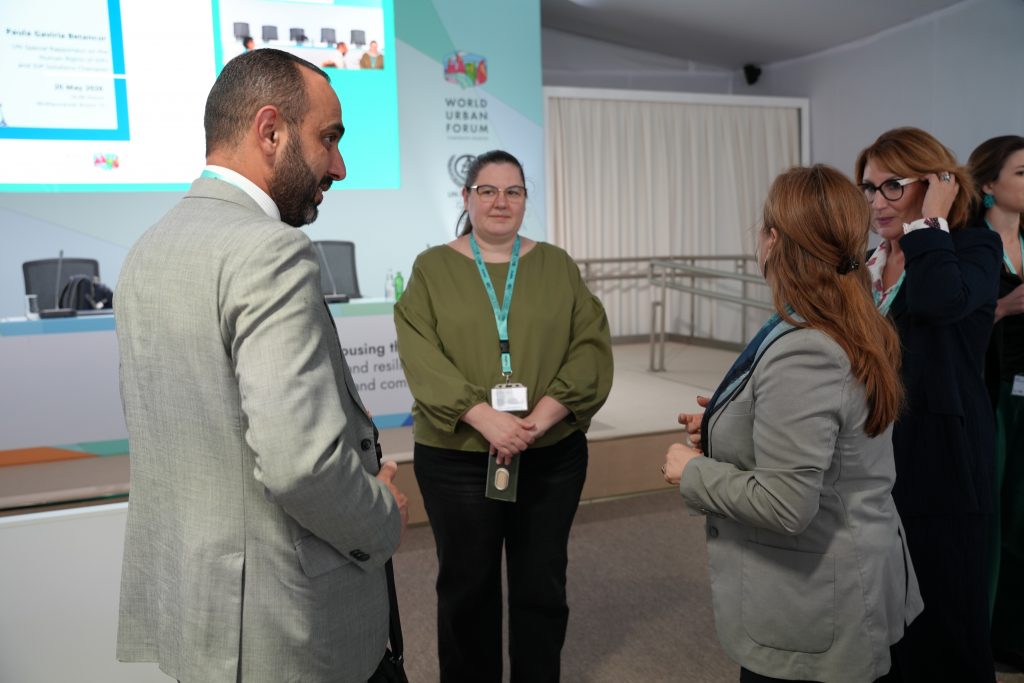
The Ukrainian experience has become part of a broader international conversation on community and IDP leadership in recovery.