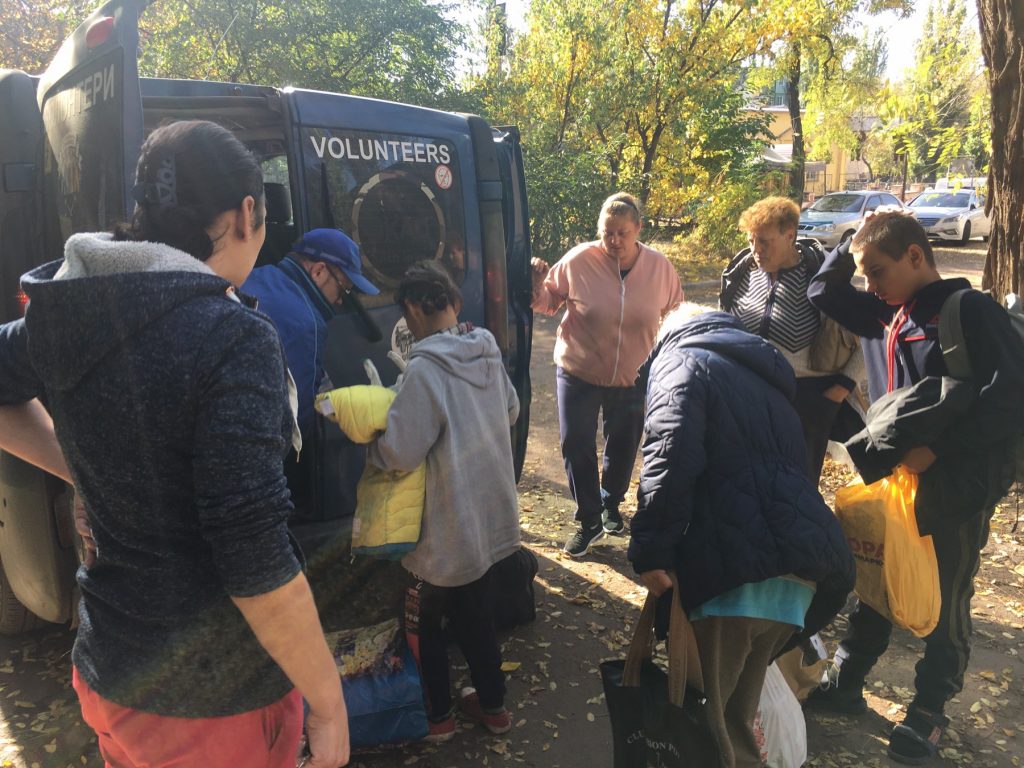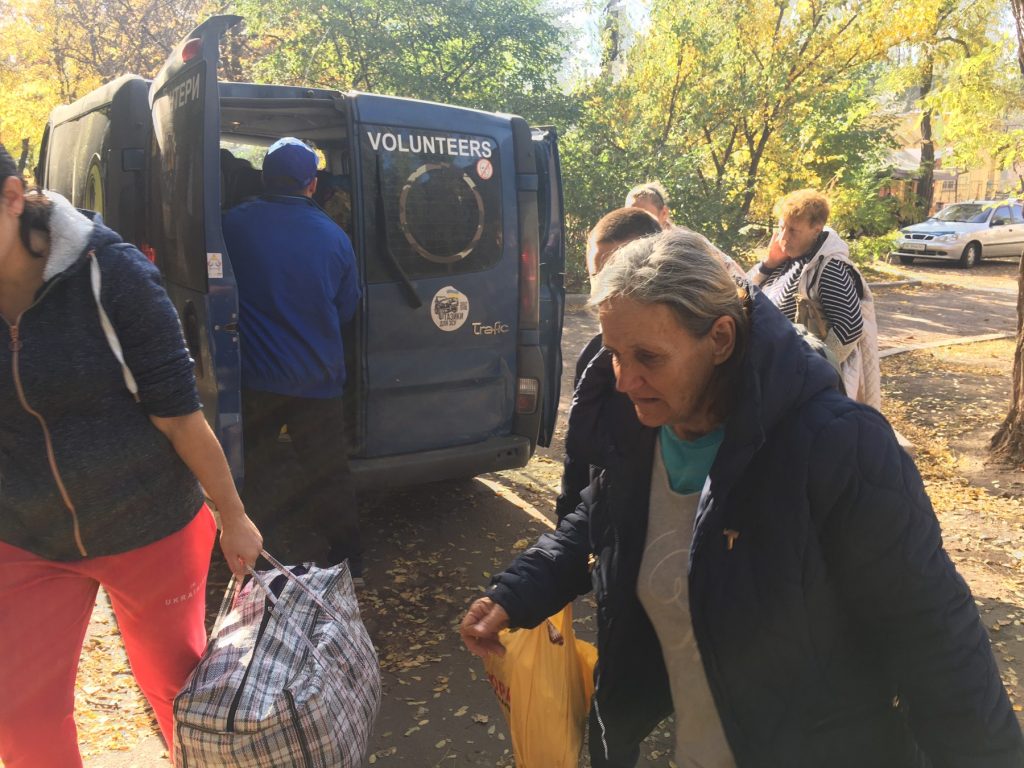
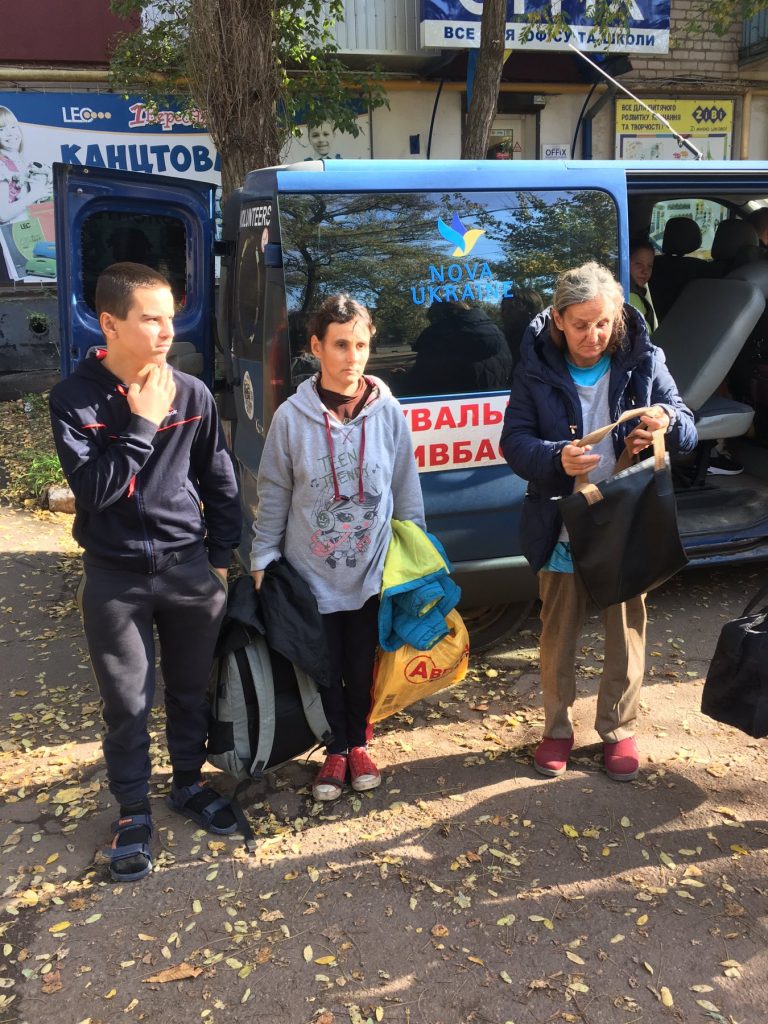
The mandatory evacuation of families with children from dangerous settlements remains in place for the second month in a row.
According to the Oblast Military Administration’s data, as of November 4, 350 children have been evacuated from Khersonska Oblast settlements under constant shelling, with 450 children still remaining.
Specifically, people from Khersonska Oblast are being evacuated to Kryvyi Rih. Here, evacuees receive assistance from local volunteers affiliated with the Public Health Charity Foundation, who aid in accommodating them in various shelters.
This is how we met Halyna Hryhorivna. She left Khersonska Oblast, namely the village of Novoberyslav in Beryslavskyi Raion, with her daughter and grandson on October 27.
“The police, social services, and volunteers helped us evacuate. As we were traveling, drones started flying over us,” Halyna Hryhorivna shares.
According to the woman, currently, only about a hundred residents remain in the village. The area has no access to water, electricity, or gas and has been increasingly subjected to shelling. Halyna Hryhorivna mentions her son-in-law, who had his roof damaged by shelling recently. Drone activity has also intensified. Residents were returning home to pick up their personal belongings and had their cars fired upon by a drone.
Presently, the village population stands at around 100 as Novoberнslav continues to endure frequent shelling. This underscores the critical need for evacuation and support for individuals from Khersonska Oblast.
The new project, Lifesaving Response to Protection Risks and Humanitarian Needs of Conflict-Affected Population in South and South-East of Ukraine, is being implemented by the CF SSS together with the international humanitarian organization CARE and with the financial support of the Ministry of Foreign Affairs of Denmark, is helping people affected by war in the remote areas of Khersonska, Zaporizka, and Mykolaivska oblasts.
Throughout the course of this project, rapid response teams will be established to carry out several crucial tasks:
- Delivery of drinking water to affected communities;
- Distribution of non-food item kits;
- Distribution of hygiene kits with varied contents tailored to different genders and ages;
- Distribution of multi-purpose cash assistance to those affected.