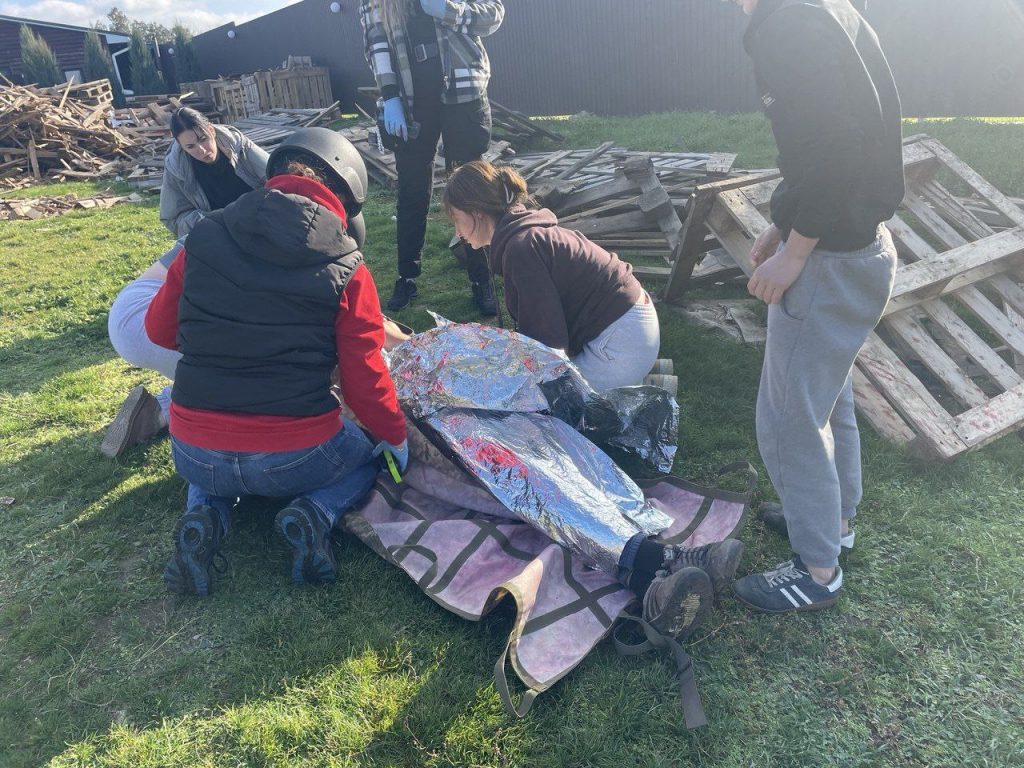
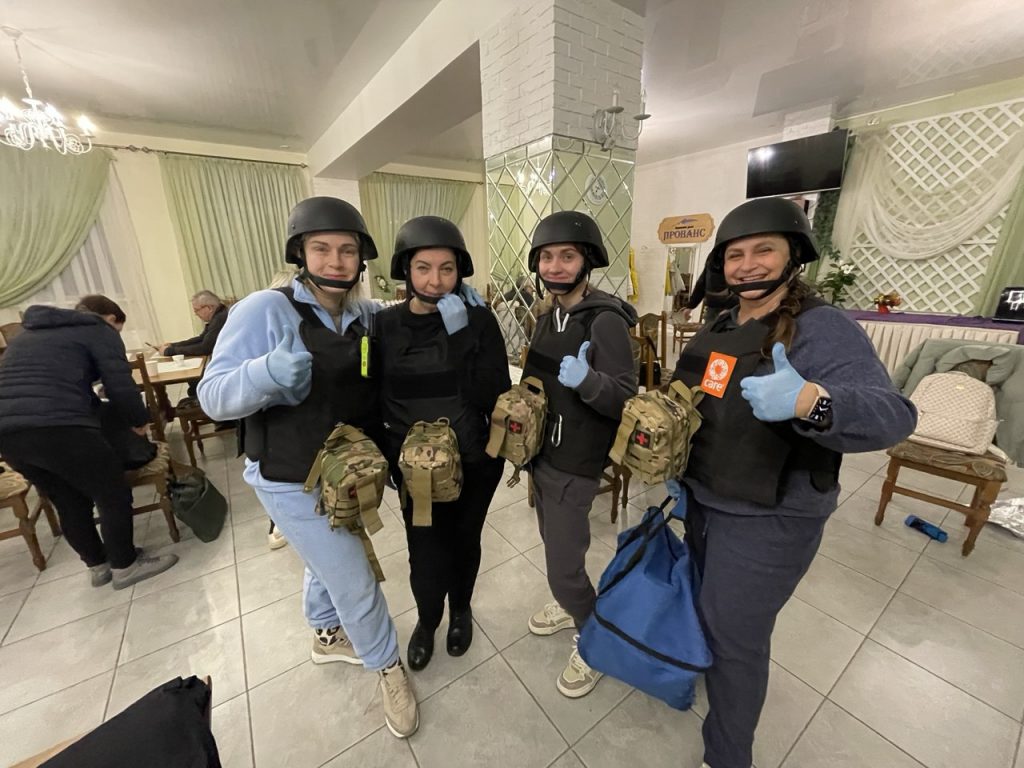
The team of the project “Lifesaving response to protection concerns and humanitarian needs of conflict affected people in the South and South-East of Ukraine” took part in the training “First aid and survival basics in hostile environments”.
The event took place in Mykolaiv. For three days, our team immersed themselves in the learning environment and gained practical knowledge and skills necessary in crisis situations. Qualified trainers explained the algorithm for providing pre-medical care in urgent, emergency situations in an accessible way. The specialists used examples to teach how to perform cardiopulmonary resuscitation, stop bleeding, treat injuries and burns, apply a tourniquet correctly, bandage wounds, and prepare a person for evacuation.
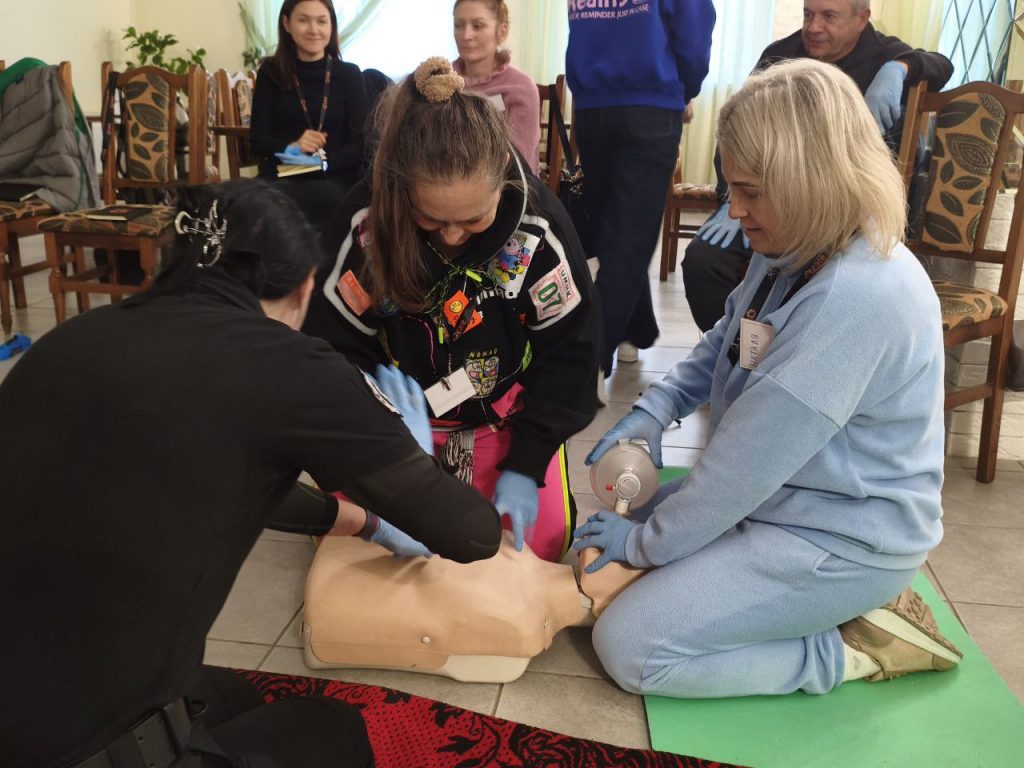
As part of the project, mobile teams consisting of two psychologists and a lawyer are working in the Zaporizhzhia, Mykolaiv, and Kherson regions. They travel to communities to provide assistance to people affected by the war. This means that at any moment they may find themselves in the epicenter of an emergency, alongside wounded or injured civilians.
That is why our partners at CARE, in cooperation with the Ukrainian Rescue Service NGO, have organized this much-needed training for the employees of the Stabilization Support Services Charitable Foundation.
“During this training, we learned the most important thing—how to work as a team. After all, during mobile visits to populated areas, there will be no one else around except for team members, and we will have to act decisively and quickly. Our coordinated and professional actions will determine not only our lives, but also the lives of the people who come for consultations,” – emphasizes Vita Bondarenko, a psychologist with the mobile team in the Zaporizhzhia region.
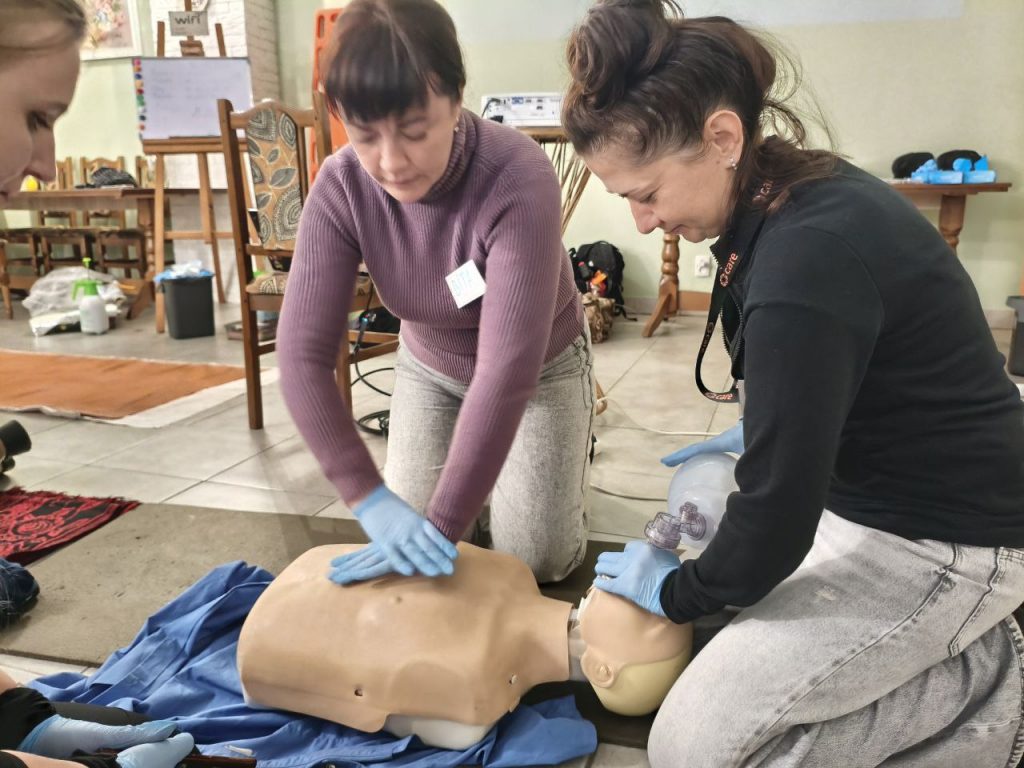
Some of the training sessions were devoted to the response of the population in the zone of active hostilities: during a chemical attack, the use of nuclear and incendiary weapons, and mine and explosive hazards.
“This training was very necessary for the Kherson team. On the third day of training, there was a section devoted to enemy drones. Unfortunately, this is a major problem for the Kherson region, as it suffers from drone attacks on a daily basis. The trainers explained how to act when a drone is detected while traveling by transport, and what responsibilities each member of the mobile brigade should have when traveling in terms of drone safety,” – said Valentina Kosyuk, regional coordinator in the Kherson region.
In addition, according to the training participants, they liked the practical part of the event the most—the simulation exercises. This was because they were as close as possible to real-life conditions. This format helped to reinforce all the knowledge gained in practice and taught participants how to act in stressful situations.
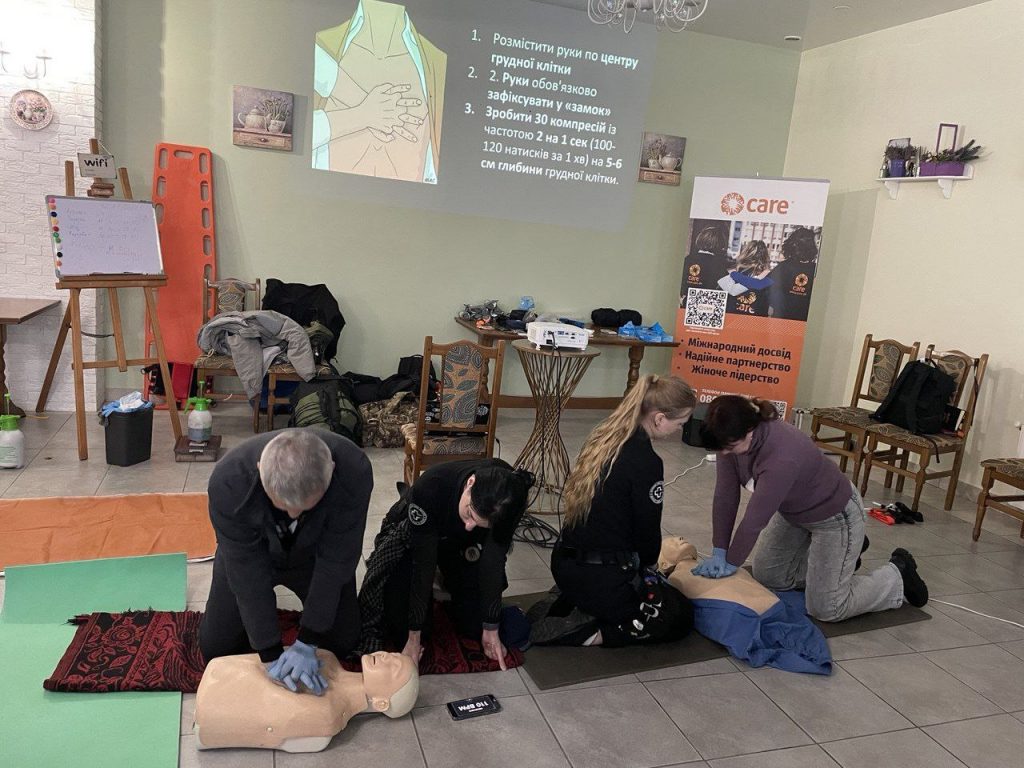
“It was interesting and scary at the same time. I really liked the practical application of the medical knowledge I gained on myself and other participants. I was very impressed by the information on self-defense. In three days, I gained useful experience that I am sure will be useful not only in my work but also in my personal life,” – says Oksana Kamaletdinova, a psychologist with the mobile team in the Mykolaiv region.
For the project team, it was not just a training course, but an opportunity to acquire new knowledge and skills that are necessary for the effective work of humanitarian workers.
The project “Lifesaving response to protection concerns and humanitarian needs of conflict affected people in the South and South-East of Ukraine” is implemented by the Stabilization Support Services Charitable Foundation in partnership with the international humanitarian organization CARE, with financial support from the Danish Ministry of Foreign Affairs.