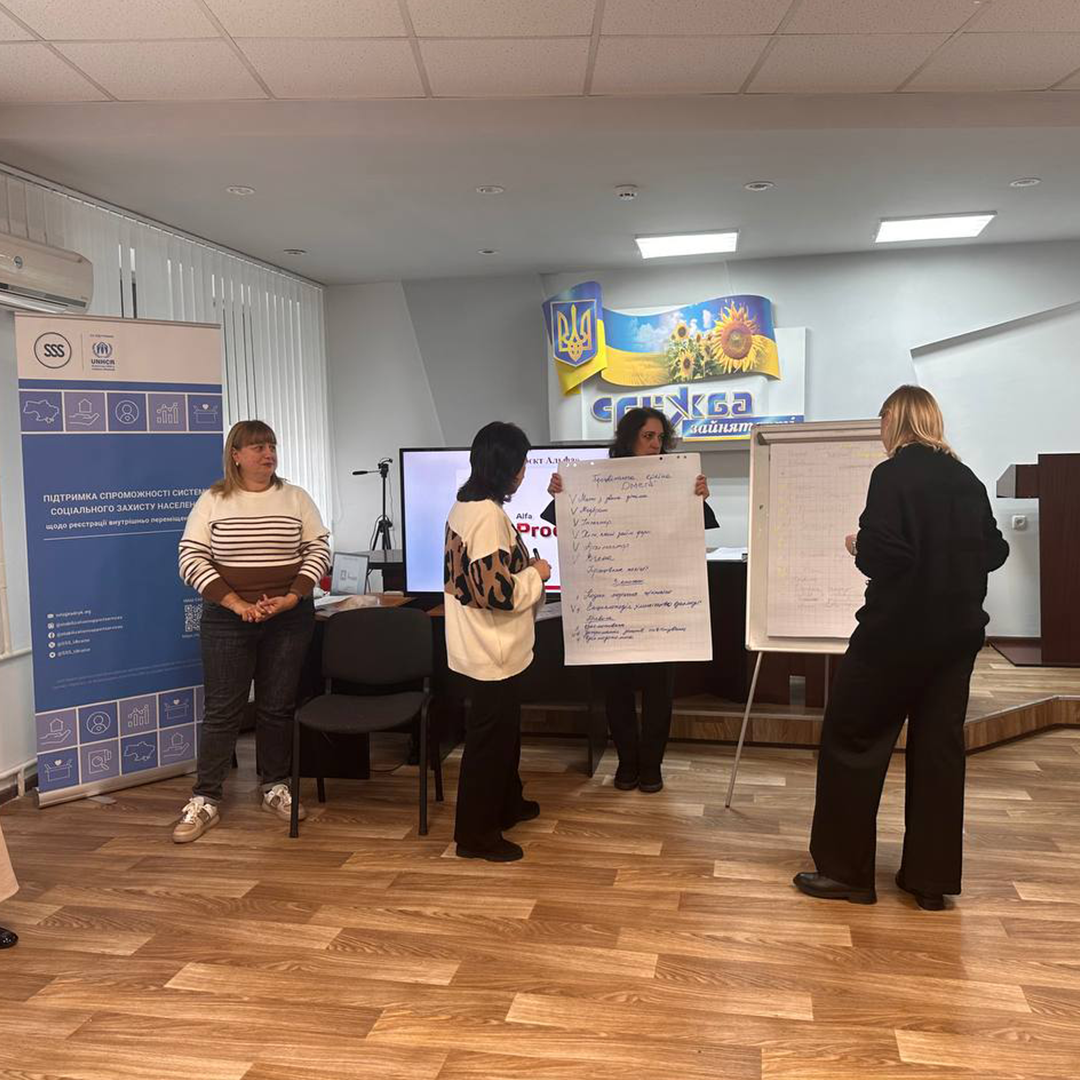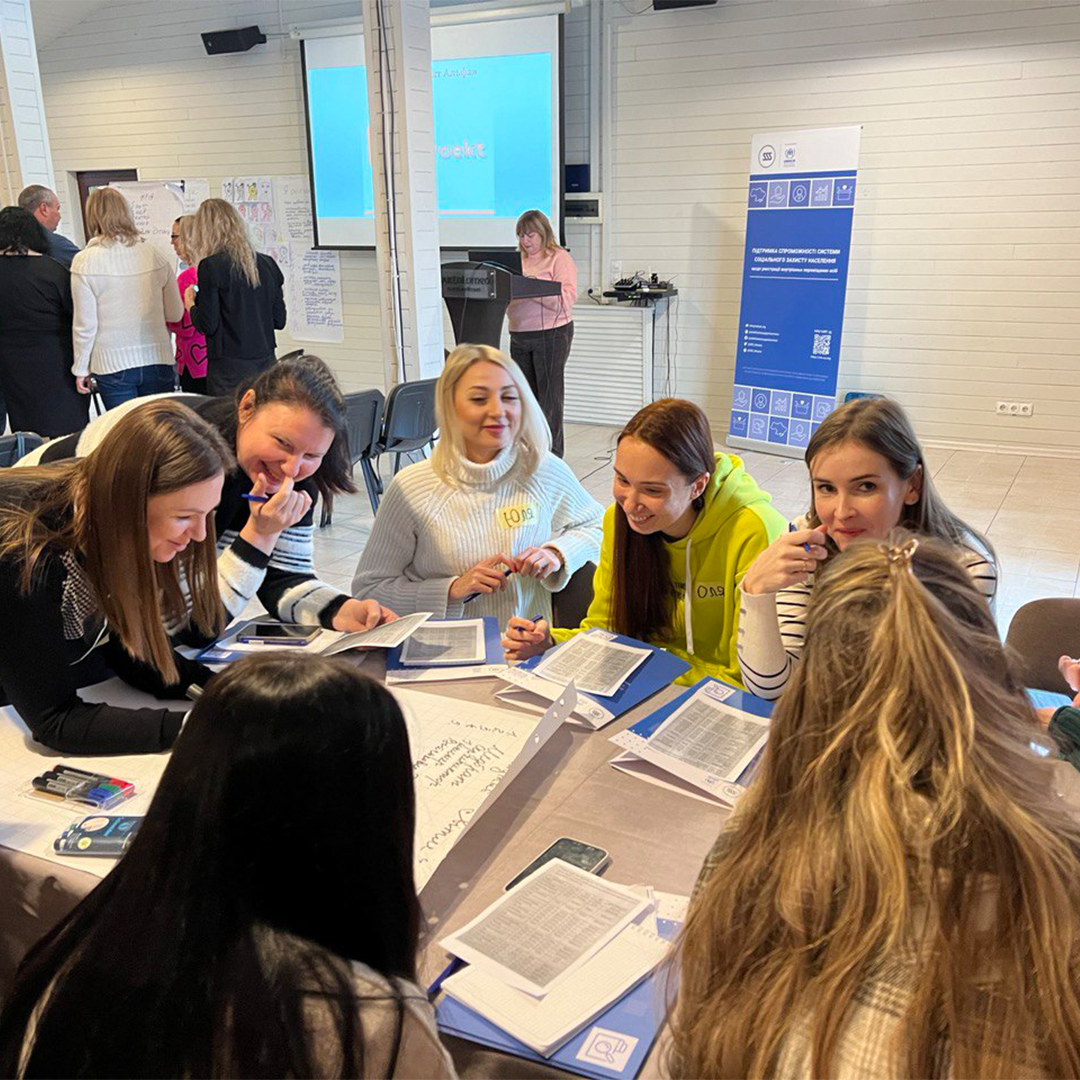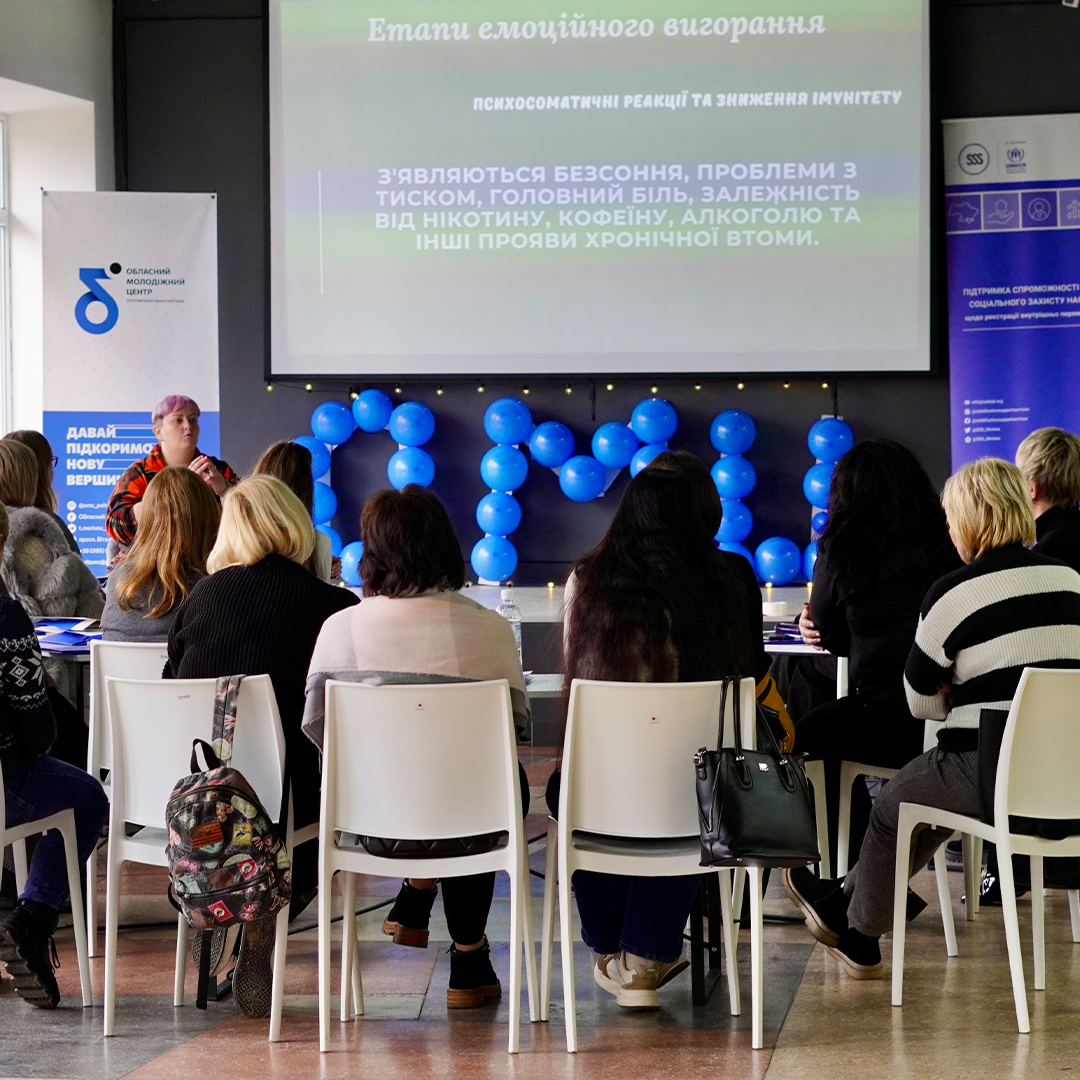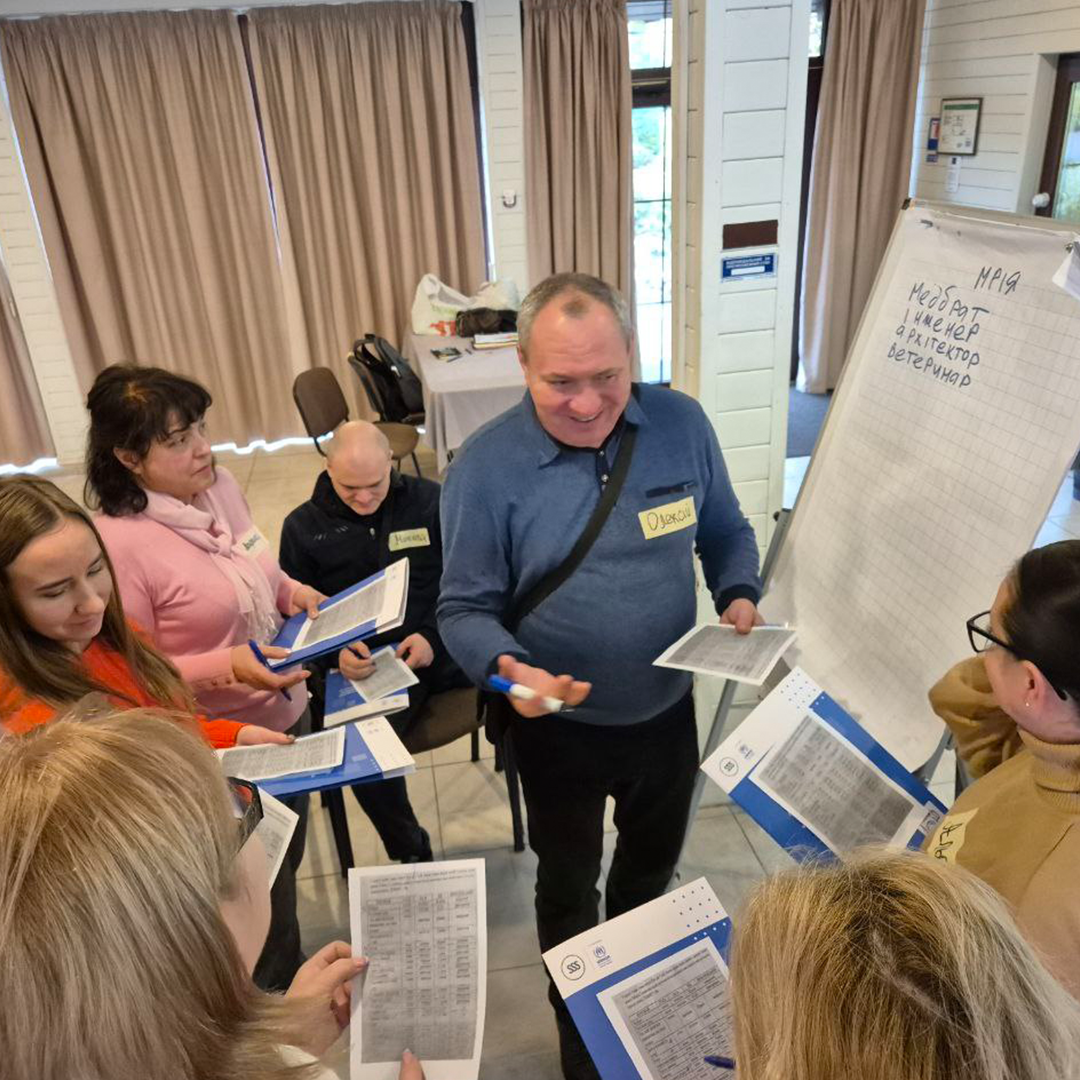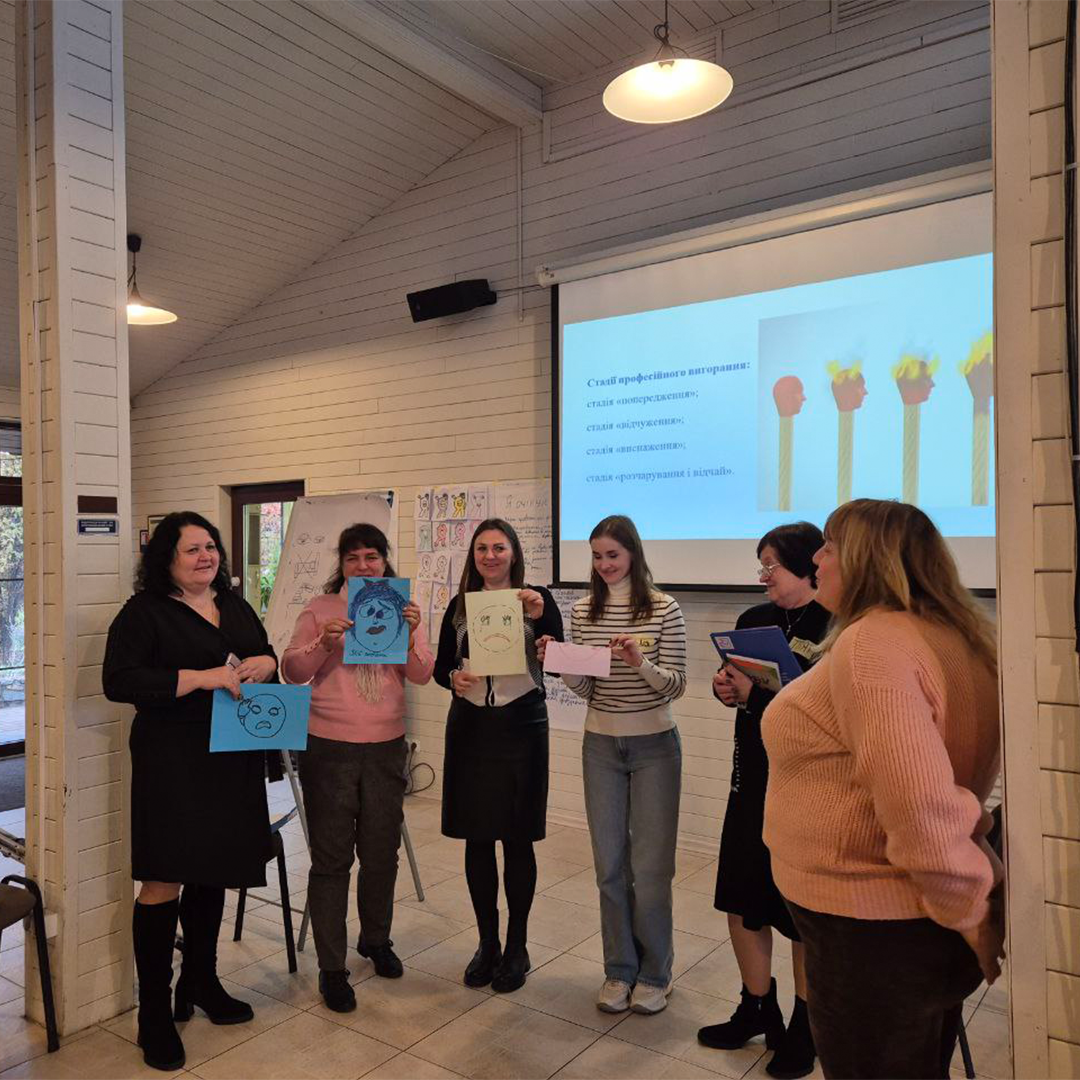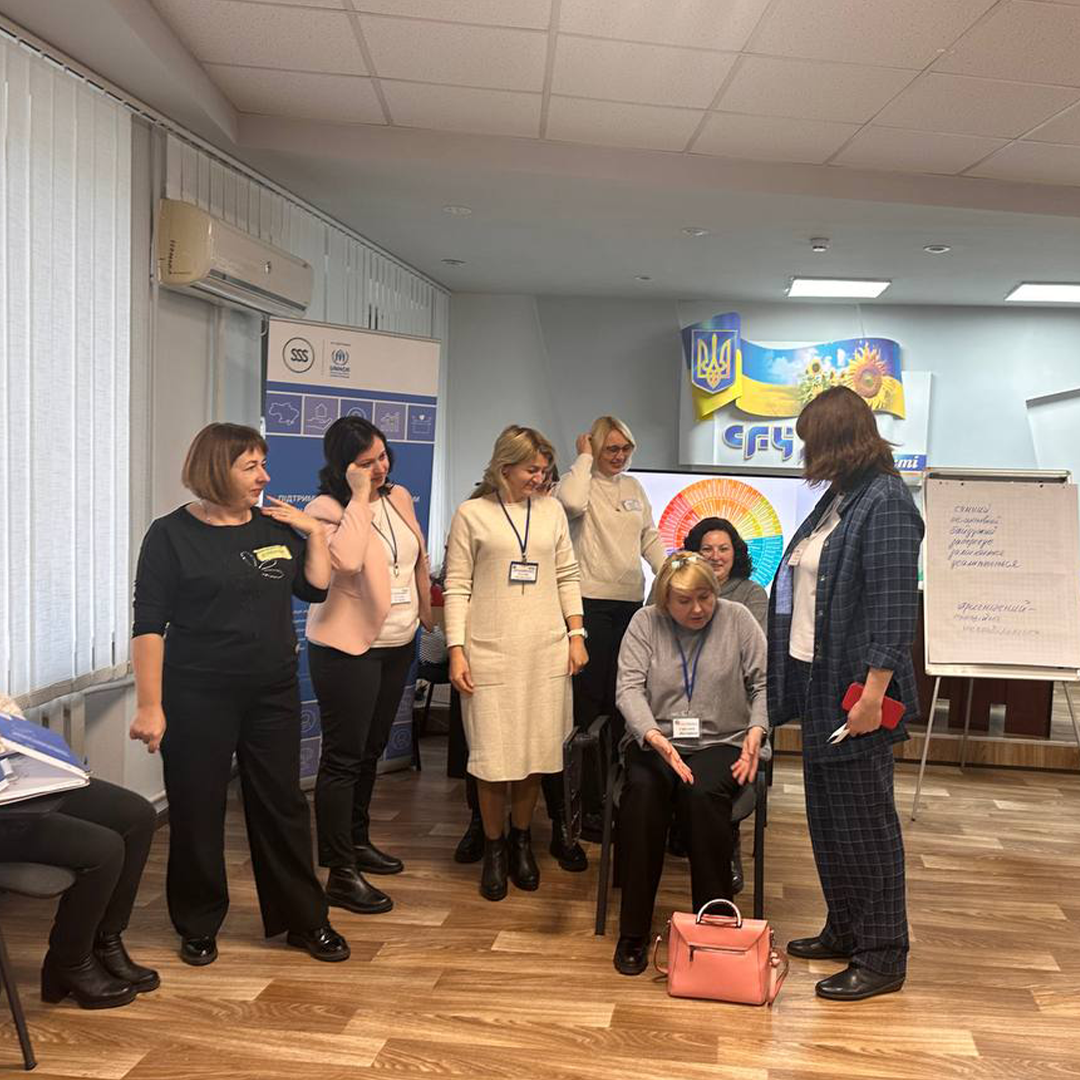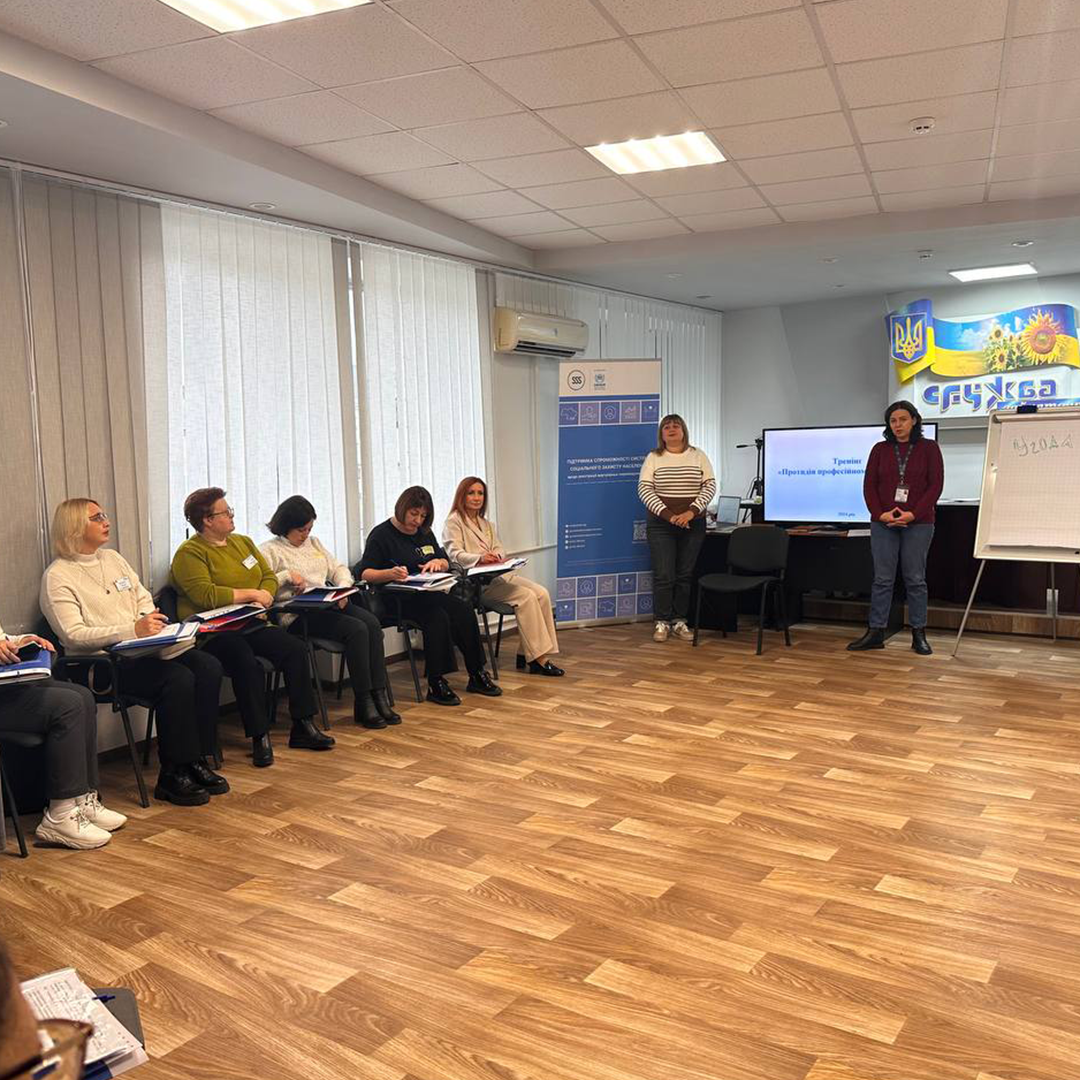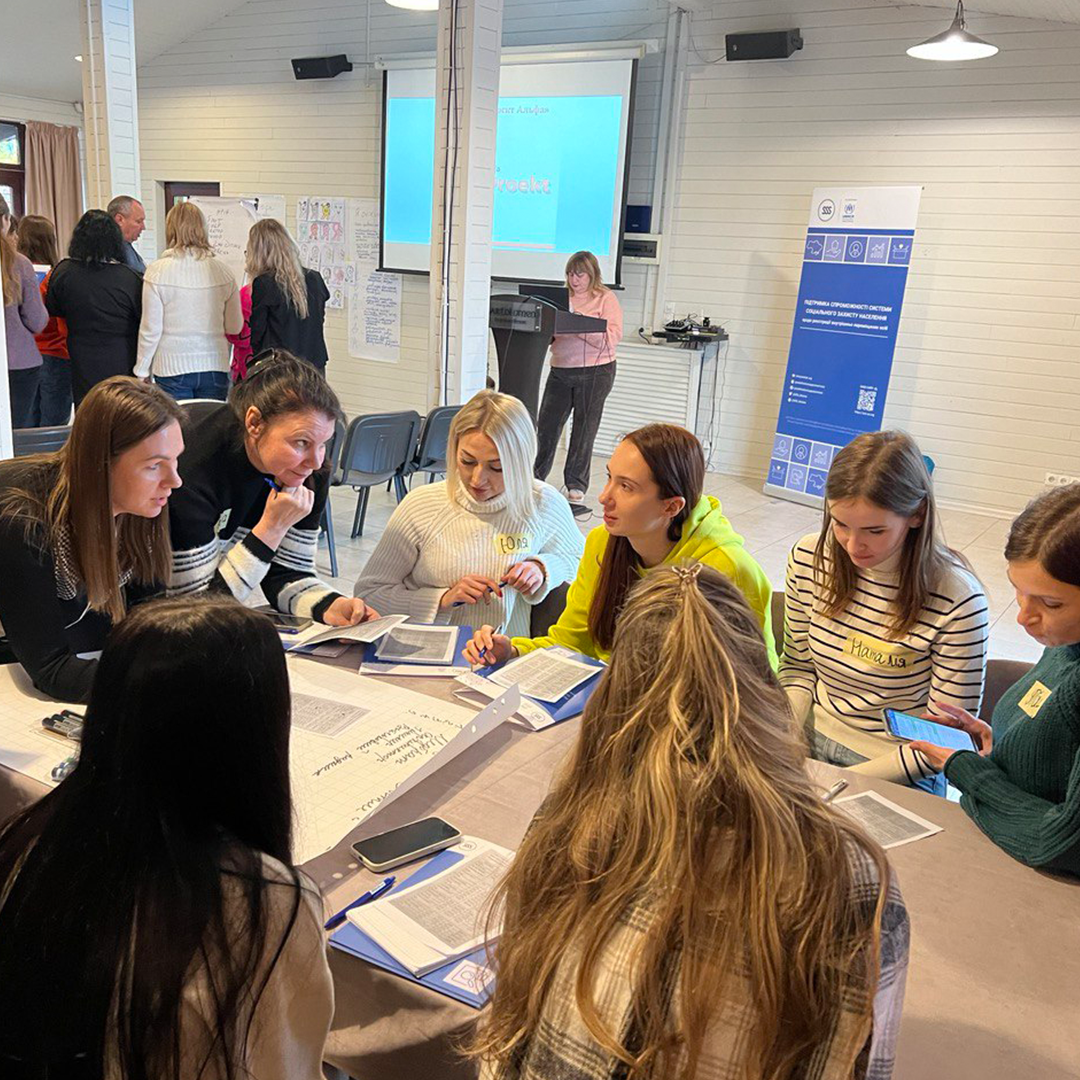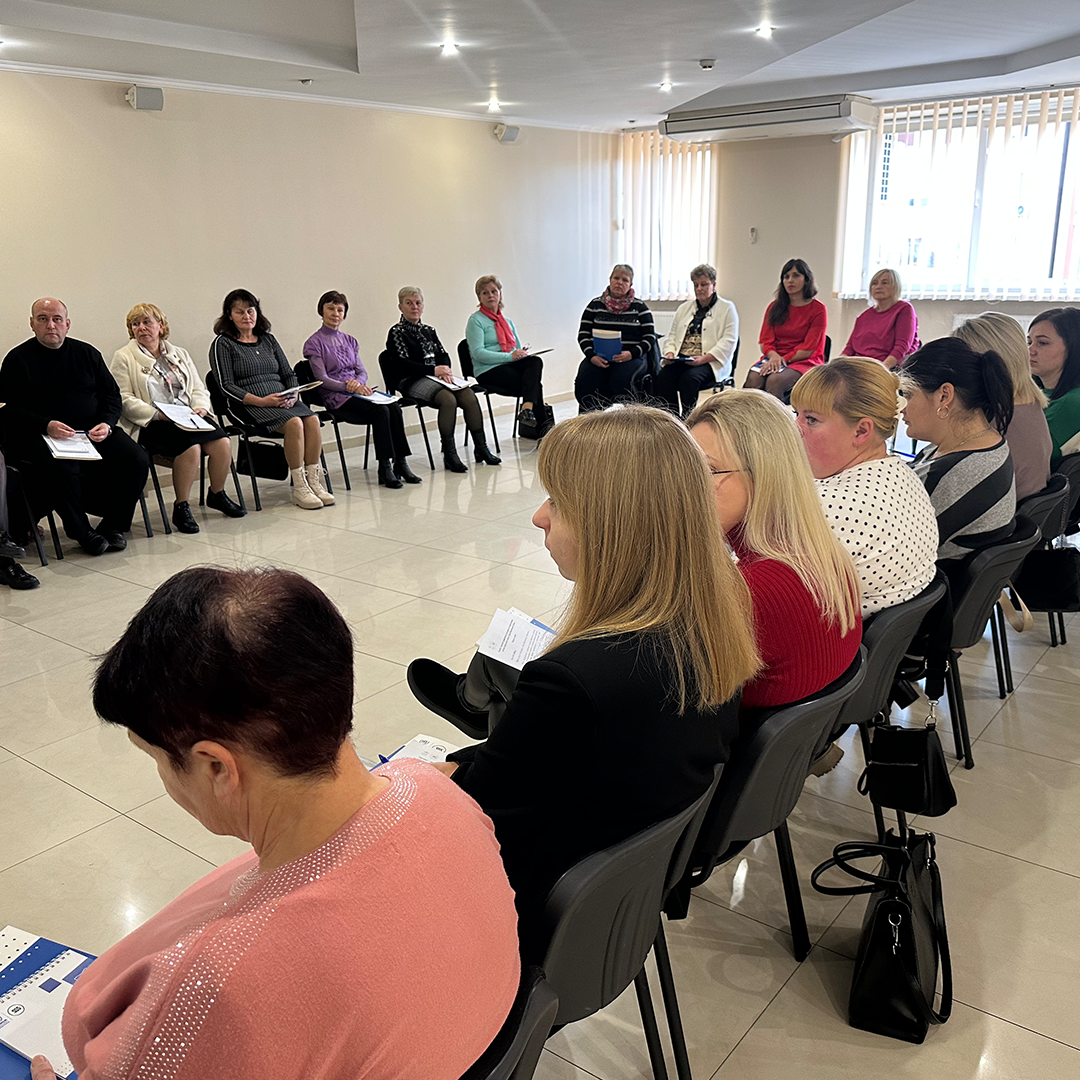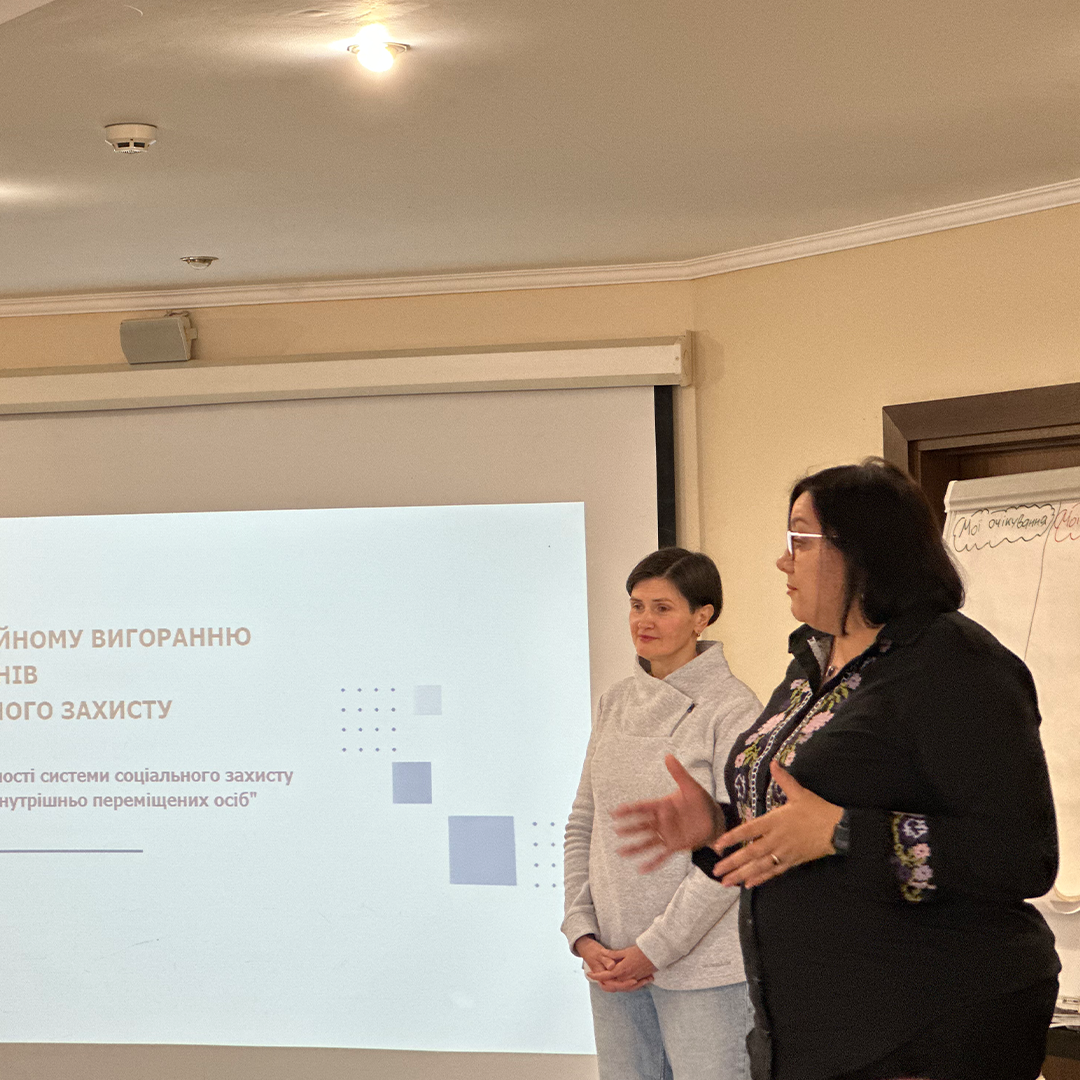
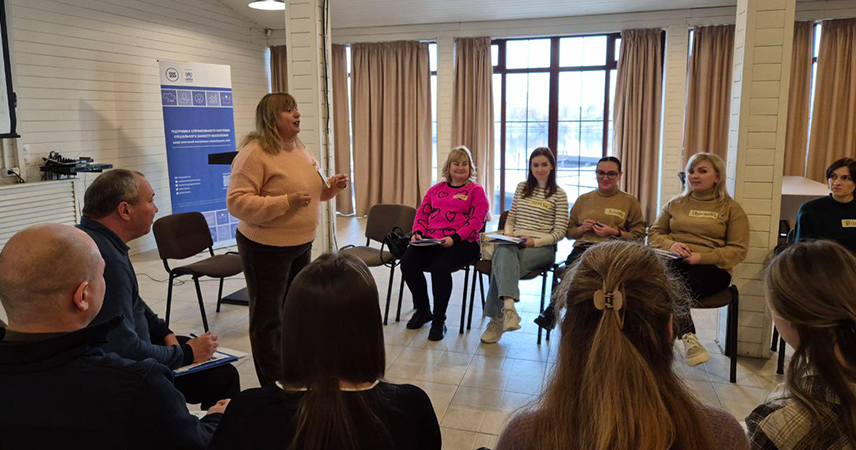
Today, it is crucial to take care of ourselves and maintain our psychological well-being at work, especially as we continue to work under heightened emotional stress. Professionals working in “human-to-human” systems, such as social protection institutions, are particularly at risk for professional burnout.
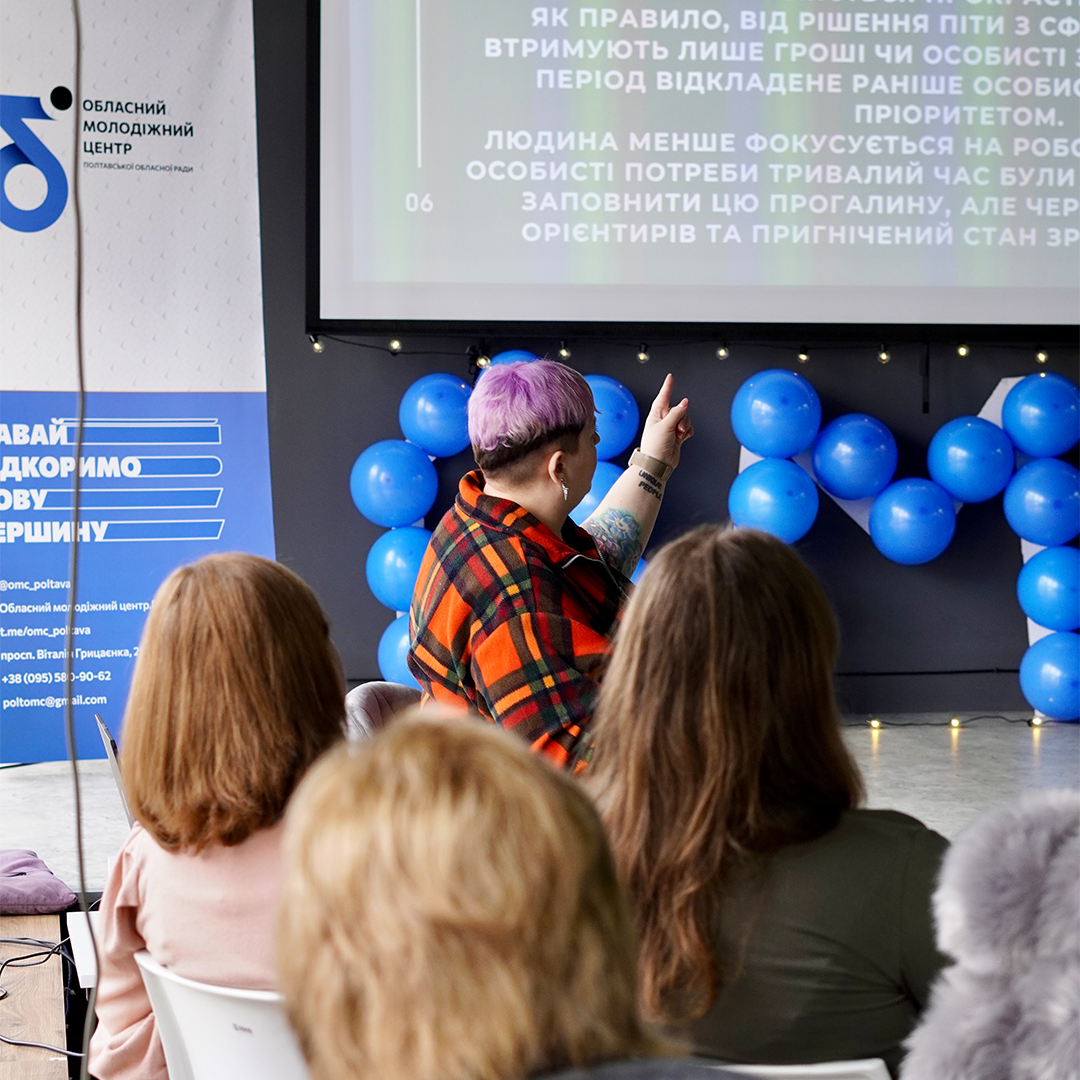
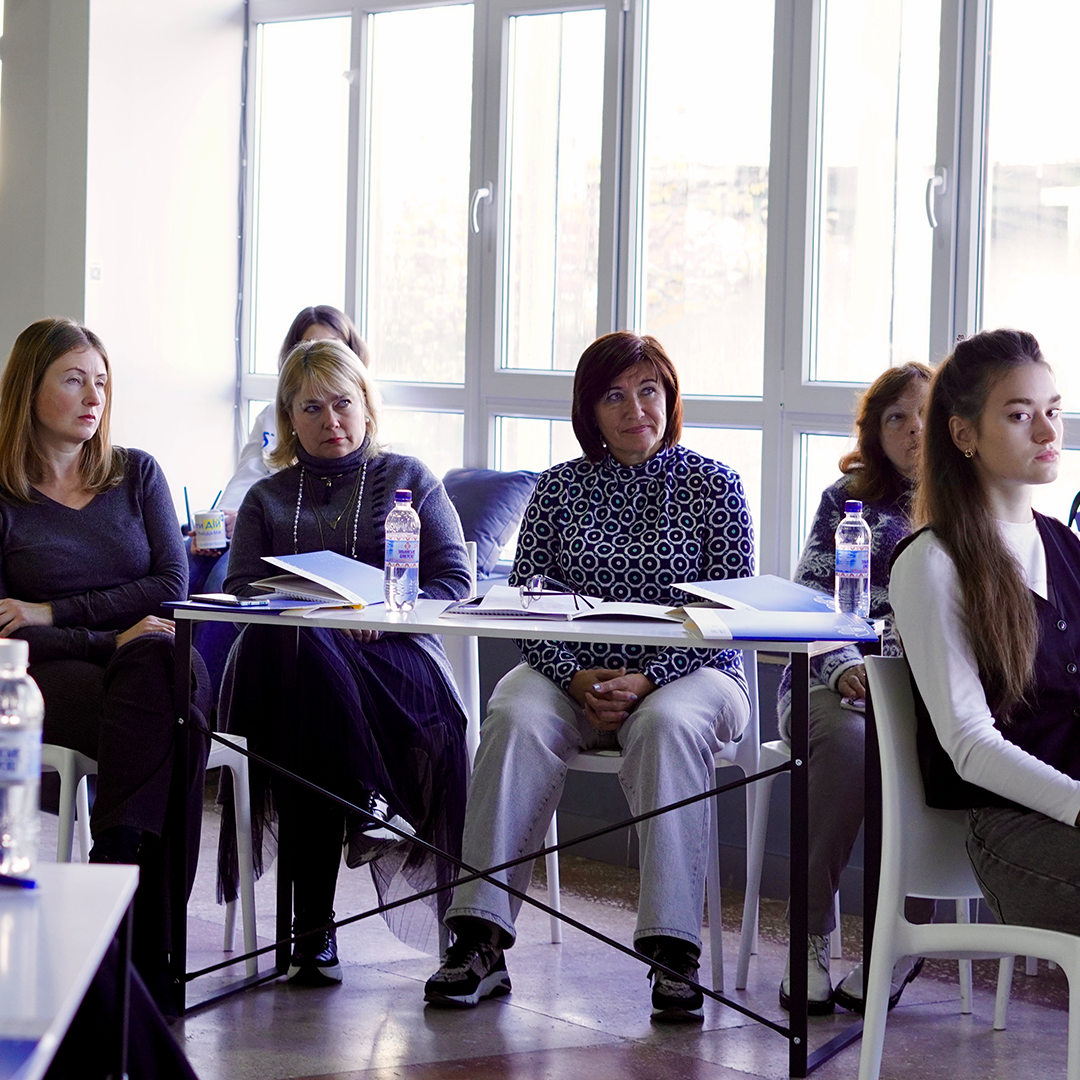
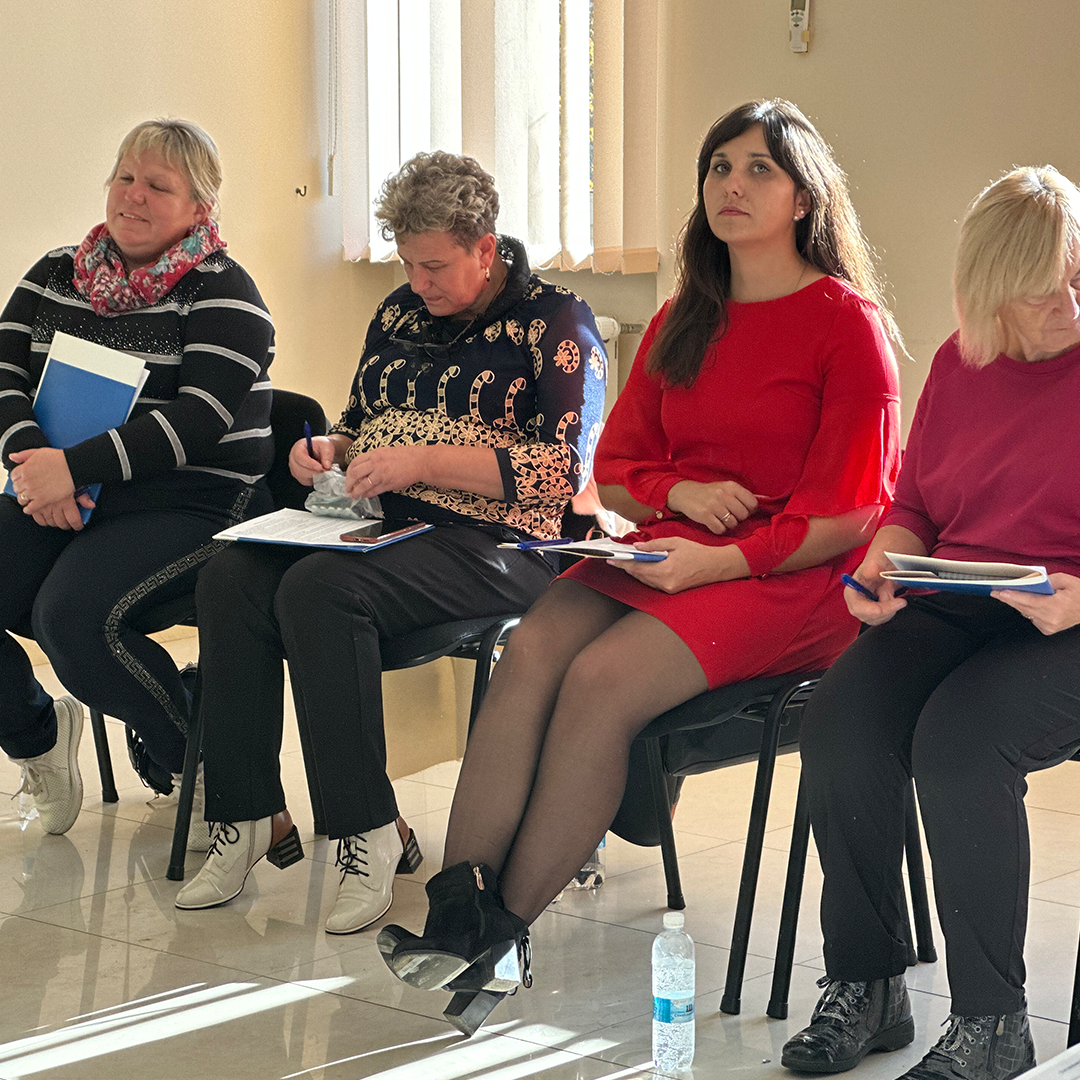
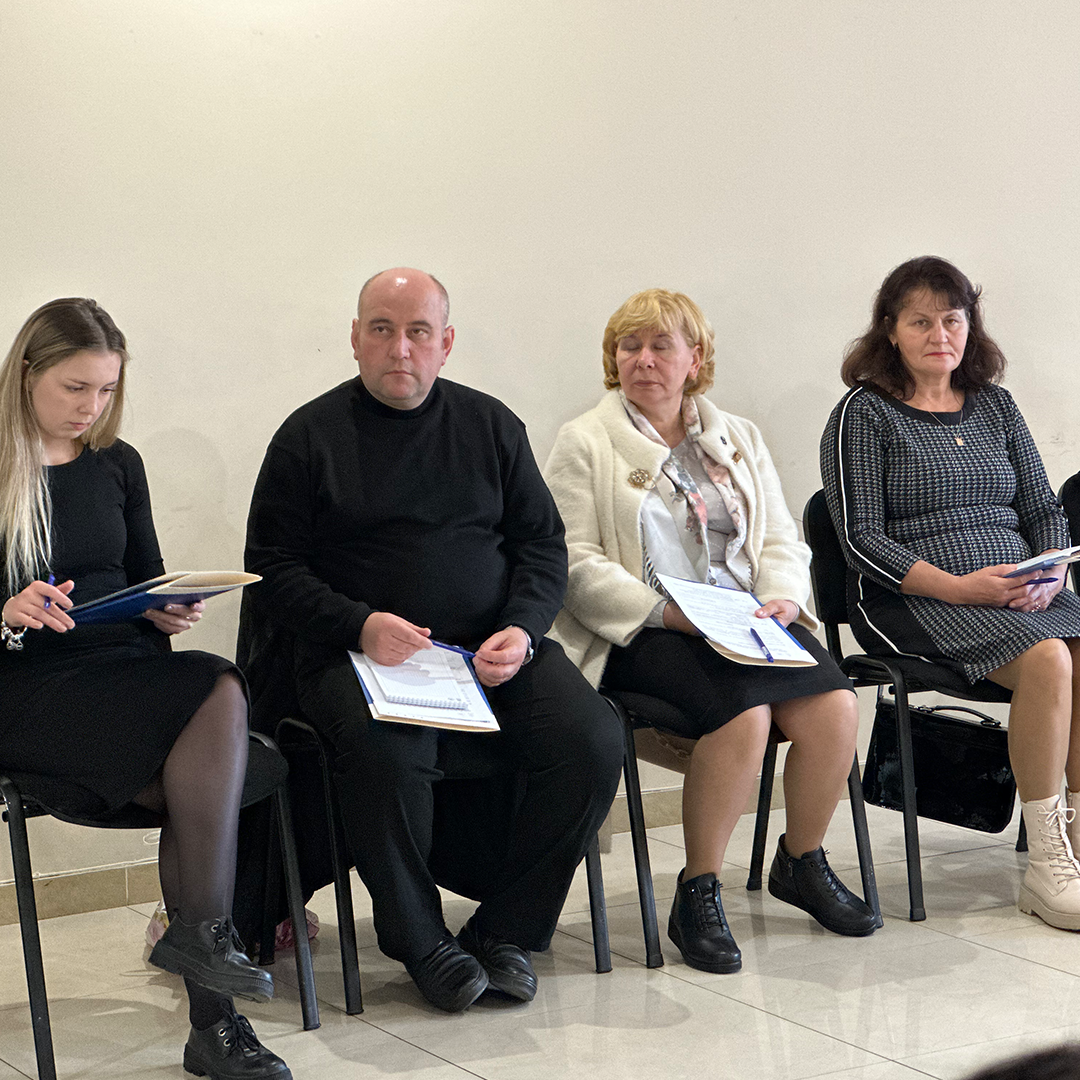
To help prevent burnout, we have conducted four training sessions since the beginning of November in the Dnipro, Rivne, Poltava and Ivano-Frankivsk regions. This is part of a series of educational events that we organize throughout the year for social protection workers.
Check out how the training went in the carousel.
Training objectives:
- to identify the causes and signs of professional burnout;
- to discuss strategies for overcoming burnout;
- to address stress prevention among employees of the social protection system;
- to help participants understand their values and perspectives;
- to develop psychohygiene skills for daily life.
Why is it important to train social protection workers to prevent burnout, especially now? We asked the Project’s regional social specialists about this.
Alina Strilets, Project’s Regional Social Specialist in Dnipro region:
“Social protection workers often experience increased emotional strain, especially now. Such trainings are essential to help prevent professional burnout and take care of mental health.
Training participants learned effective stress management strategies, relaxation exercises, meditation techniques, time management basics, ways to strengthen emotional stability, and practical methods for maintaining emotional resilience. Special attention was given to the importance of social support within the team and fostering a healthy work environment.”
Yuliia Honcharenko, Project’s Regional Social Specialist in Poltava region:
“Social protection workers are among the most vulnerable groups to burnout, particularly during martial law. Every day, they work with families who have lost their homes, income, or close ones, people with disabilities, IDPs, and others in need. The emotional burden they carry, combined with the stressful conditions of war, creates a serious risk of exhaustion, emotional burnout, and reduced effectiveness.
The key topics discussed during the training included: signs of emotional burnout, with a focus on human-centered professions, and an algorithm for preventing burnout The participants asked how to work with toxic people, express anger in a healthy way, choose the right specialist, set personal boundaries, handle crises between employees and recipients.
During martial law, burnout prevention training is not a luxury, but a necessity. Investing in the psychological health of social protection workers helps not only to maintain their ability to work but also ensures the resilience of the social assistance system during times of crisis. This is an important step toward supporting not only the professionals themselves but also the hundreds of thousands of people who depend on their work.”
Social protection workers actively participated in the training, sharing their experiences and challenges. Group discussions enhanced the effectiveness and created an atmosphere of trust and mutual support. The participants emphasized that they would be happy to attend similar training sessions that help relieve mental stress.
We conduct educational events within the framework of the Project “Supporting the Capacity of the Social Protection System to Register Internally Displaced Persons”, funded by the UNHCR Ukraine.