
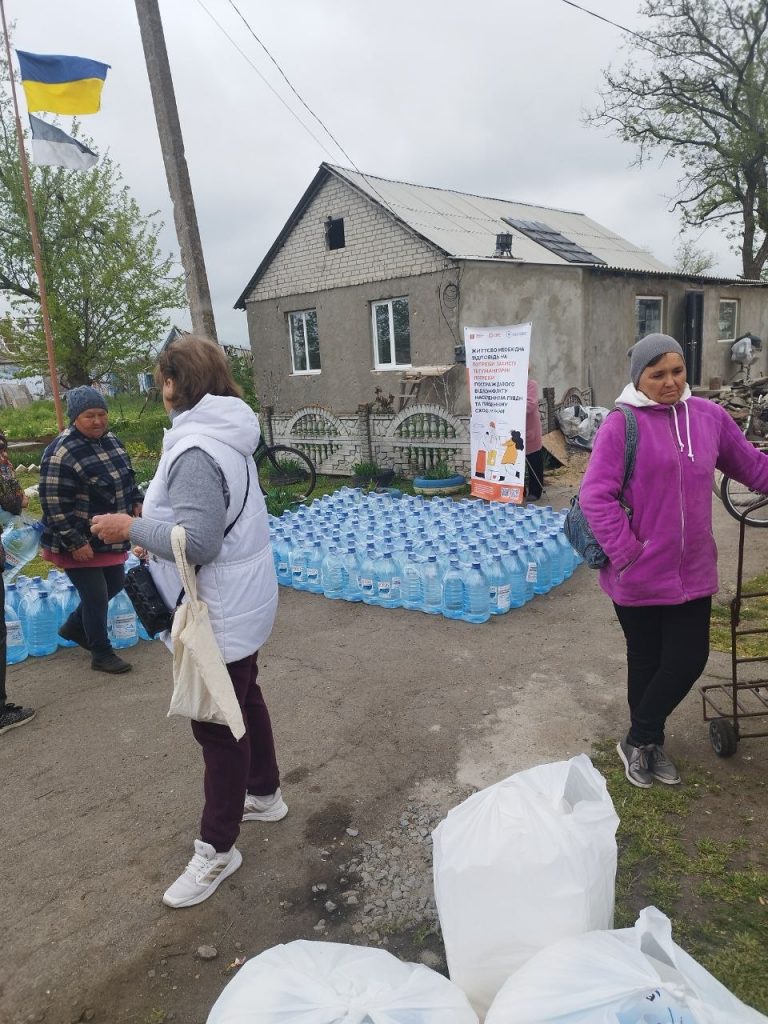
Valentina (name changed for security reasons) from the Zavodska community in Mykolaiv Oblast came with her husband and children to pick up drinking water. For this large family of five, this is truly a significant event, as now, for about a week, they won’t have to worry about where to get water to cook or make tea.
“We’re so happy that your foundation brought us water—and so much of it. We’ve been waiting for it for a long time. My husband and I are going to take the bottles home and put them in the cellar so they’ll stay cold. Now I’ll be able to make borscht for the kids for lunch, and porridge and dried apple compote for dinner, just like they love. We’ve been asking for this for a long time. I have three children; my youngest daughter is five years old. I have to cook a lot. But because of the constant water shortage, it’s very difficult. I count every drop so as not to waste it,” – the woman says.
Water supply problems in the Zavodska community began with the start of the full-scale war. The village where Valentina’s family lives was under occupation for eight months. Only a few houses survived; the rest were almost completely destroyed, as was the water supply system. That’s why water has become truly worth its weight in gold for the community’s residents.
“There’s no drinking water in the village at all, and the water from the well or the tap is completely undrinkable—it’s cloudy, smells bad, and is even salty. You can’t even do laundry properly with this water, let alone bathe in it. It’s even scary to water the plants in the garden. We don’t give it to our poultry. We usually let the water settle in buckets, but that doesn’t help much; while some rust settles out, the salt doesn’t go anywhere. Some neighbors tried drilling wells to get at least some water, but after a few months, even those started to develop sediment and a salty aftertaste,” – the woman shares.
To buy drinking water, Valentina’s family has to drive to the neighboring town of Snigurivka, 25 kilometers away.
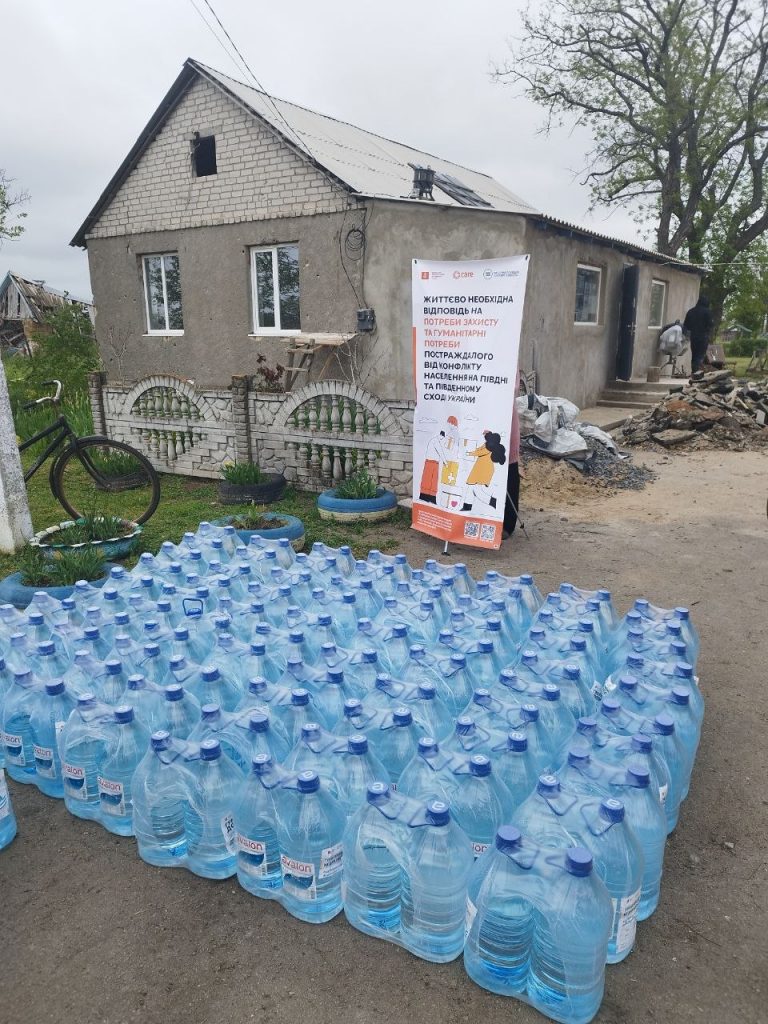
“We take a trailer, fill it with all our empty bottles, and drive there to fill them up. We usually do this once a week. We conserve drinking water as much as possible because we can’t afford to make frequent trips—it’s very expensive. My husband is unemployed and has a disability, and I’m always with the children, so our family budget is, you could say, limited. Thanks to your help, at least for a while we won’t have to worry about where to get water, and we’ll even save a little. This is so important for our family. It’s very hard to be without water; it’s good that you understand this and are helping us,” – says Valentina gratefully.
Unfortunately, the Zavodska community is not the only one facing water supply issues. Due to constant shelling and severe damage to infrastructure, centralized water supply in frontline regions is either completely absent or operates with significant interruptions.
As part of this project, our Charitable Foundation organized 11 water distribution drives in communities across the Zaporizhzhia, Mykolaiv, and Kherson regions. We distributed 9,738 bottles of drinking water, each with a capacity of 6 liters. As a result, 4,869 households received assistance.
The assistance was made possible through the project “Lifesaving Response to Protection Concerns and Humanitarian Needs of Conflict Affected People in the South and South-East of Ukraine” is implemented by the Charity Foundation “Stabilization Support Services” together with the international humanitarian organization CARE, with financial support from the Danish Ministry of Foreign Affairs.