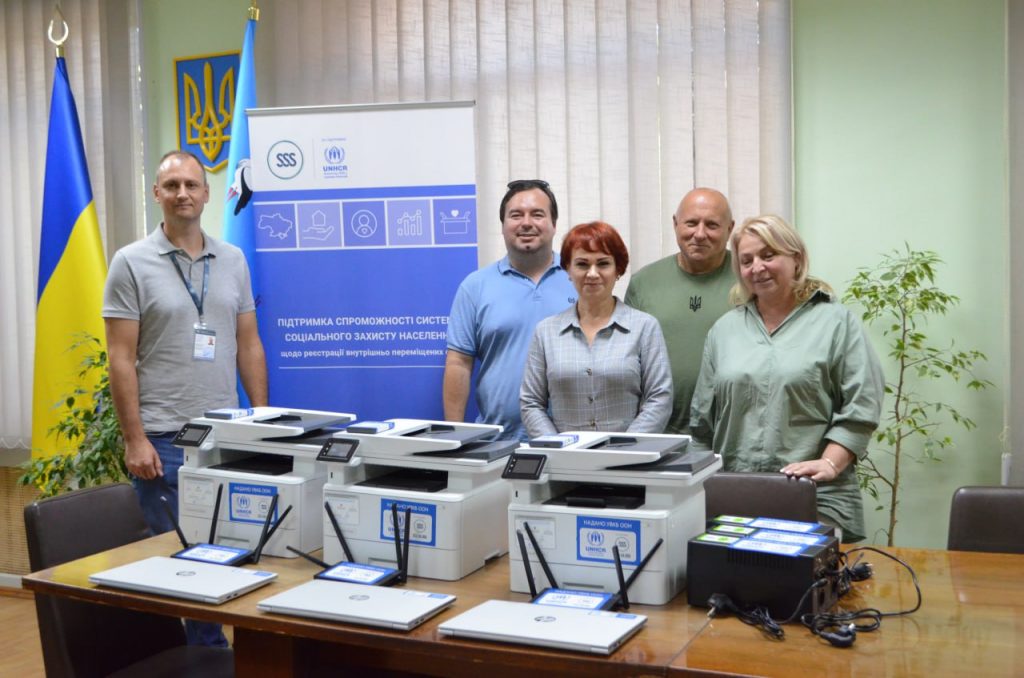
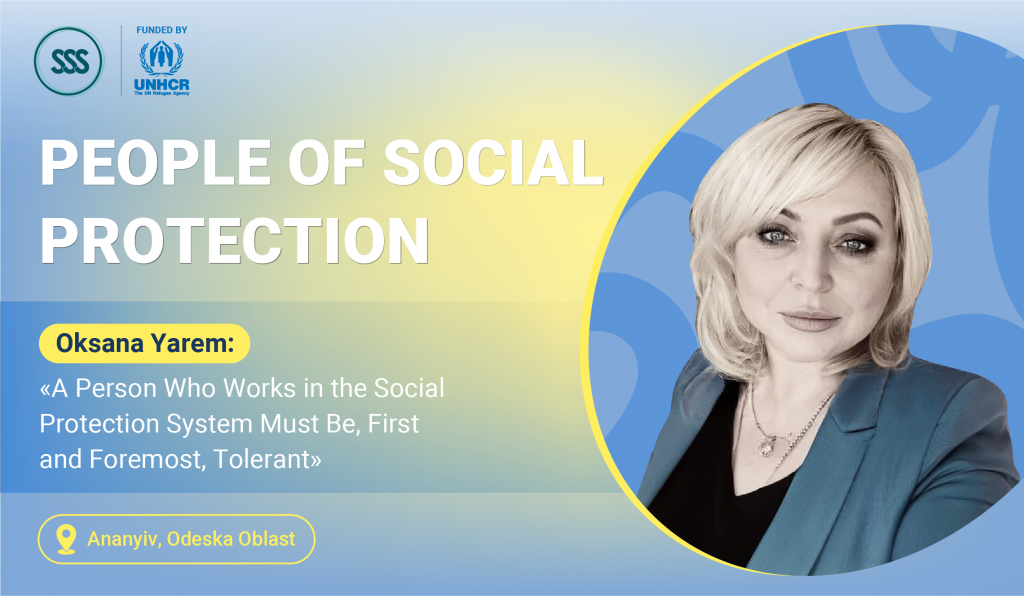
The Ananyivska community faced a significant challenge at the onset of Russia’s full-scale invasion of Ukraine, accommodating nearly 2,000 internally displaced persons. Today, the community steadfastly supports each individual seeking refuge within its borders, working in tandem with the local IDP Council. We had a conversation with Oksana Yarem, who leads the Department of Health and Social Policy of the Ananyevo City Council. She shared insights about her team’s efforts during the war, the ongoing needs of IDPs, and their department’s future objectives for 2024, which include enhancing healthcare services and establishing a cultural center for IDPs.
Oksana, tell us about your community. How many IDPs has it hosted since February last year?
Ananiev, situated in the northern part of the Odesa Oblast in the Podilskyi Raion, has a population nearing 24,000, predominantly elderly, as younger residents often move away. With the beginning of the military aggression, we welcomed 1,971 individuals, mainly from the Mykolaivska, Kyivska, and Zaporizka oblasts, almost from all the regions that saw hostilities. By mid-2023, this number had decreased as some were able to return home. Currently, our community is home to 1,371 IDPs, mostly elderly from occupied oblasts, who find themselves in a particularly challenging situation and in need of considerable social support from our community.
What are the key tasks of your department? How long have you been working there? What kind of workload do you currently experience as a social worker?
I’ve been leading the Department of Health and Social Policy since January 2021, shortly after the Ananyevo City Territorial Community was formed. My previous role was as the head of the education department, a position I held for nearly 12 years, contributing to over two decades of civil service.
Out structural subdivisions include primary healthcare, ambulance services, and the Ananyevo City Policlinic Hospital, which provides effective medical care to residents. Additionally, we handle social protection, encompassing a broad spectrum of social services.
Despite our small team, comprising a head and two chief specialists, our responsibilities are extensive and varied. We face a continual influx of information and tasks, a workload that has intensified since the hostilities began, as we’ve been actively involved in registering, accommodating, and providing social services to IDPs.
What has been the biggest challenge and success for your department since the beginning of the full-scale invasion?
The biggest challenge was accommodating almost 1,000 people in just two weeks. Many in our community have family connections in Odesa and Kyiv, allowing them to stay with relatives. However, we still had about 600 individuals needing accommodation, even without sufficient space available. We collaborated with the Odesa Coordination Center. People who came to Odesa called my phone number directly and asked if any places were available. Back then, everyone was constantly on their phones, looking for places to stay, clothes, and food because, during the initial days, there was no humanitarian aid. For a month, we worked 24/7 because people were arriving at night as well.
In retrospect, it’s remarkable that we managed to do it. We feared having to turn people away, but that never happened. Providing shelter during those critical times meant people could stay for a month before deciding their next steps, whether to remain or move on.
What are the main needs of IDPs in the Ananyivska community?
The foremost necessity for IDPs is access to fuel, such as firewood and coal, because it’s winter. Our close collaboration with them and the IDP Council helps us address this need efficiently. We maintain active communication through messenger groups, where we disseminate information about humanitarian aid and events for IDPs and gather details about their needs. Besides fuel, there’s a pressing need for winter clothing, food, and hygiene products. We compile a list of these needs and submit it every Monday to the Podilskyi Raion State Administration’s Department of Social Protection of the Population.
I recently reviewed a sociological study conducted by the CO CF SSS, which assessed the accessibility and quality of social and administrative services in our community. The study highlighted our strengths and areas for improvement, including our accomplishments and aspects needing further attention. One critical focus is supporting IDP families with many children, ensuring they have adequate winter clothing and can live through the winter comfortably and warmly.
To what extent has the modern equipment that we, together with UNHCR, provided you with facilitated your work? What processes have you managed to optimize?
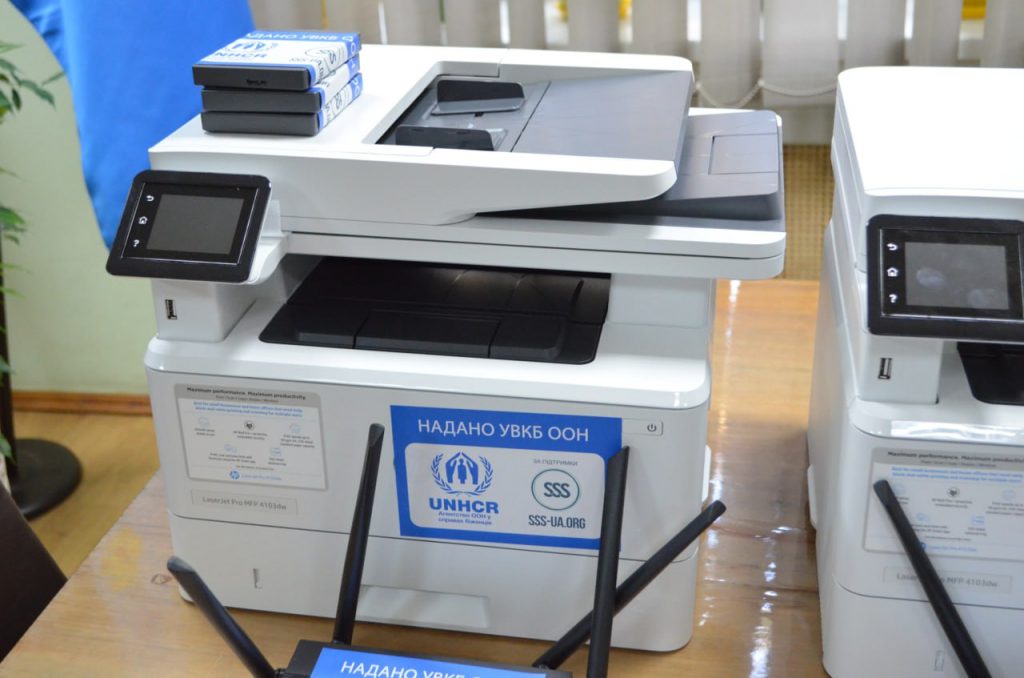
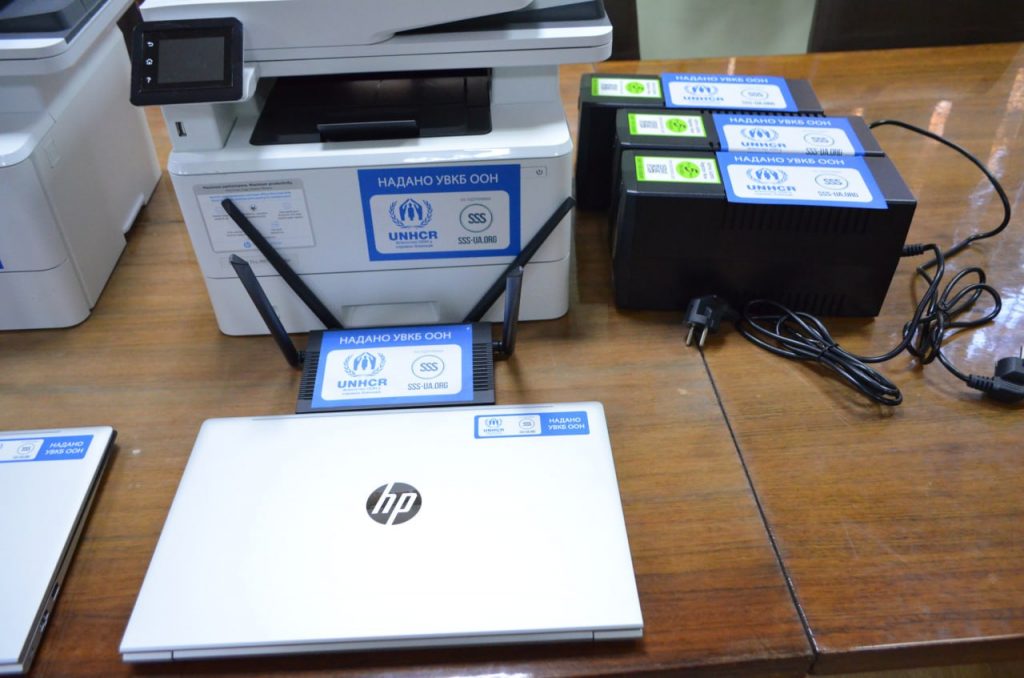
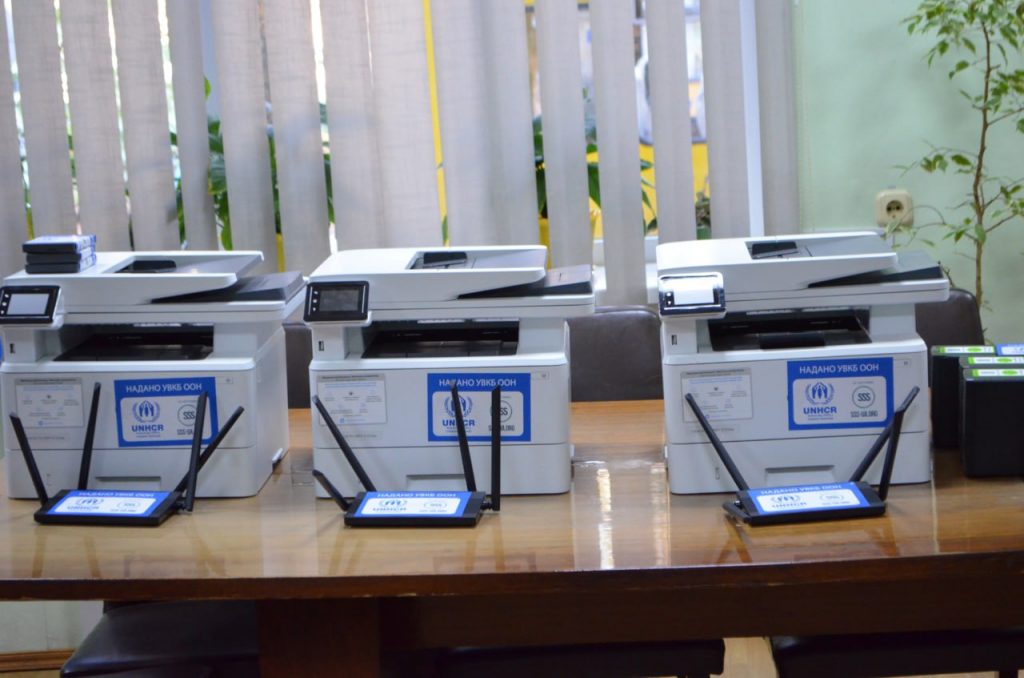
The equipment from UNHCR has significantly sped up our processes. We managed to optimize the work that is extremely important for us — cooperation with IDPs. All personal files are now systematically arranged, making information and contact details of each IDP readily accessible. This has improved our ability to monitor the employment of IDPs in our community.
The new equipment has also streamlined our work with regulatory frameworks. The faster laptops allow us to receive and process information quickly. Printing, scanning, and document management have become much more efficient.
We greatly appreciate this support and hope to continue our cooperation with organizations like UNHCR, as it’s crucial for working with and developing a tolerant attitude towards IDPs. They expect us to take actions that will make them feel like residents of our community, not displaced persons.
Aside from new equipment, what else could improve the work of your department?
As for the department, we need furniture for the compact placement of documents. We also want to create a small hub for IDPs as a cultural center where they could meet, socialize, surf the Internet, etc. So far, we have been holding such meetings in the library, but we have already considered a dedicated space. So we would be happy if UNHCR could provide us with furniture and equipment to set up this location.
What are the main qualities of professionals working in the field of social protection in the human-to-human system?
A person who works in the social protection system must be, first and foremost, tolerant. Yes, you have to be a highly qualified professional, knowledgeable, and quick. But when a person who needs something during the war comes to your office, you must, first and foremost, be a person to them: accept them and make them feel welcome. In the first 10-20 seconds, you must create conditions that allow them to feel safe, calm down, and tell you what they want. There are people who need this approach. The IDPs who came to us were like that.
Generally speaking, a social worker should be educated, have work experience, know the law well, be familiar with modern life, speak Ukrainian, be able to communicate with people, behave tolerantly, be a sociable, polite, courteous person, and to some extent a psychologist.
Share your department’s plans for 2024. What areas would you like to develop besides creating a hub for IDPs?
First of all, we want to improve the work of medical institutions in the community, in particular, the Ananievo Polyclinic City Hospital. The country is currently implementing a healthcare reform that provides for the creation of cluster hospitals. At the same time, our community does not have the population to qualify for this kind of medical facility. As a result, we may lose our hospital as it may be closed. Therefore, we are doing a lot of work to improve the quality of medical services. Our entire budget will be spent on purchasing the necessary equipment and improving the hospital’s operations.
We will also work on the issues of IDPs. We want to improve their lives, especially those who have been left homeless, as we have several such people. Perhaps we will allocate rooms in dormitories. We are also considering a social protection program to provide housing, at least in rural areas, so that people can have their own homes.
This publication was prepared by the Charity Foundation “Stabilization Support Services” with funding from the UN Refugee Agency (UNHCR). The contents of this publication are the sole responsibility of the CO CF SSS and can in no way be taken to reflect the views of the Agency.