
Yuliya Suchok is a project manager at the Charity Foundation “Stabilization Support Services”. She and her team are currently working on the Provision of Lifesaving Winterization, NFI and Shelter Support to Conflict Affected Populations in Ukraine project. We talked to Yuliya about the main tasks of the project.
– Yuliya, could you please tell us about the project you are currently working on with the team?
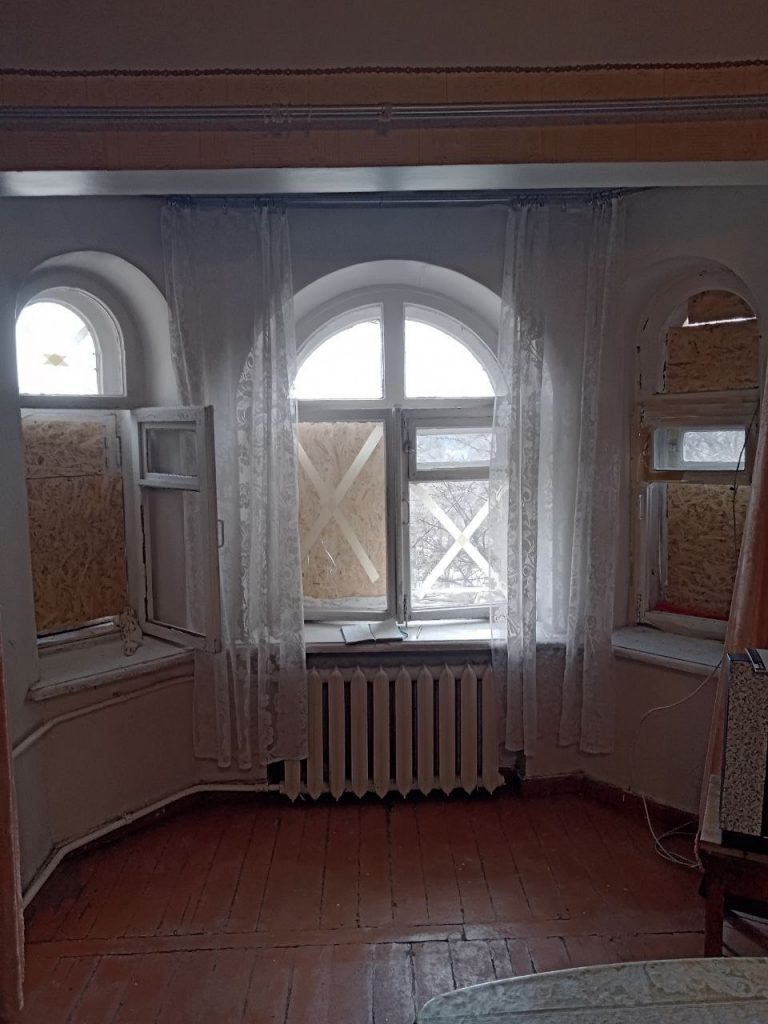
This year, the CF SSS will carry out 10 repairs in settlements subject to frequent and intense shelling in Khersonska and Zaporizka oblasts. In particular, in the territorial centers that provide social services to people in difficult life circumstances, collective centers, and critical infrastructure facilities. The goal is to address the institutions’ urgent needs that complicate their functioning and provide services to the community. First of all, it is the replacement of windows, re-roofing, repair of sanitary areas, and installation of boilers in places where people reside permanently. It also means re-equipping the premises to make them accessible to everyone.
In addition, we will distribute 550 non-food kits. In total, we plan to provide assistance to more than 5,000 people.
– How does the preparation for project implementation begin? What approaches, mechanisms, and tools do you use in your work?
The team of Stabilization Support Services aims not only to provide targeted humanitarian assistance to the affected but also to identify the urgent needs of the communities in general. In order to help the target communities, the Foundation’s team first conducts a comprehensive assessment of the needs of both the affected population and government officials. We try to follow the “Nothing for us without us” rule. First, we will determine which institutions, according to the community, require repair. We commence the repairs only after we receive complete and reliable information from those who live in the community permanently and those who were forced to move there because of Russian aggression. I think these will be socially important institutions for the largest number of people in the community.
– What has changed in project implementation since the full-scale invasion?
In the third year of the full-scale war, it is clear that we need a holistic approach to helping the population. Rapid response means providing assistance here and now to meet basic human needs. However, working on solving more long-term problems, such as recovery, is equally important. We are now working in communities home to locals and IDPs, who are adapting and building new ways of interaction and coexistence. A holistic approach makes it possible to reduce social tensions that arise when the government and benefactors focus their attention only on specific categories of the population.
The project is being implemented in the settlements of Khersonska and Zaporizka oblasts. The Charity Foundation “Stabilization Support Services” is implementing it in cooperation with the international humanitarian organization “CARE” with the support of NACHBAR IN NOT.