
The Kalush City Council reported that internally displaced persons (IDPs) residing in the Kaluska community can now submit an application to register for temporary housing. The initiative was launched by the Council for Internally Displaced Persons under the Kalush City Council.
IDP Councils are becoming an essential component of local democracy, influencing strategic decision-making within communities. Every major achievement consists of a series of small steps. We are launching a series of publications to showcase the results achieved by IDP Councils across the country. Our goal is to make their work visible and inspire others to implement changes in their communities.
Housing is one of the key challenges for displaced persons in Ukraine, including in Kalush. After being forcibly displaced, many people lack the means to rent housing independently and, therefore, require temporary shelter. This is confirmed by surveys regularly conducted by the IDP Council at the Kalush City Council.
“In Kalush, most displaced persons come from Donetska, Luhanska, Khersonska, Kharkivska, and Sumska oblasts. Many have lost their homes due to occupation, destruction, or damage. During meetings and in quarterly surveys, IDPs consistently emphasize the urgent need for temporary housing. Recognizing the importance of this issue, we prepared an appeal to the Kalush City Council, requesting the approval of a procedure for establishing a housing stock for temporary accommodation and maintaining a registry of citizens in need,” explains Valeriia Prudnikova, head of the IDP Council at the Kalush City Council.
From Idea to Decision
The IDP Council was assisted in preparing the appeal to the city council by the Charitable Organization “Stabilization Support Services” (hereafter, CO SSS). Within the framework of the Support to the Capacity of Government Institutions and Local Communities To Strengthen Social Protection Systems in Ukraine project, implemented with the support of UNHCR, the UN Refugee Agency in Ukraine, CO SSS specialists conduct training sessions for IDP Councils, study local targeted programs, and provide expert consultations on drafting appeals and implementing policy changes at the local level.
“Initially, we conducted training sessions for the IDP Council and representatives of the Kalush City Council on forming a housing stock for temporary accommodation and maintaining a registry of those in need. We emphasized that even in the absence of available housing, it is crucial to maintain a registry of IDPs requiring temporary accommodation. This allows for an accurate assessment of the community’s needs. Following the training, we helped the IDP Council draft a letter to the Kalush City Council requesting approval of the necessary procedure and organized a series of thematic meetings with city council employees. Additionally, we analyzed existing housing programs and provided recommendations for adopting regulations on temporary housing for IDPs,” notes Dmytro Savuliak, regional legal expert for the project in Ivano-Frankivska Oblast.
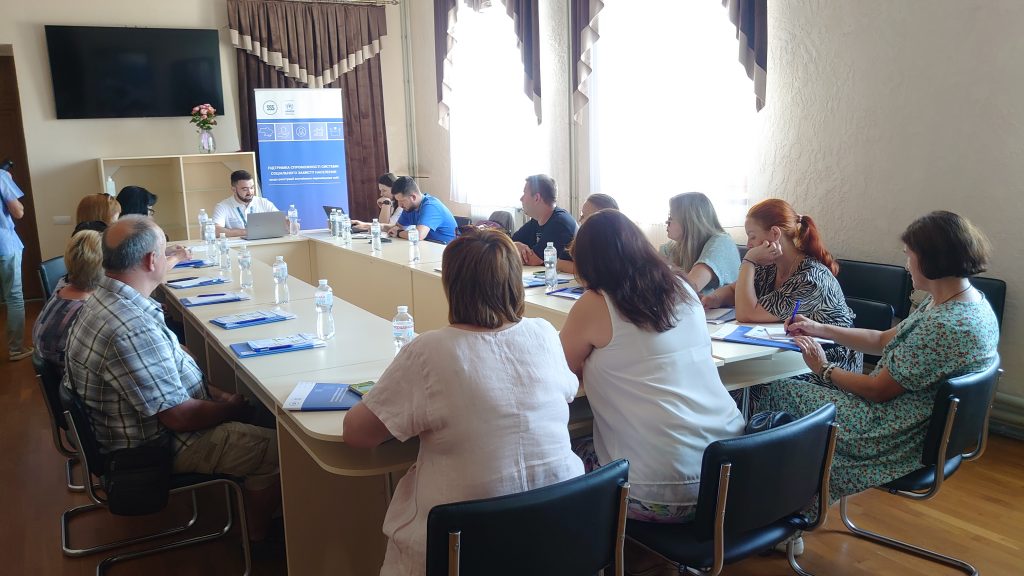
The local authorities in Kalush supported the IDP Council’s initiative and, at the end of 2024, approved the Procedure for Forming a Housing Fund in the Kalush City Territorial Community for Temporary Accommodation, Registration, and Provision of Such Housing to Internally Displaced Persons. A revised version of the decision was adopted in January 2025. Now, IDPs residing in the community can apply and be registered.
However, this is only the first step. Moving forward, the local authorities, recognizing the need for temporary housing, may seek grant funding to address this issue.
What Does This Initiative Offer?
Svitlana Shevchenko, an internally displaced person from Donetska Oblast, highlighted the importance of such local-level decisions.
She and her two children have had to flee their home twice. In 2014, they moved from Svitlodarsk to Kharkiv. Later, after the active fighting subsided, they returned to their hometown. With the start of the full-scale invasion, the family was forced to flee again — this time to Kalush. Svitlodarsk is now occupied, and Svitlana does not know when she will be able to return home.
Svitlana is a member of the IDP Council under the Kalush City Council. She was among the first to learn about the registration system and is preparing to apply.
“Since April 2022, we lived in a kindergarten. Later, we moved to a shelter for IDPs. The premises were provided by the local authorities, while repairs and furniture were funded by donors. The conditions here are comfortable, but of course, we would like to have our own housing. Now, I plan to register. This gives me hope that, over time, the community will have apartments available for temporary accommodation of displaced persons,” says Svitlana.
Some displaced persons have already taken advantage of the opportunity and registered as citizens in need of temporary housing. Tetiana Furman submitted the necessary documents in early March.
Tetiana and her son moved to Kalush in June 2022 from the town of Novyi Buh in Mykolaivska Oblast. Initially, they planned to return home soon, but they have now been living in Ivano-Frankivska Oblast for over two years. Due to the constant threat of shelling, Tetiana decided to stay in Kalush.
“Renting a place is very expensive,” Tetiana admits. “It’s even harder to find accommodation if you have pets. And we have two cats. Right now, we’re renting. But as a single mother raising a child on my own, it’s really difficult. So when I found out that I could apply and register, I decided to take this opportunity. I hope that in the future, Kalush will establish a temporary housing stock.”
The launch of the IDP housing registry is the first, yet critically important, step toward implementing systemic solutions to housing issues. Thanks to the collaboration between the IDP Council and local authorities and the support of the CO SSS, it was possible not only to document the need for housing but also to lay the groundwork for future housing initiatives.
This publication was made with the support of UNHCR, the UN Refugee Agency in Ukraine. The content of the publication is the sole responsibility of the Charitable Organization “Charity Foundation “Stabilization Support Services” and does not reflect the views of UNHCR.