
In 2025, the Charitable Organization “Charity Foundation ‘Stabilization Support Services,'” with the support of UNHCR, the UN Refugee Agency in Ukraine, continued to implement the Support to the Capacity of Government Institutions and Local Communities To Strengthen Social Protection Systems in Ukraine project under a new name: Support to the Capacity of Government Institutions and Local Hromadas to Strengthen Social Protection Systems in Ukraine.
Key project goal: to work with hromadas to overcome the consequences of the demographic crisis caused by internal displacement and to develop long-term strategies for strengthening the social protection system across the country.
Implementation period: January – December 2025.
Geography: 23 oblasts (Vinnytska, Volynska, Dnipropetrovska, Donetska, Zhytomyrska, Zakarpatska, Zaporizka, Ivano-Frankivska, Kirovohradska, Kyivska, Lvivska, Mykolaivska, Odeska, Poltavska, Rivnenska, Sumska, Ternopilska, Kharkivska, Khersonska, Khmelnytska, Chernivetska, Cherkaska, Chernihivska).
Team: approximately 160 people worked on the project across 23 oblasts: regional coordinators, regional lawyers, regional social specialists, regional specialists, and the central office team (Kyiv).
PRIORITY OBJECTIVES
- Strengthen the capacity of institutions operating in the social protection sector by providing institutional, technical, and consultative-methodological support;
- Assist those affected by the war, specifically by providing free legal consultations and information support;
- Strengthen and support the capacity of IDP Councils that represent the rights and interests of displaced persons at the local level;
- Support hromadas in updating social profiles and implementing development plans for the social protection system;
- Advocate for laws and policies beneficial to IDPs and others affected by the war;
- Strengthen the organizational capacity of the Ombudsman’s Office.
KEY RESULTS
SUPPORT FOR SOCIAL PROTECTION INSTITUTIONS
Throughout the year, we conducted 142 seminars and training sessions for specialists from social protection institutions, covering updates to social protection legislation, crisis counseling, case management, and preventing professional burnout. 4,033 employees of the social protection system improved their qualifications and strengthened their professional skills. This contributed to improving the quality of social services in the project’s target hromadas.
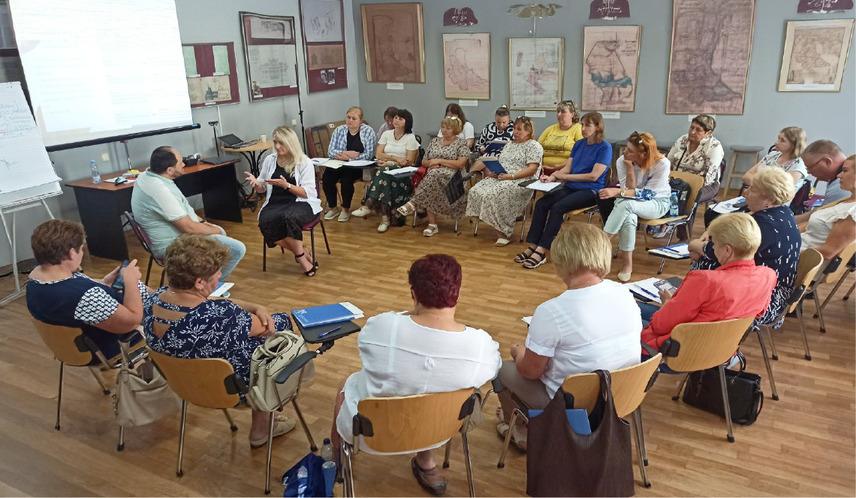
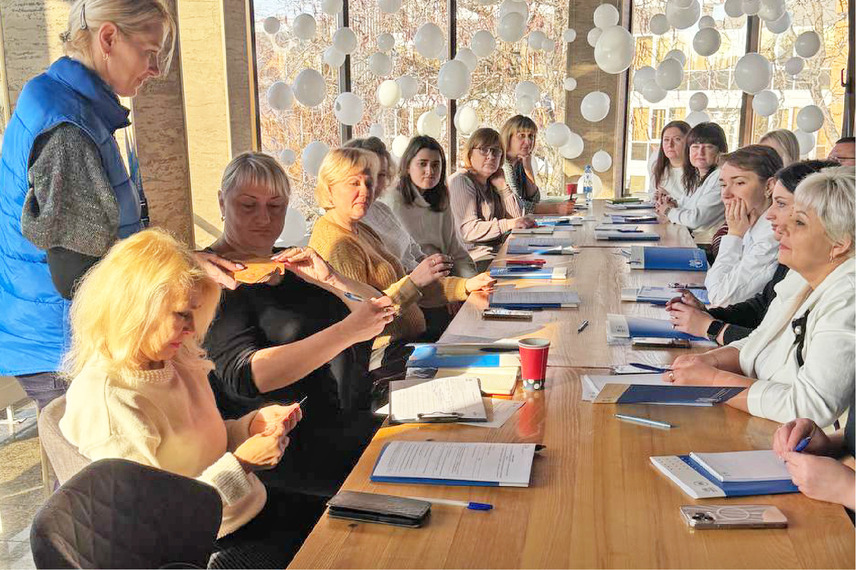
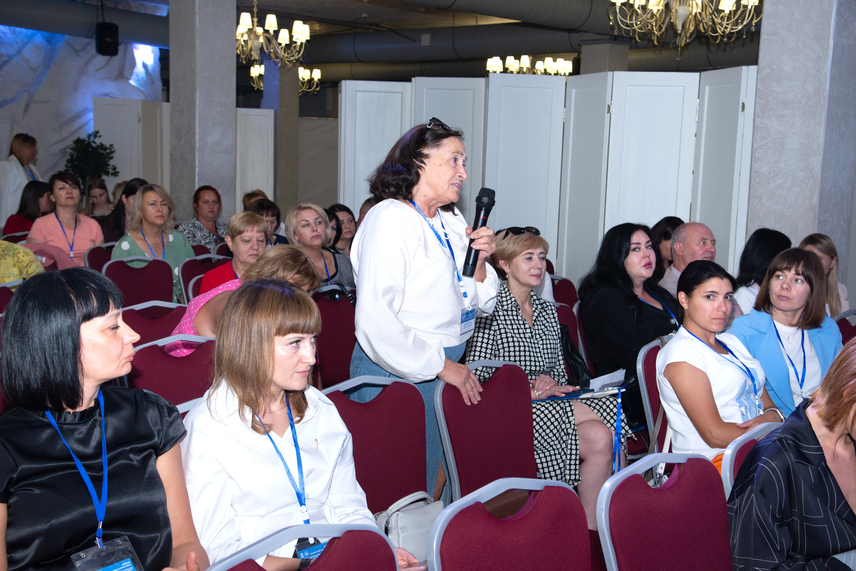
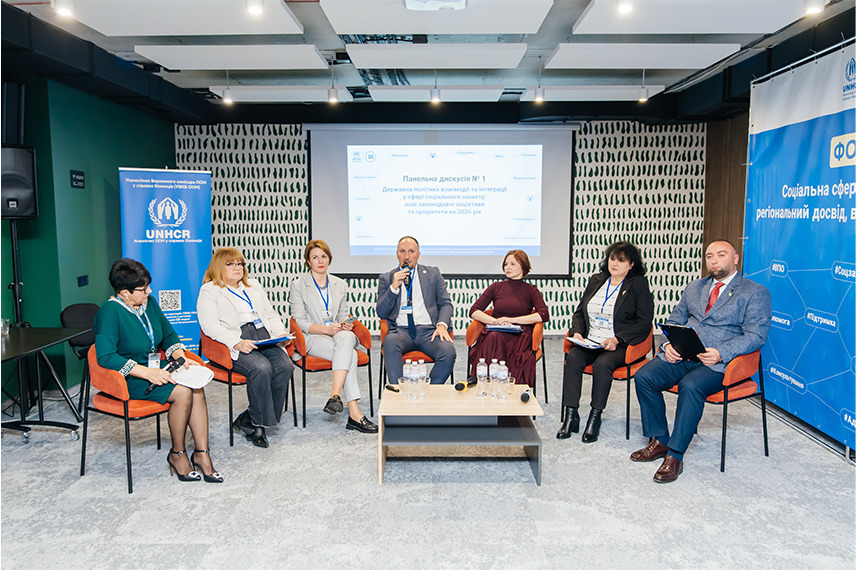
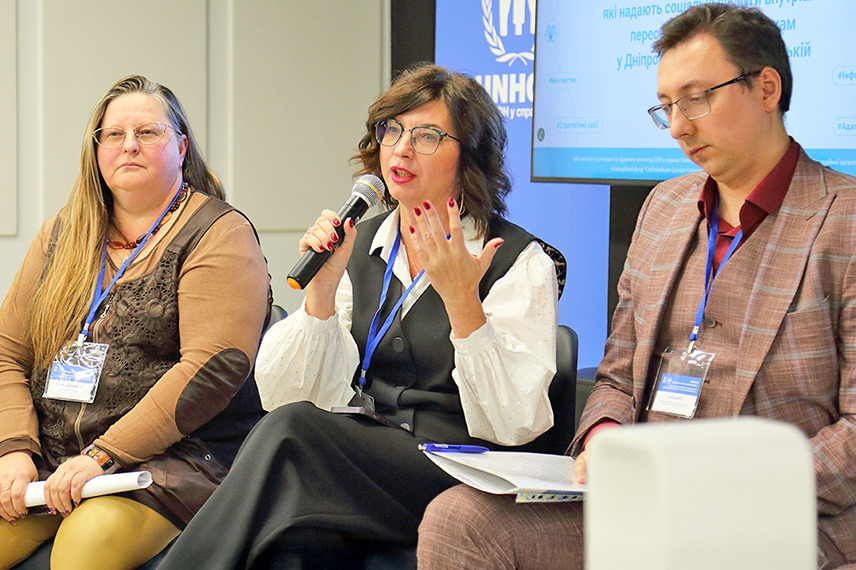
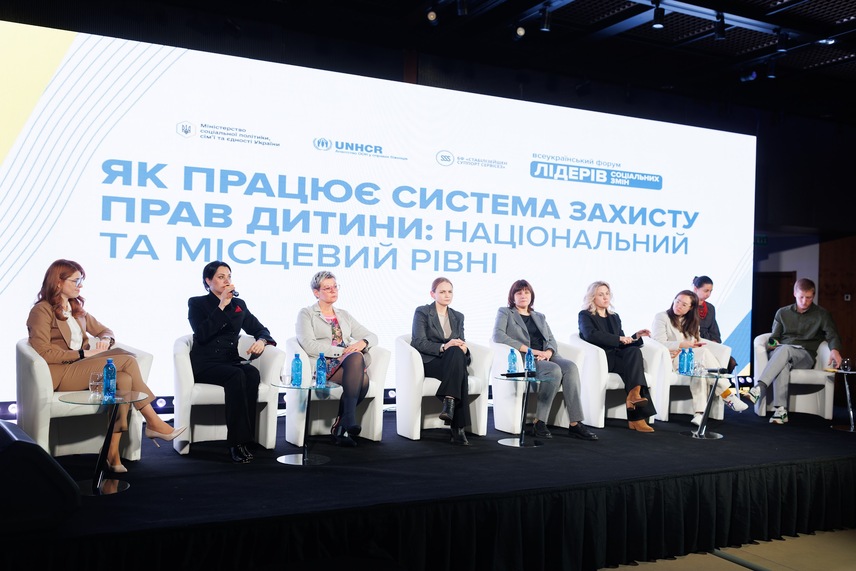
Within the project, 9 forums were held for representatives of the social sphere:
- 7 regional and interregional “The Social Sphere in Wartime” forums (Khmelnytskyi, Ivano-Frankivsk, Lutsk, Vinnytsia, Dnipro, Poltava, Lviv);
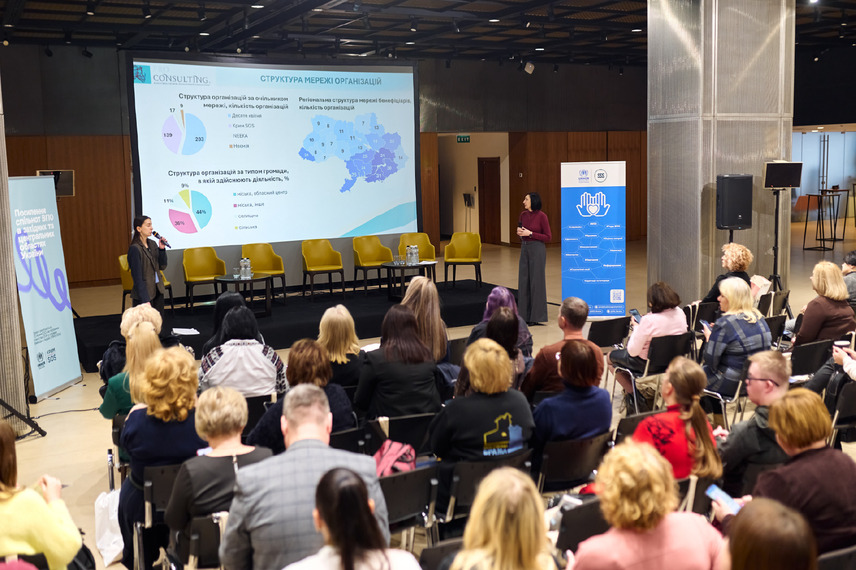
- National Forum of Social Service Providers “Caring Communities”* (Kyiv);
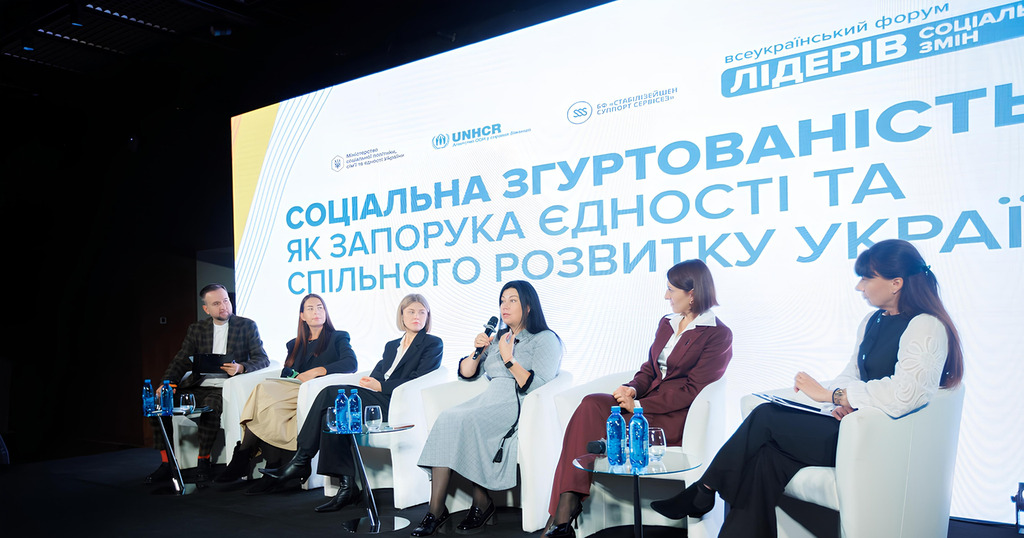
- All-Ukrainian Forum of Social Change Leaders (Kyiv).
*The event was held by the CrimeaSOS civil society organization together with the Charity Foundation “Stabilization Support Services” за підтримки UNHCR, the UN Refugee Agency in Ukraine.
Representatives of the social sector (a total of 759 people), the civil society sector, government, and local authorities participated in discussions, workshops, and other interaction formats to exchange experiences, identify systemic problems, and develop joint solutions to improve social services under martial law.
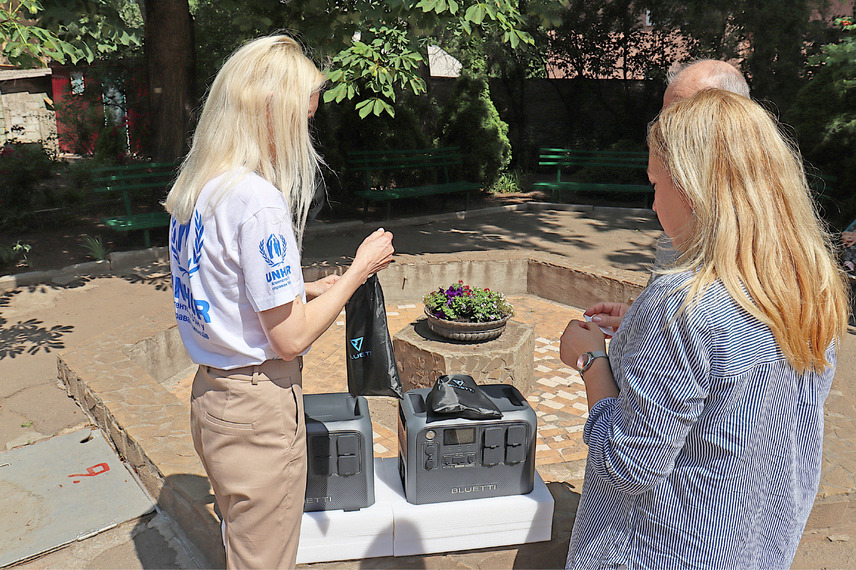
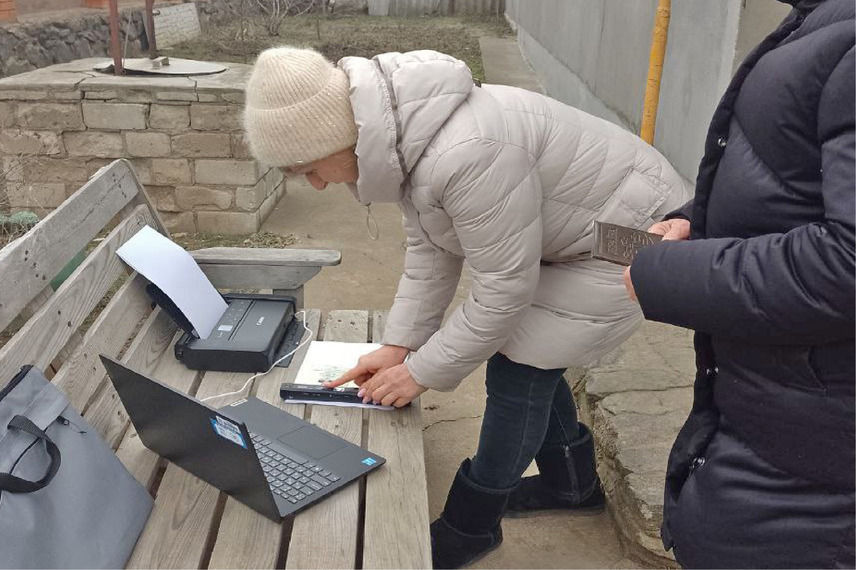
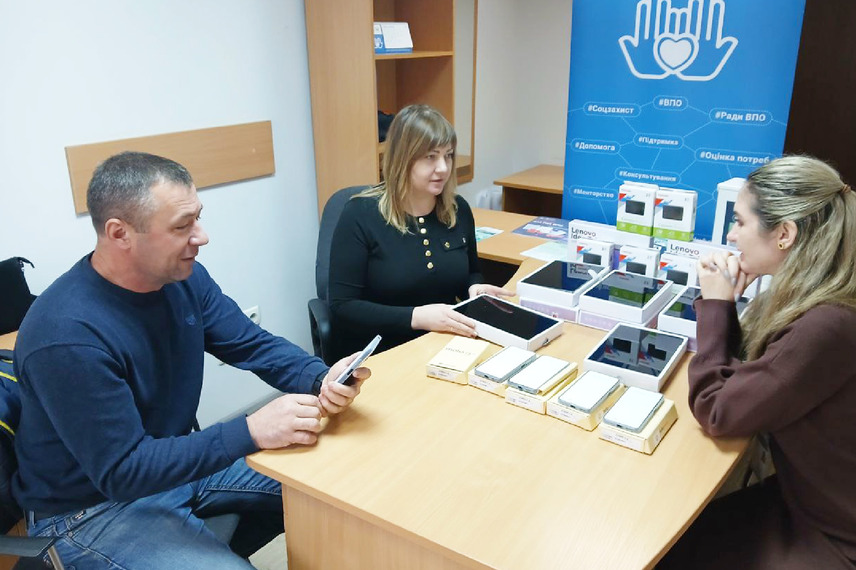
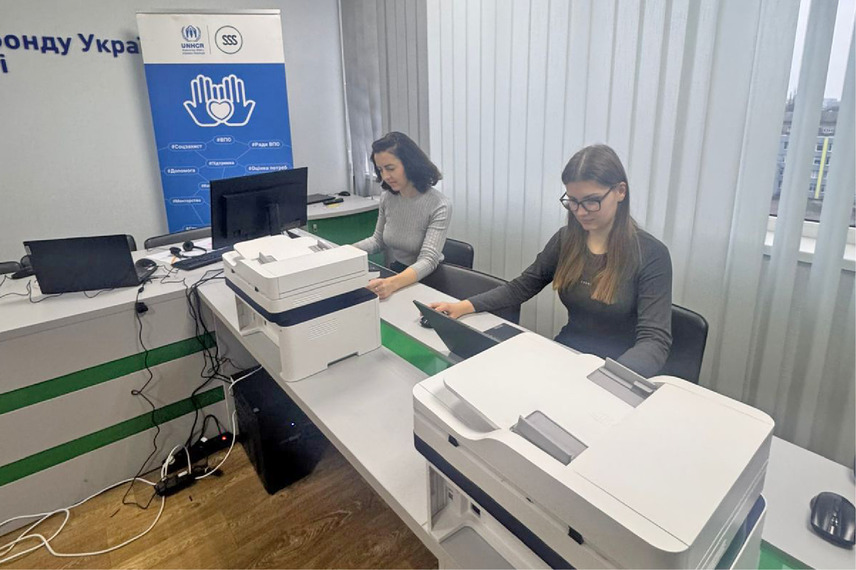
The project helped improve the technical and material capabilities and operational capacity, as well as enhance the energy resilience of 154 institutions. Specifically, in 2025, we delivered the following to the hromadas:
- 264 sets of office equipment (laptops, charging stations, tablets, and more);
- 20 mobile workstation sets.
In addition, 4 municipal social services training centers in Uzhhorod, Rivne, and Ivano-Frankivsk received equipment and furniture.
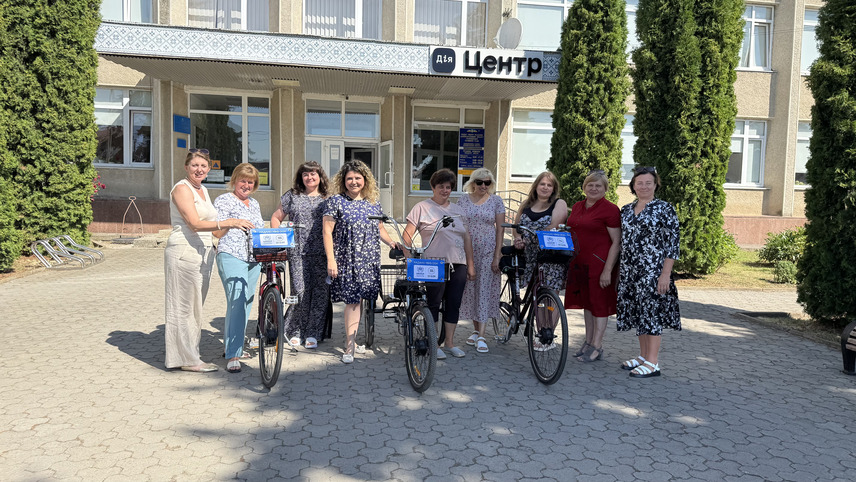
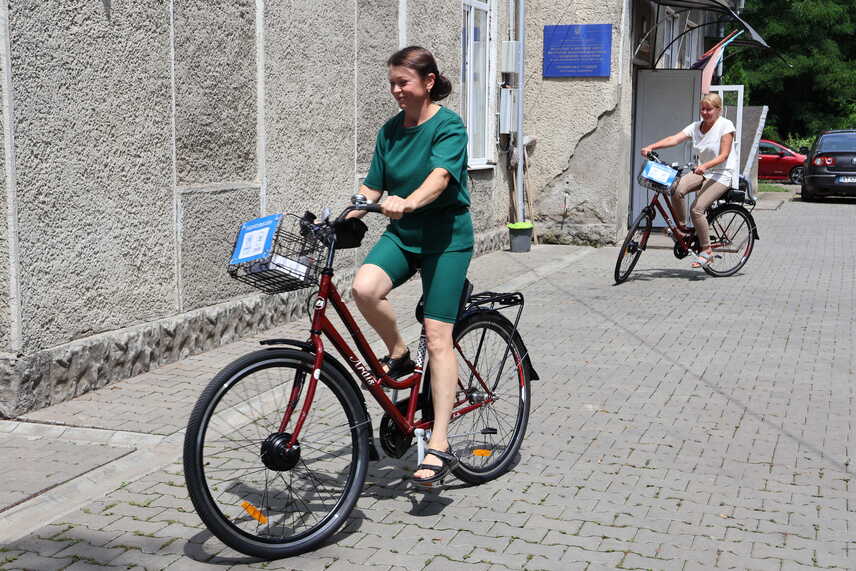
We also handed over 223 bicycles to hromadas for the provision of home care services. With the help of bicycles, social workers from 72 institutions reach older people and people with disabilities, including IDPs living in remote parts of hromadas, more quickly. They deliver food and medicine to beneficiaries and help with household chores. In frontline hromadas, bicycle transport allows for more prompt travel across dangerous sections of the road.
Watch the photo report about a day in the life of a social worker from Sumska Oblast who received a bicycle to visit her beneficiaries.
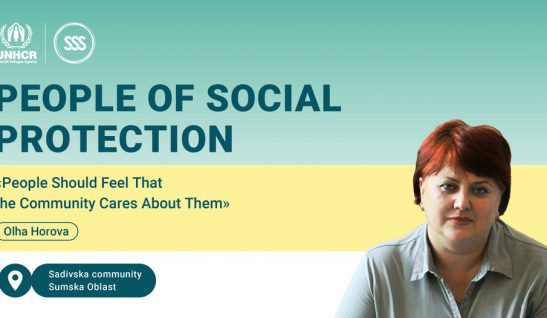
We implemented the annual special project “People of Social Protection,” in which we shared the work of social protection institutions in the Dubnenska Hromada of Rivnenska Oblast and the Sadivska Hromada of Sumska Oblast.
Read more in the interviews:
- Yurii Strilchuk: “A Social Worker Is a Mediator Between a Person and Their Problems”.
- Olha Horova: “People Should Feel That the Community Cares About Them”.
SUPPORT FOR IDPS AND OTHERS AFFECTED BY THE WAR
Thanks to legal assistance, those affected by the war learned more about exercising their rights and freedoms: they were able to access social protection, restore documents, submit necessary applications, and more.
How we helped them:
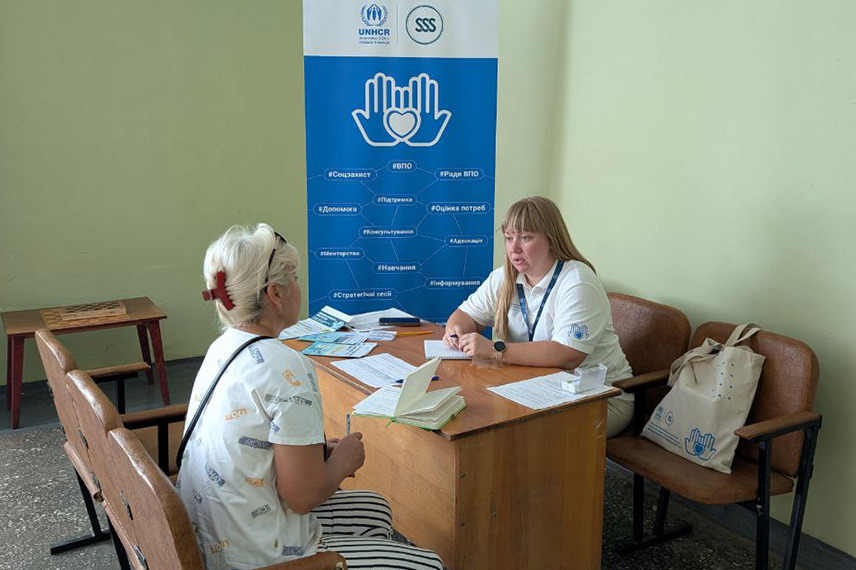
- Conducted over 14,100 legal consultations;
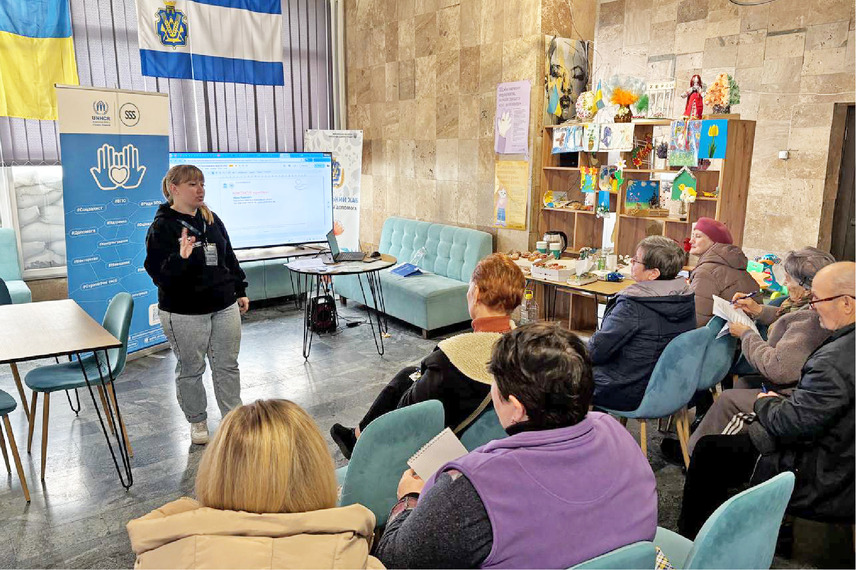
- Organized about fifty seminars for 1,120 people, covering housing certificates, subsidies, scholarships, medical care, and compensation for damaged and destroyed property;
- Developed a calculator for estimating housing rental subsidies for IDPs;
- Published 31 useful information materials: leaflets, explainer cards, articles, videos (social media reach — over 1.5 million people);
- Conducted 47 events for World Refugee Day and within the 16 Days of Activism against Gender-Based Violence campaign (attended by over 900 people).
94% of people who received legal consultations noted that they helped resolve their issues.
Specifically, we prepared the following information materials:
- Strength in Unity: How IDPs Can Achieve Greater Success Together.
- How IDPs Can Restore Their Educational Documents.
- How to Obtain a Replacement Civil Registry Certificate.
- Registration for Temporary Housing for Internally Displaced Persons.
- Social Services for Refugees and People With Complementary Protection Who Became IDPs in Ukraine: World Refugee Day in Ukraine.
- Reimbursement of Expenses for the Temporary Accommodation of IDPs.
- How to Apply to the Pension Fund of Ukraine for Living Allowance for IDPs.
- How to Reclaim Pensions and IDP Benefits Transferred from Oschadbank to the Pension Fund of Ukraine.
- How IDPs Can Access Medical Care.
- How to Receive Compensation for War-Damaged Housing in Ukraine.
- Obtaining an IDP Certificate: Current Instructions.
- Special Project: “How the Law ‘On Local Self-Government’ Affects the Lives of IDPs”: video 1, video 2, video 3.
- Explainer “The Law ‘On Local Self-Government. What it means and how it will affect displaced persons”.
SUPPORT FOR IDP COUNCILS
Throughout the year, we conducted for representatives of IDP Councils:
- 84 training sessions and 8 webinars to develop the capacity of IDP Councils;
- 49 strategic sessions;
- 861 consultations regarding the organization of council work, advocacy, and reporting.
Over 4,500 representatives of IDP Councils learned about the role and objectives of IDP Councils, integration opportunities for internally displaced people, and received practical tools for advocacy, communication, and partnership building.
Throughout the year, we organized the following for members of IDP Councils:
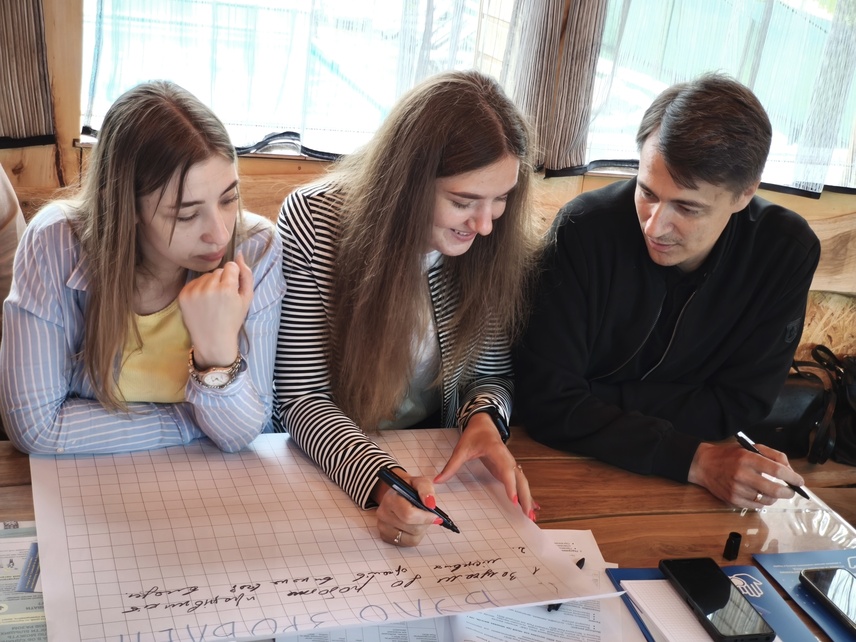
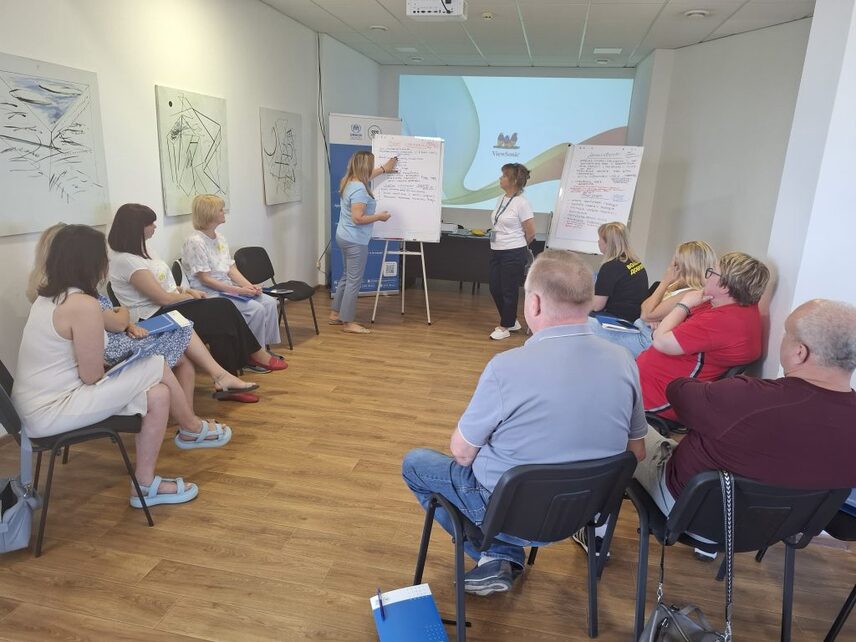
We prepared a series of useful information materials for IDP Councils, specifically “Knowledge Bank for IDP Councils” explainer cards:
- Objectives and Rights of an IDP Council: What Does This Mean in Practice?
- How to Keep and Format the Minutes of an IDP Council Meeting?
- How to Organize and Hold a Meeting of an IDP Council: A Step-by-Step Guide
- Guide for Updating the Composition of the IDP Council
- Mentorship Support for IDP Councils by CF SSS
Two editions of the Radnyk for IDP Councils handbook were published as part of the project: Issue 1 and Issue 2.
We have also prepared materials on best practices of IDP Councils:
- Compilation of Best Practices: “IDP Councils 2025–2026”
- Successes of IDP Councils: A System for Registering IDPs in Need of Temporary Housing Introduced in Kalush
- Successes of IDP Councils: Access to Assistance for IDPs Expanded in Lubny
- Building inclusion from the ground up: How IDP councils help displaced Ukrainians rebuild their lives
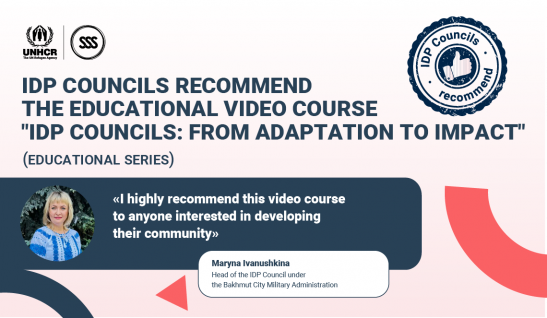
Throughout the year, 2,629 people completed the video course “IDP Councils: From Adaptation to Impact.” Participants learned to implement positive changes in the hromada: planning and coordinating council work, communicating with the public and partners, advocating for IDP rights, and evaluating the results of their work.
4,500 people visited the IDP Councils Portal. On the portal, representatives of IDP Councils and other civil society groups found relevant information and useful materials for Council capacity building and advocacy for IDP rights, and were also able to access an interactive map of the Councils.
With the support of the project,4 interregional IDP Council forums were held (Eastern Ukrainian, Central Ukrainian, Western Ukrainian, Southern Ukrainian). Participants (304 representatives of 156 IDP Councils, the civil society sector, and local authorities) exchanged successful practices, established partnerships, and developed initiatives to enhance the effectiveness of IDP Councils. During the forums, we conducted a quest explaining how decision-making works in a hromada.
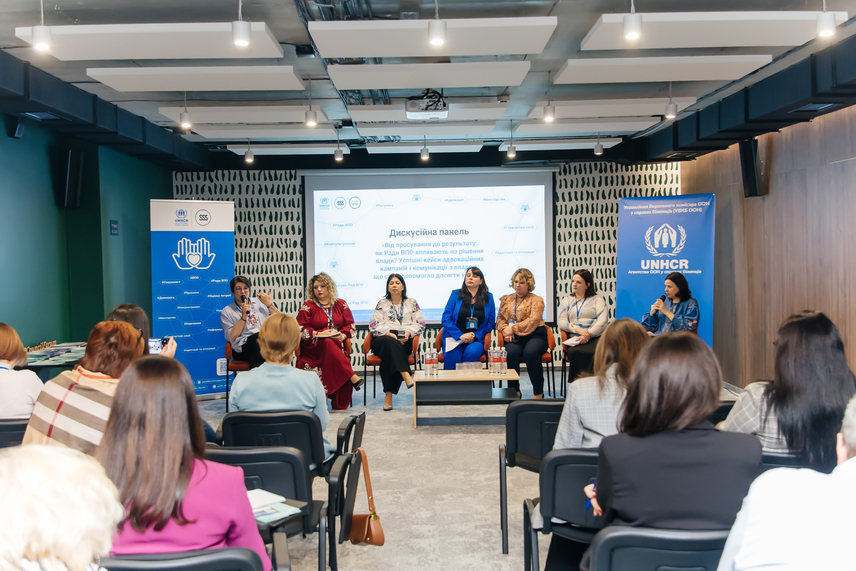
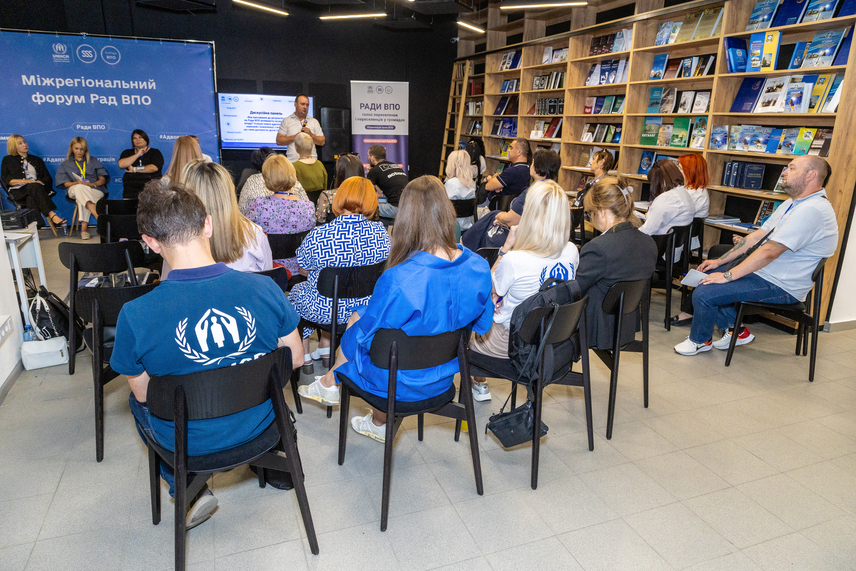
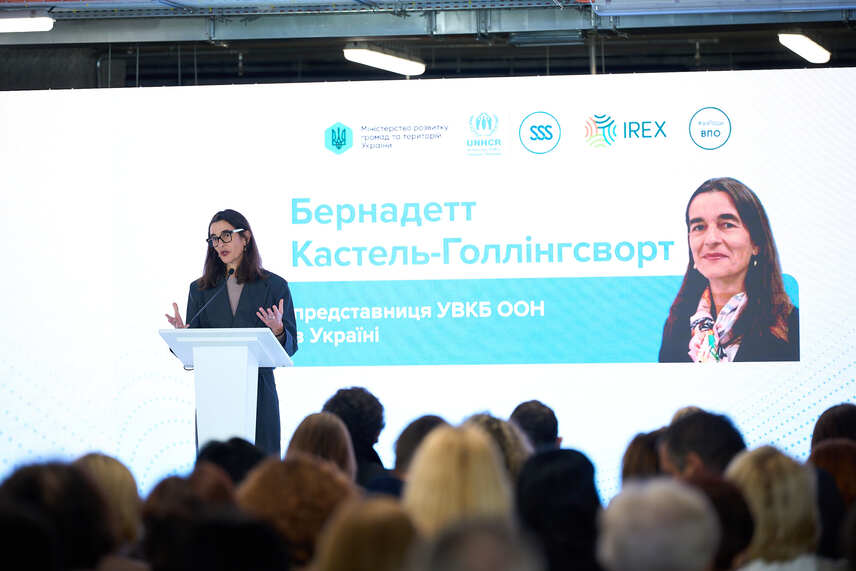
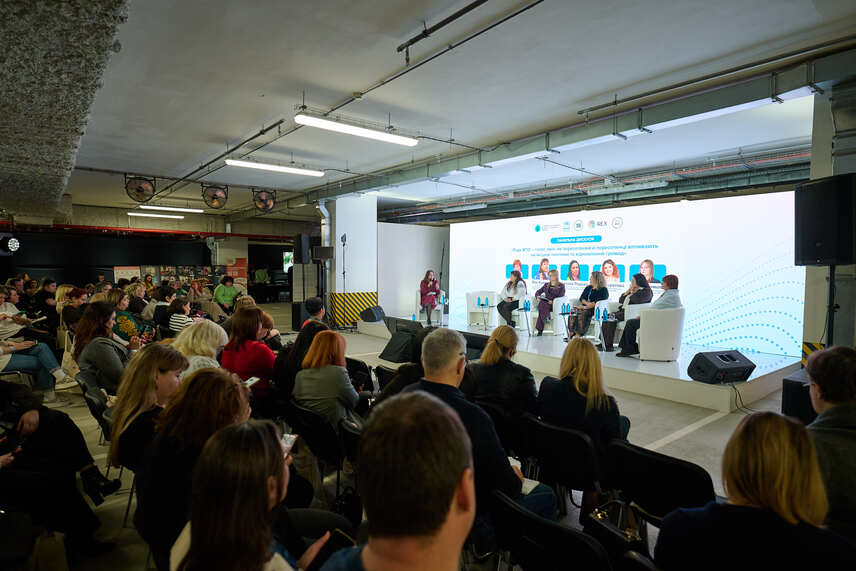
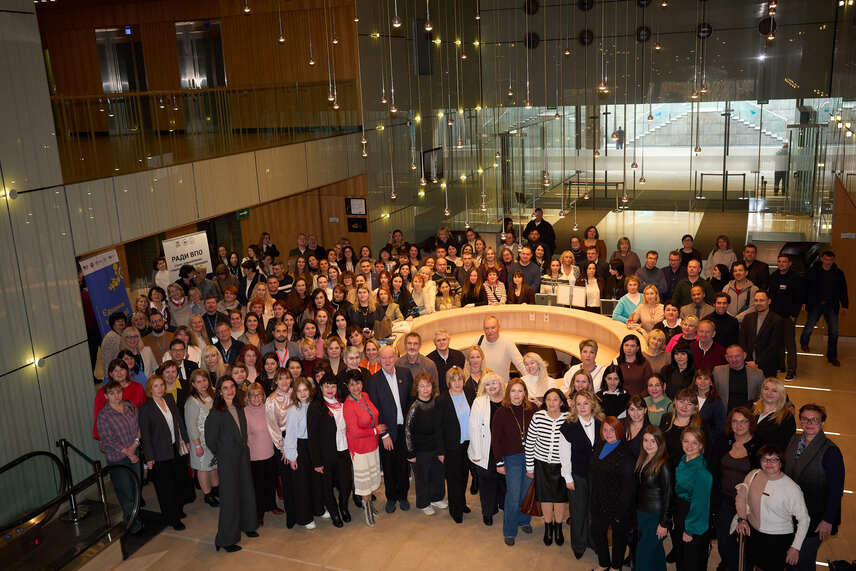
The project also included the III All-Ukrainian Forum of IDP Councils. The forum was organized with the support of UNHCR, the UN Refugee Agency in Ukraine and the International Research and Exchanges Board (IREX), in partnership with the Ministry of Community and Territorial Development of Ukraine.
The event was attended by 252 members of 116 IDP Councils, as well as representatives of the civil society sector, government, and international organizations, who together reflected on the role of IDP Councils and their influence on recovery processes and integration into local government systems and national policy.
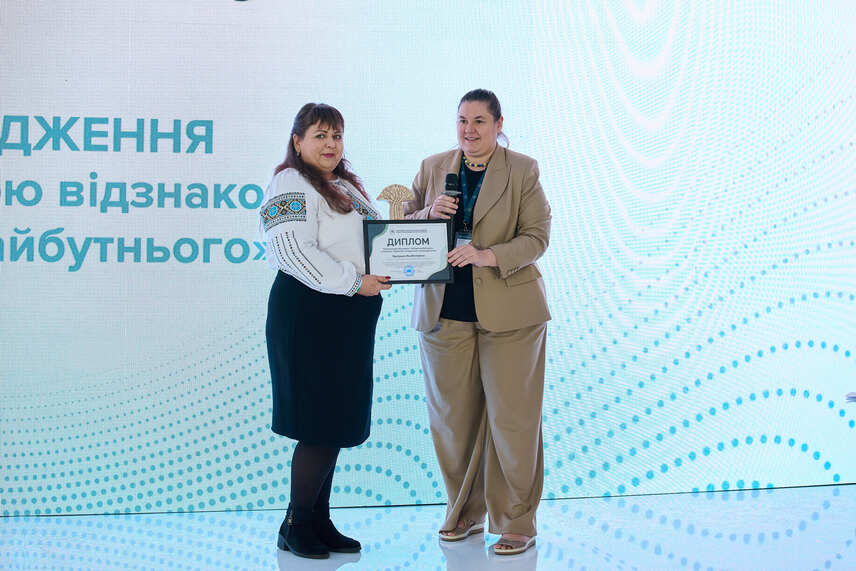
During the event, the CF SSS presented the Declaration of Intent “Sustainable and Quality Reconstruction: Involving Councils on Internally Displaced Persons in the Reconstruction Process” and presented for the first time the national award “For the Future” — an award for the most active members of IDP Councils.
Read the story of Kseniia Kluban, a member of the IDP Council in the Vinnytsia City Territorial Hromada and a forum participant: “From IDPs to Drivers of Change: How the Experience of Displaced Persons Can Work for Community Development.”
Within the project, we conducted a mapping of IDP Councils to assess the status and development of Councils across the country. Based on the mapping results, a register of 882 IDP Councils was created and handed over to the Ministry for Communities and Territories Development of Ukraine. UNHCR, the UN Refugee Agency in Ukraine, used this data as a basis for updating the national map of IDP Councils, increasing their visibility and coordination.
SUPPORT FOR TERRITORIAL HROMADAS
With the support of the project, 3 seminars were held on strengthening hromada capacity in organizing and providing social services for heads of hromadas in Khersonska, Odeska, and Mykolaivska Oblasts. 90 hromada leaders analyzed the level of population coverage with social services and exchanged experiences in finding opportunities and resources for building the social protection system and developing social services at the local level.
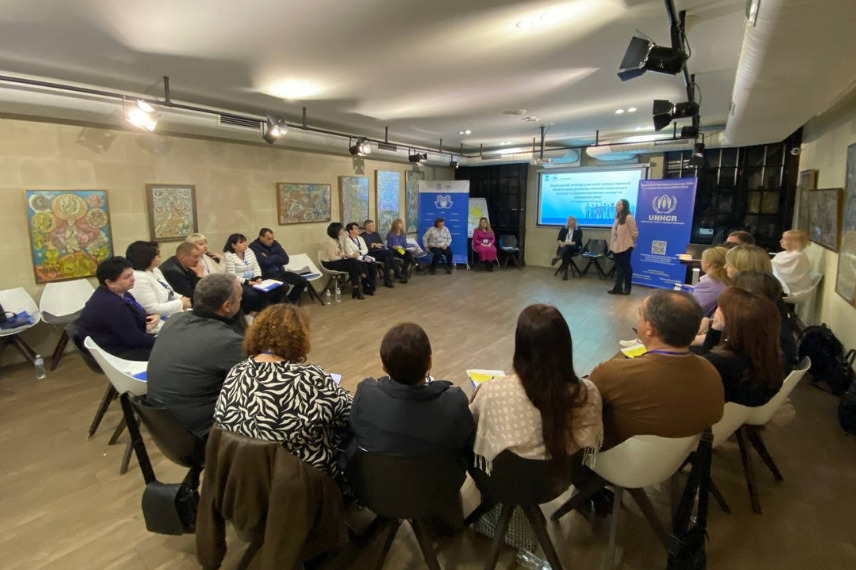
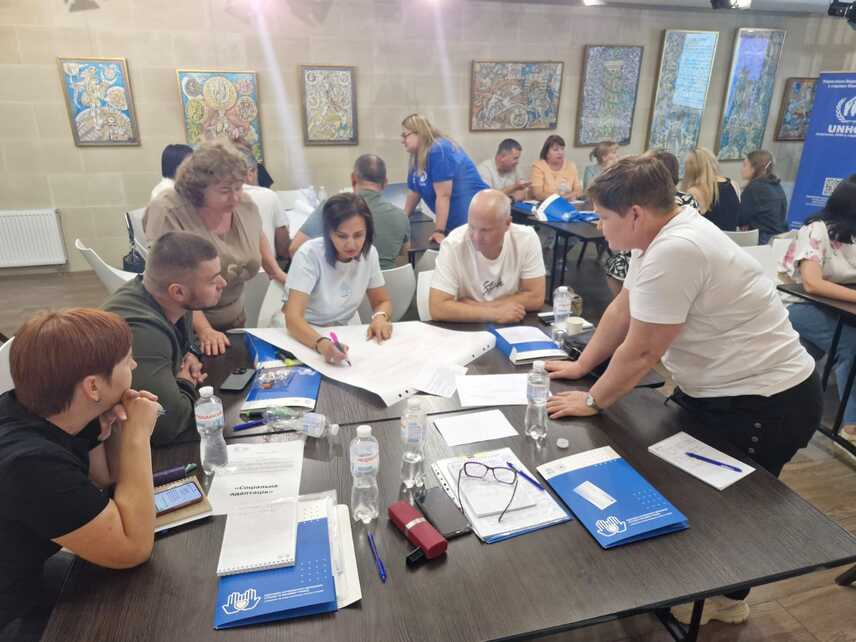
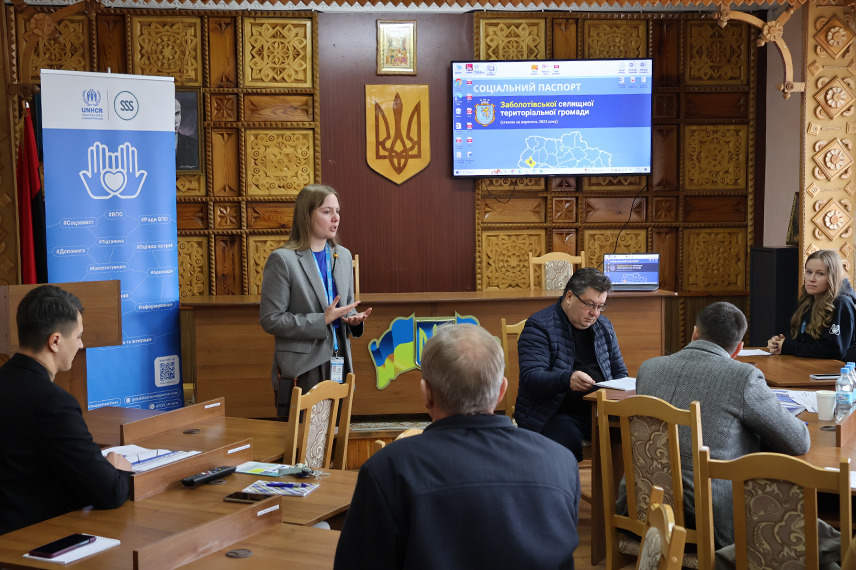
We also conducted 37 training sessions on social service provision, needs assessment, development of social passports, and local targeted programs (attended by 541 people), and provided 128 consultations on these issues. As a result of this cooperation, 35 hromadas developed social passports.
With the support of the project, hromadas learned to collect, use, and analyze gathered data. The result of this comprehensive work is 35 draft medium-term plans for the development of the social protection system at the local level, 25 of which were approved by decisions of the executive committees of city/settlement/village councils. 98% of hromadas integrated the social passport into resource analysis and decision-making processes, and 70% use it in developing new local programs.
Read the story of the successful experience of the Vyhodnianska hromada: how a social profile helps modernize social services.
Special project “How Hromadas Work with Social Passports,” in which we report on the results achieved by the hromada after research and document development:
The Experiences of Turiyska, Shatska, and Klevanska Hromadas
The Experiences of Novoyavorivska, Rudkivska, and Zinkivska Hromadas
The Experiences of Kodymska, Trybukhivska, and Dunayevetska Hromadas
The Experiences of Nedoboyivska, Monastyryshchenska, and Lubenska Hromahas
The Experiences of Brusylivska, Novoukrayinska, and Yakushynetska Hromadas
The Experiences of Uzhhorodska, Mukachivska, and Khustska Hromadas
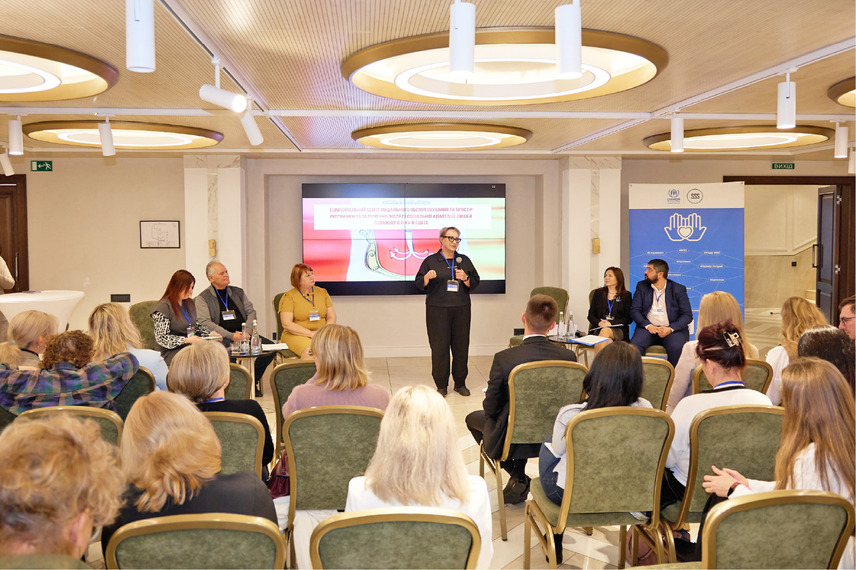
In November, we held the Southern Ukrainian Forum “Cities of Solidarity“ for hromadas in Mykolaivska, Odeska, and Khersonska Oblasts (attended by 68 people). The forum allowed for the unification of efforts to support IDPs, older people, and people with disabilities, and to discuss the modernization of the social protection system under war conditions. Hromadas presented successful models of social adaptation, assisted living, facility-based care, and mobile social and administrative services.
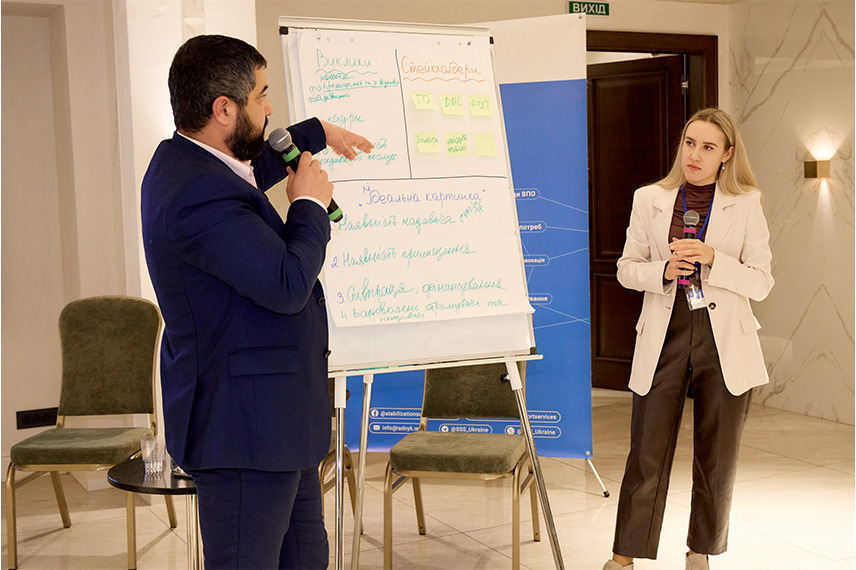
For the forum, we created a video about the work of the University of the Third Age, operating at the Mykolaiv City Territorial Center for Social Service (Provision of Social Services): “The Work of the University of the Third Age in Mykolaiv.”
Read more in the article “Social Adaptation and Integration of Older People in Communities: Experience Working with IDPs.”
ADVOCACY CAMPAIGNS
Results of the project team’s advocacy work:
- Together with IDP Councils, advocated for the adoption of 18 decisions to strengthen the social protection and support of IDPs, introduce financial aid, launch new social services, create social service providers, and approve comprehensive IDP integration programs;
- Advocated for the adoption of 11 decisions aimed at creating and expanding temporary housing stocks for IDPs, introducing the registration of IDPs needing temporary housing, and approving comprehensive housing programs for IDPs;
- Conducted 12 advocacy campaigns aimed at amending resolutions and procedures regarding the assignment of social payments to IDPs, mechanisms for applying budget legislation, the Model Regulations on IDP Councils, etc.
Thanks to changes in local regulatory acts and the development of new documents, 409 IDPs and others people affected by the war received additional social protection and support:
- The total amount of funds additionally allocated from local budgets — 2,605.7 thousand hryvnias;
- For 2026, hromadas have earmarked 11,597 thousand hryvnias for the continuation and expansion of relevant activities.
Ensuring housing rights of IDPs:
- 121 IDPs were registered for housing from temporary residence stocks;
- 6 facilities were included in these stocks;
- 12 people received temporary housing;
- Hromadas allocated 1,405.2 thousand hryvnias from local budgets for the development of design and cost estimate documentation for 2 facilities, with an additional 6,142.0 thousand hryvnias earmarked for their reconstruction in 2026.
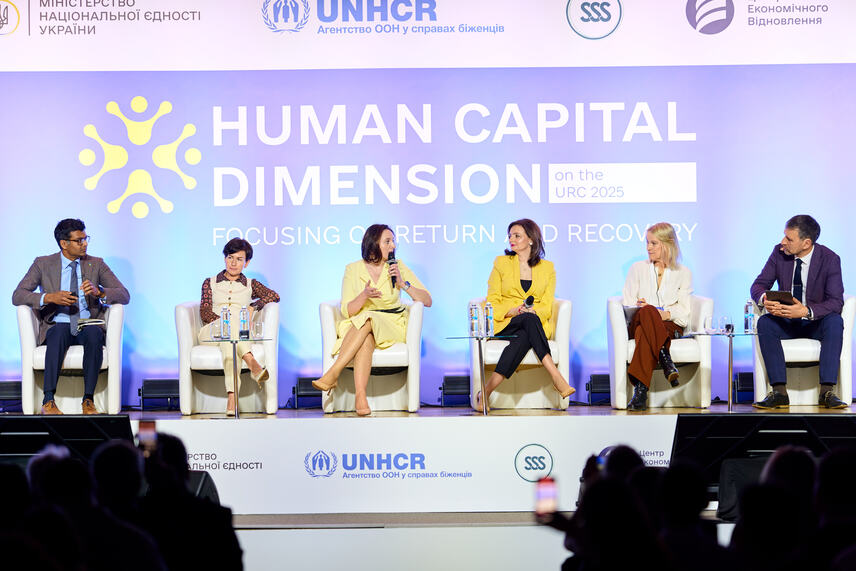
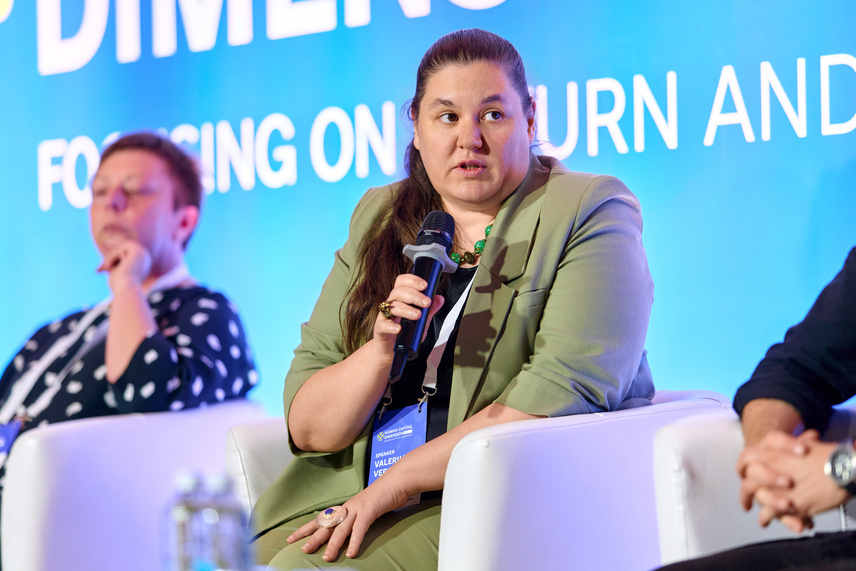
Within the project, the Human Capital Dimension at the URC 2025. Focusing on Return and Recovery forum took place. The event was organized by the Ministry for National Unity of Ukraine on the platform of the Center for Economic Recovery with the support of UNHCR, the UN Refugee Agency in Ukraine and the Charity Foundation “Stabilization Support Services.”
The event brought together 314 representatives of the government, international partners, the civil society sector, business, and the expert community, becoming a platform for discussing the preservation, development, and reintegration of the country’s human capital in wartime. The ideas outlined during the forum became the basis for Ukraine’s position at the Ukraine Recovery Conference 2025.
All these initiatives were implemented through the Support to the Capacity of Government Institutions and Local Hromadas to Strengthen Social Protection Systems in Ukraine project, implemented with the support of UNHCR, the UN Refugee Agency in Ukraine.