The Myrhorodska territorial community in the Poltavska Oblast has welcomed over 13,000 new residents. Despite a significant increase in population, the local social protection department manages to cope with the social adaptation of new people, providing them with temporary housing, assisting in job searches, and offering necessary services. They are aided by the well-coordinated work of the team, the establishment of a Council on Internally Displaced Persons, and the upgrade of computer equipment. Read about the life of the Myrhorodska community, the department’s plans for 2024, and the main qualities of social protection workers in an interview with Nataliya Molochko, the Deputy Mayor of Myrhorod.
Tell us about your community. How many displaced persons has it accepted? Do you have data on how many IDPs currently live in the community?
We are a relatively young community formed in 2020. The Myrhorod city territorial community includes 36 rural settlements, and the city of Myrhorod, which is the administrative center of the community. The population of the community at the beginning of 2022 was 48.8 thousand residents. Since 2014 to the present, the Myrhorod city territorial community has accepted more than 13 thousand internally displaced persons. Currently, the Unified Register of Internally Displaced Persons for the Myrhorod community accounts for 9,646 people, of which 7,709 displaced persons moved to our community after February 24, 2022. However, some of them return to their homes of origin for various reasons. Therefore, about 3.5 thousand internally displaced persons remain living permanently in the community.
Tell us about your department. What are its key tasks? How long have you been working there? What workload do you feel as a social worker?
The social protection department of the city council ensures the implementation of state and local policies in the field of social protection of the population in the territory of the Myrhorod city territorial community.
The key tasks of the administration are:
- Providing state social guarantees to certain categories of the population within its powers, namely: assigning and paying social assistance, compensations, and other social payments, implementing measures for the social protection of privileged categories of the population;
- Organizing social services for the population and providing social services;
- Ensuring social rehabilitation and integration of people with disabilities, internally displaced persons, defenders of Ukraine, their families, families of deceased or missing defenders of Ukraine;
- Implementing measures in the field of social support for the population and providing humanitarian aid.
As the Deputy Mayor, I coordinate the work of the department. We work together to accomplish tasks and overcome challenges facing communities during these difficult times. Of course, as with the country as a whole, the workload on the social protection system of the community has increased. It’s a constant daily work, communication with displaced persons, searching for sources of their support, including humanitarian. We integrate displaced persons into our social services system so that vulnerable categories, such as single elderly people and people with disabilities, can receive assistance from social services.
Tell us about the main needs of IDPs in your community and the problems and challenges that need to be overcome.
Of course, the main issue for IDPs planning to stay in the community is securing permanent housing. We almost have no municipal housing, and there are no financial resources to build any. Therefore, non-governmental organizations working with IDPs, with our support, are looking for ways to attract international funds for housing construction.
A new challenge has been finding employment for working-age internally displaced persons. We actively started working with the employment service regarding job placement. Now, information about vacancies for displaced persons is regularly posted on the city council’s website. As a result, 34 employers in the community have hired 56 IDPs, and 30 people have been involved in socially useful work. Displaced persons have opened 12 new businesses in the community, employing other IDPs.
An important issue, which I believe, we have resolved, was the social integration of internally displaced persons into the community. Currently, internally displaced persons receive all types of services (medical, educational, cultural, social) and financial assistance that local residents do, including funds from the community budget.
Of course, it’s impossible to solve all problems at once, but it’s important to know about them and respond in time. I want to thank the Charity Foundation “SSS”, which, with the support of UNHCR, helped us create a Council on IDP Issues, which has started to work actively and will become an important communication platform between IDPs and the authorities.
What has been the biggest success for your department since the start of the full-scale invasion? And what do you consider the biggest challenge?
A serious challenge for us was the beginning of the full-scale invasion (March-April 2022). Our community is located in central Ukraine, between two large cities — Kyiv and Kharkiv. Therefore, we faced a large influx of displaced persons, who either stopped in our community on their way west or came and stayed for temporary residence. It was important to provide them with housing, food, and clothing.
These issues were addressed jointly by the city council, the social protection department staff, providers of social and rehabilitation services, and specialists of the children’s services department. In addition to this, despite air alerts, they continued to provide social assistance to vulnerable segments of the community population, ensuring the implementation of state programs and more.
The next stage was the registration of IDPs in the community and the processing of documents for state benefits so that people could start receiving them as quickly as possible. Given the large number of IDPs, almost 20 percent of the community’s population, we worked virtually 24/7. The equipment and software couldn’t keep up, but the people did. For which I thank all the employees.
The consolidation of joint efforts, well-coordinated work of teams, and effective and mutually beneficial cooperation with social partners made it possible to solve the tasks facing the social protection institutions.
Throughout the war, many non-governmental organizations and associations have cooperated and continue to cooperate with the community, providing humanitarian, financial, medical, psychological, and legal assistance to the population. All employees of social institutions and establishments are involved in maximizing the effectiveness of their work. This cooperation helps to improve the social protection system and the provision of social services to the community’s population.
How does technology (computers, printers, external storage devices) help social protection workers? Why is it important to update and ensure their fast and uninterrupted operation?
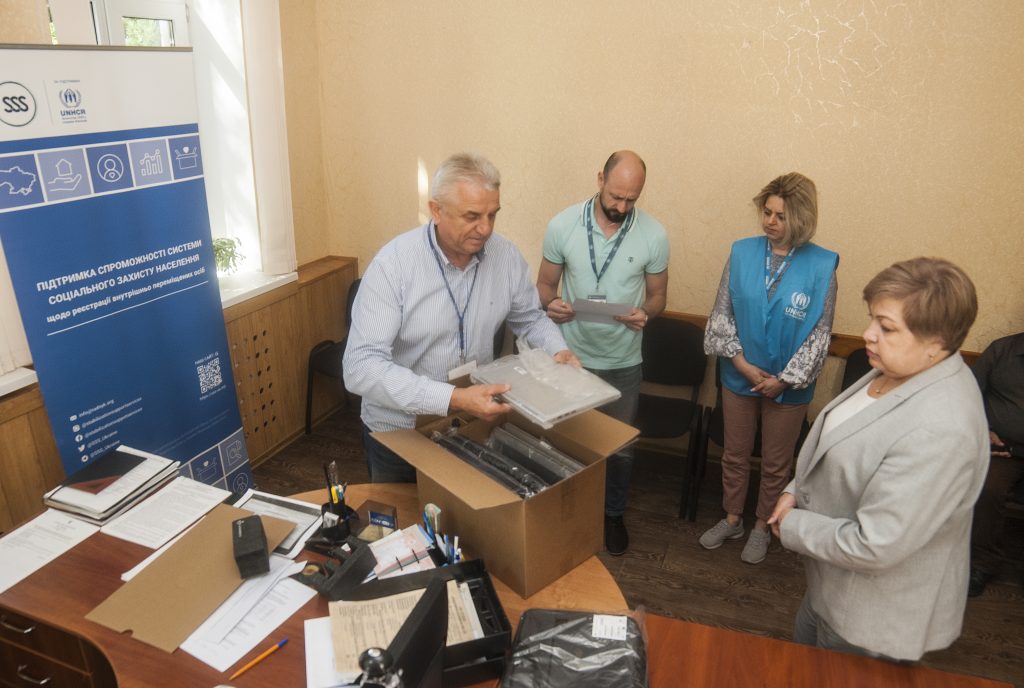
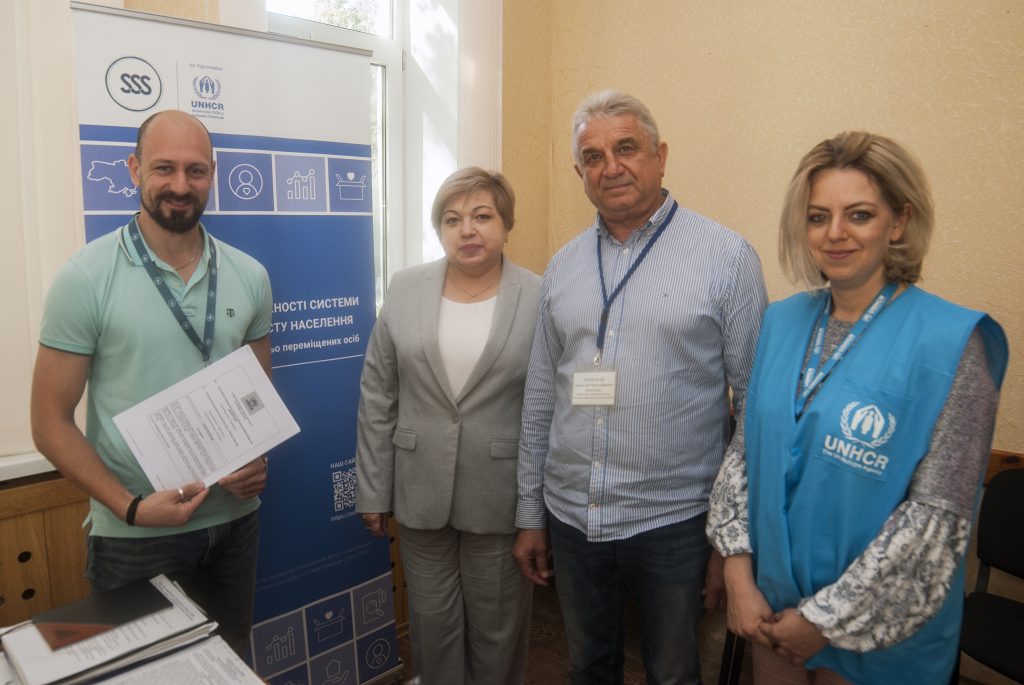
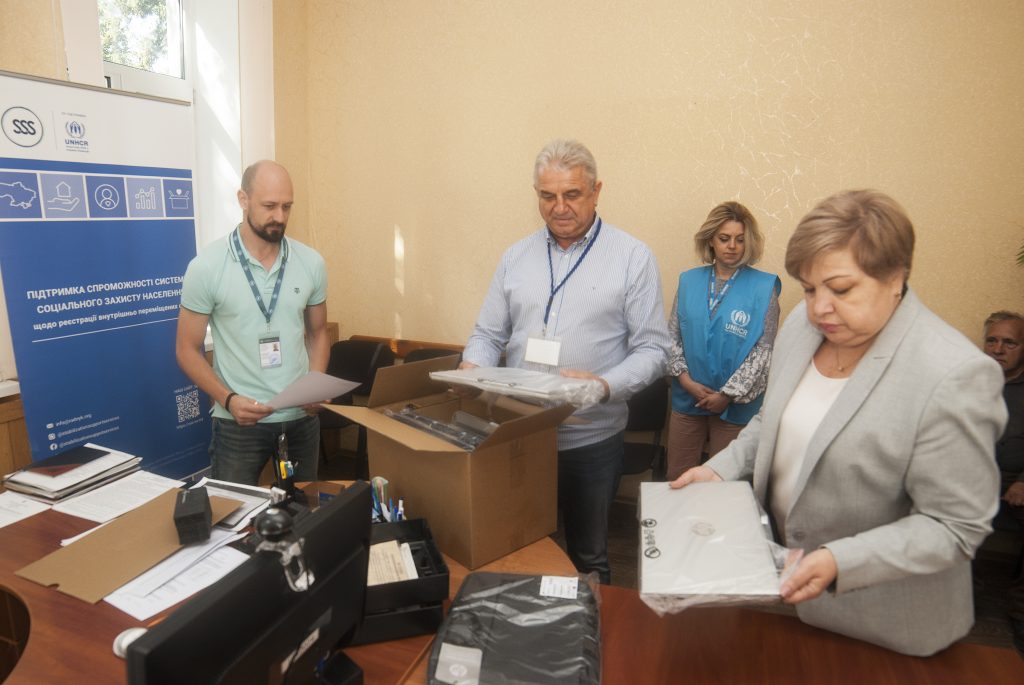
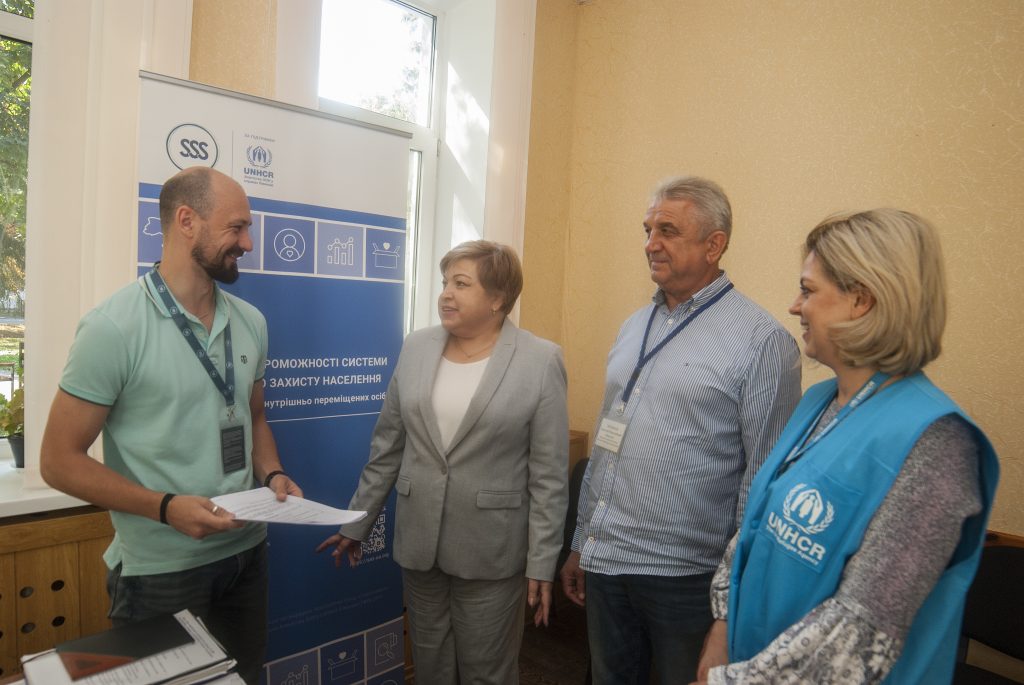
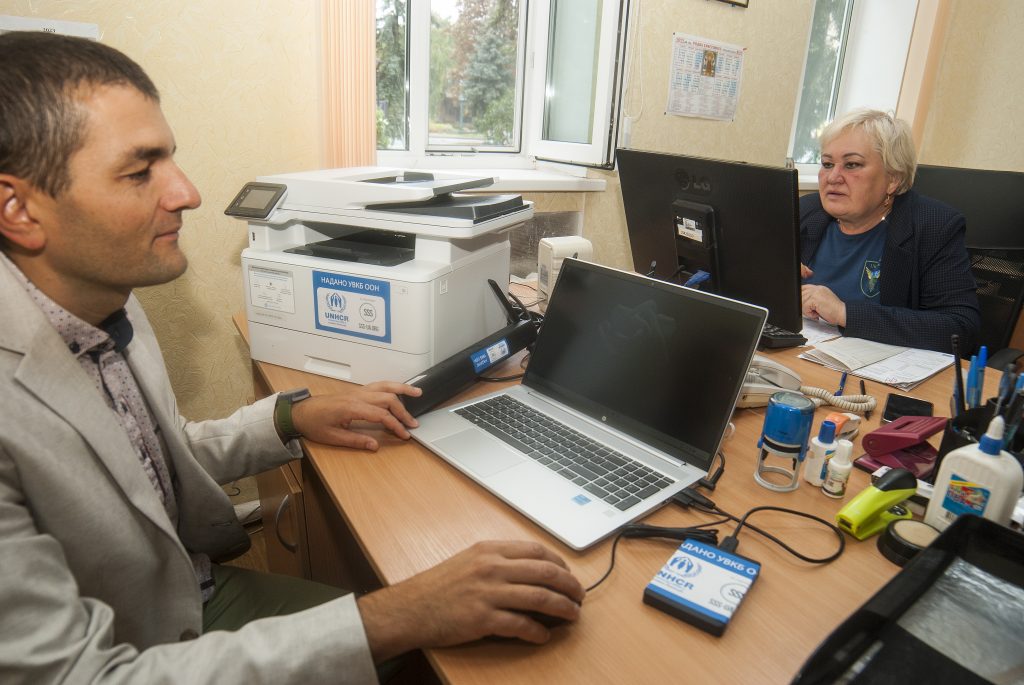
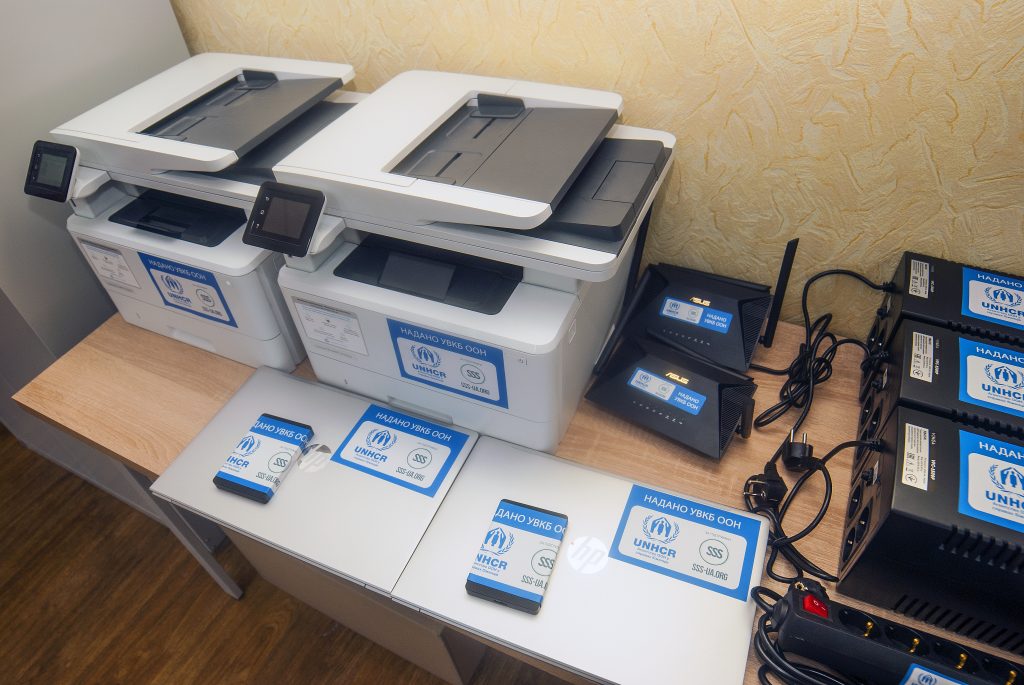
The equipment provided by the Charity Foundation “Stabilization Support Services” is used in the social protection department of the Myrhorod city council.
Especially useful are modern laptops and multifunctional devices, which have significantly sped up the work of specialists in serving citizens. After all, the processing of assistance and other services involves a considerable amount of paper and scanned copies of documents. Therefore, the fast MFPs provided by the Charity Foundation “Stabilization Support Services”, which are connected to the social protection network via wireless routers also provided by the CF “SSS”, speed up and optimize the specialists’ work.
Modern software requires constant updating of computer equipment. Therefore, the new laptops are used in complex areas of the social protection department’s work, where mobility and high performance are needed (assigning all types of assistance, including living allowance for IDPs; calculating compensation for the temporary accommodation of IDPs under the “Prykhystok” program; organizing the distribution of humanitarian aid to the population, etc.). Portable hard drives for backup of databases, as well as uninterruptible power supplies, which are particularly relevant during power outages, were also useful.
Considering the Methodological Recommendations for the Organization and Support of the Territorial Community’s Activities in the Field of Social Protection, approved by the Order of the Ministry of Social Policy of Ukraine dated July 31, 2023, No. 263-N, we are working on changing the structure of the social protection department, including the creation of a unit for organizing the provision of social services. This will improve work in this direction.
Who is a social protection system worker? What are the main qualities of these professionals?
Workers of the social protection system are primarily professionals in their field. Random people do not work in this system.
They must be professionally trained and well versed in the fields of culture, politics, economics, and social development of society; have communication skills, for example, be able to communicate with people with disabilities and the elderly properly; have professional tact, maintain professional secrecy, be delicate in matters concerning the client’s personal life; possess emotional stability, be ready to perform their professional duty under any conditions, maintaining friendliness and self-control.
Tell us briefly about the plans and aspirations of your department for 2024.
Currently, despite the war, a reform of the social protection system in general and the system of social services in particular is taking place in Ukraine. Mechanisms of social contracting are being developed, and the role of municipal social services and non-governmental organizations in carrying out social work in communities is being rethought.
Therefore, next year our efforts will be directed specifically towards the development of social and rehabilitation services for the community’s population.
Thanks to participation in a project implemented by the Charity Foundation “Stabilization Support Services”, we will get a real picture of the community’s population’s needs in social services, which will allow us to improve the quality and accessibility of existing services and effectively implement new ones.
We will continue to participate in projects that are relevant to the community, both for gaining new knowledge and experience and with the goal of attracting additional resources for development.