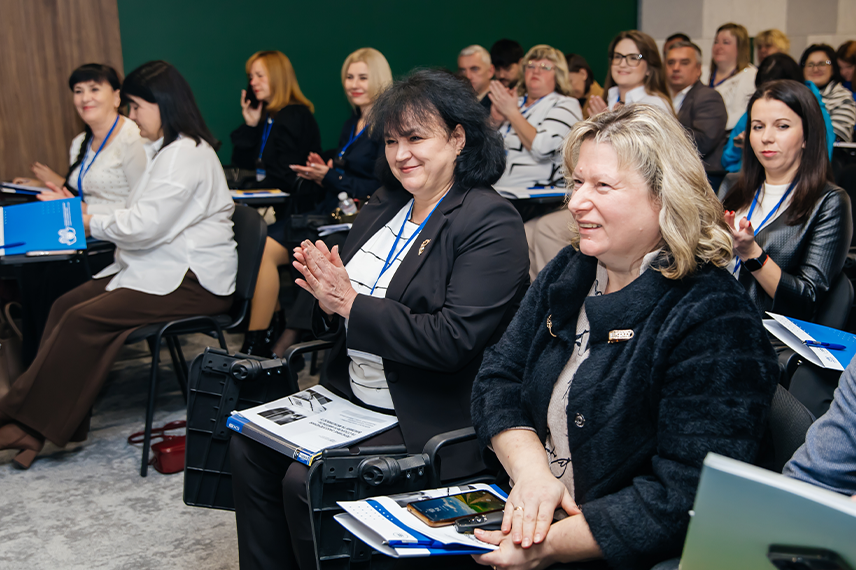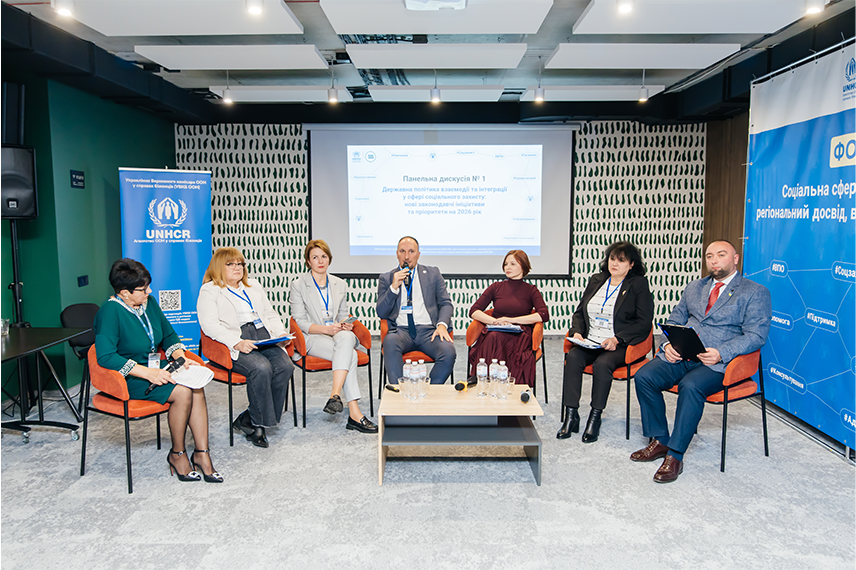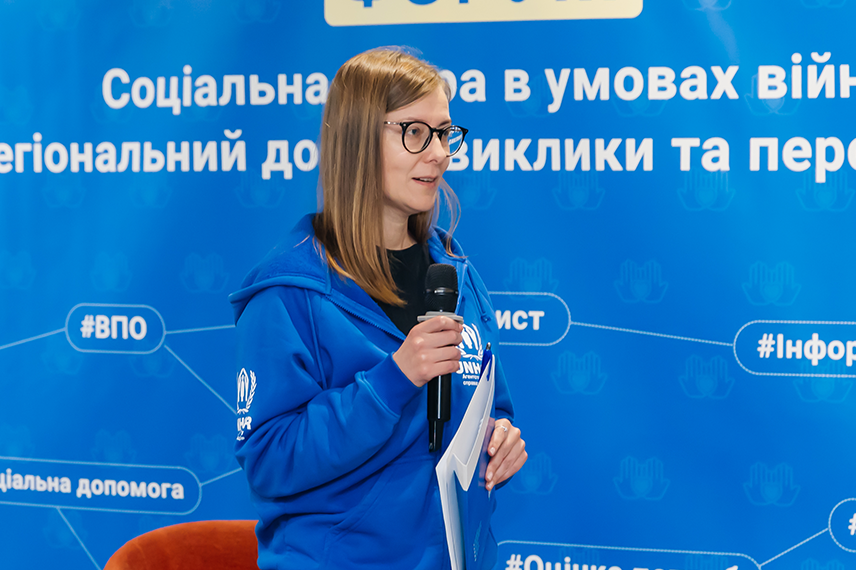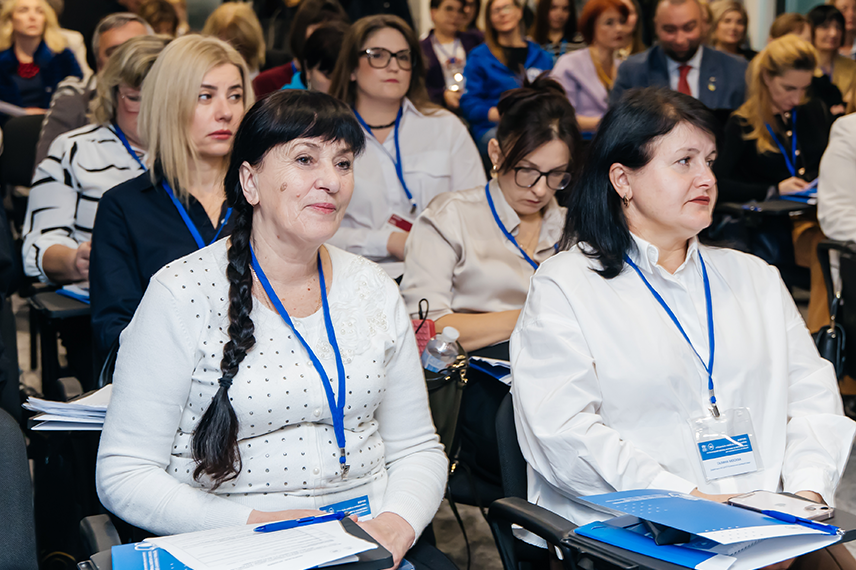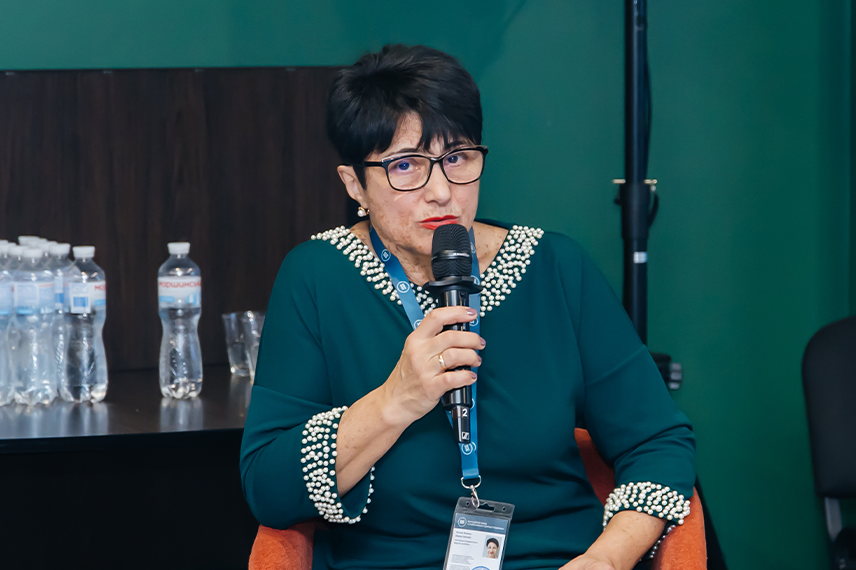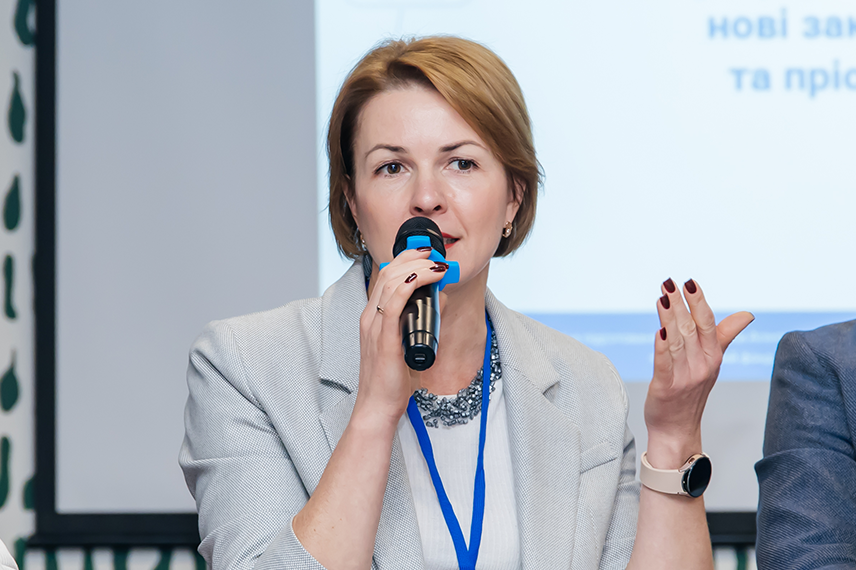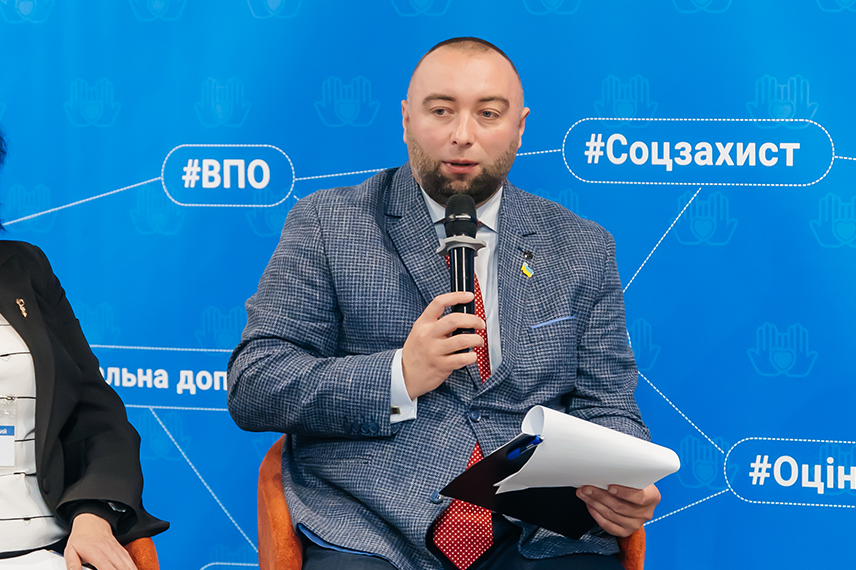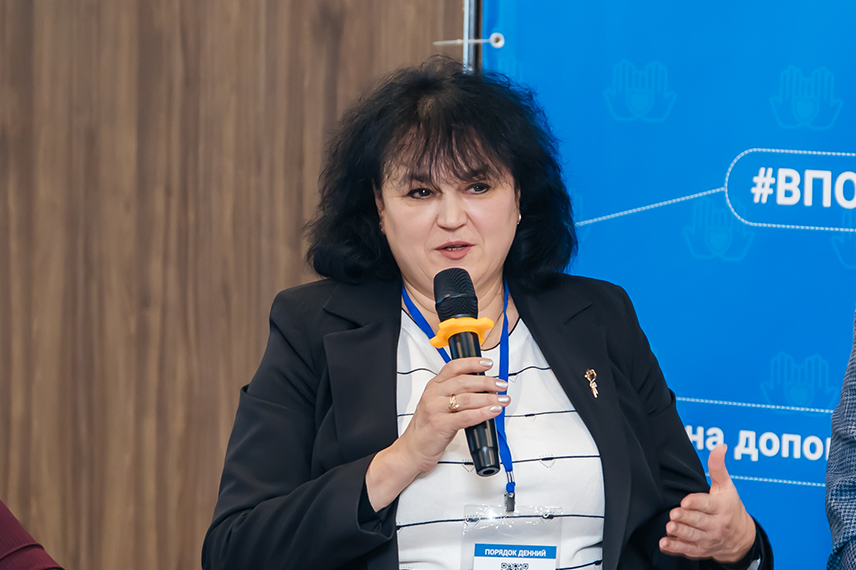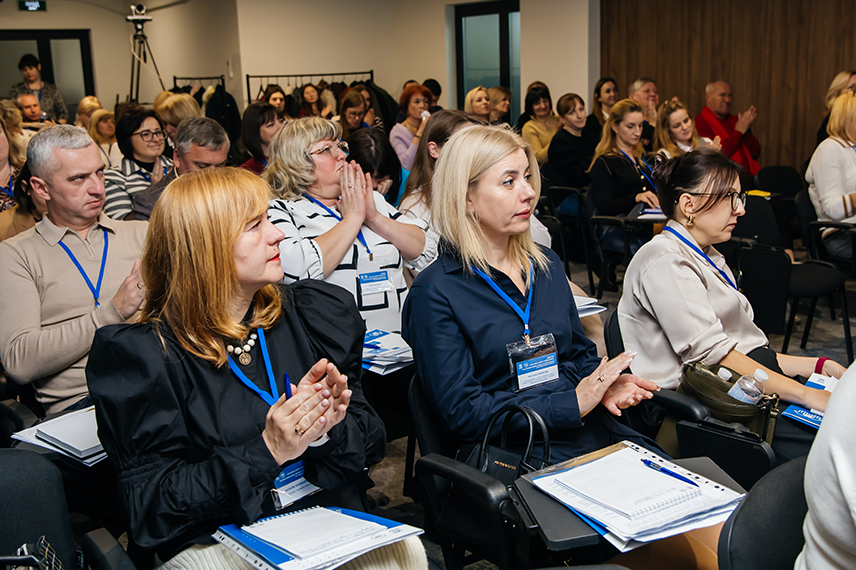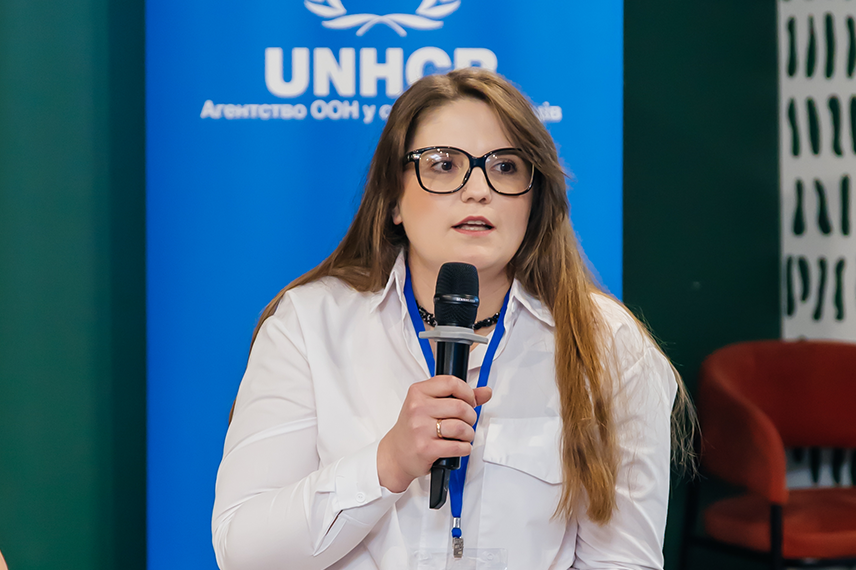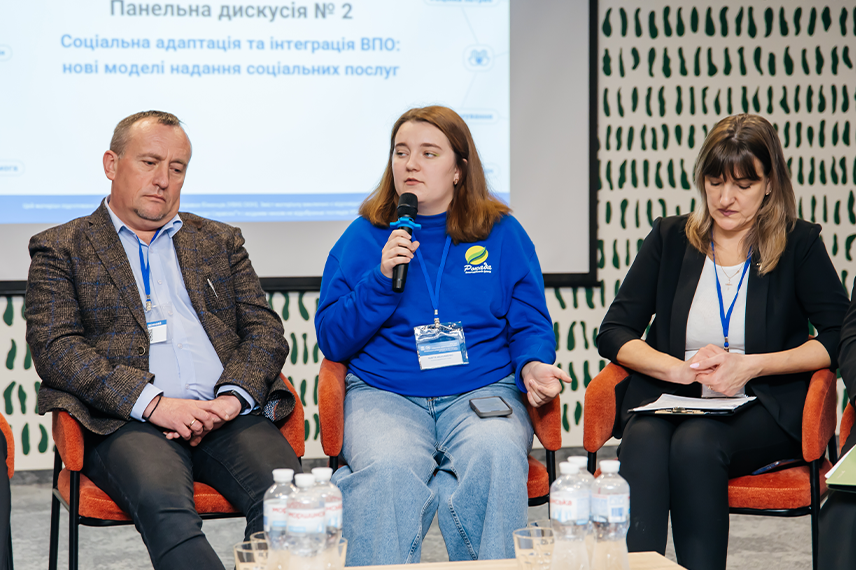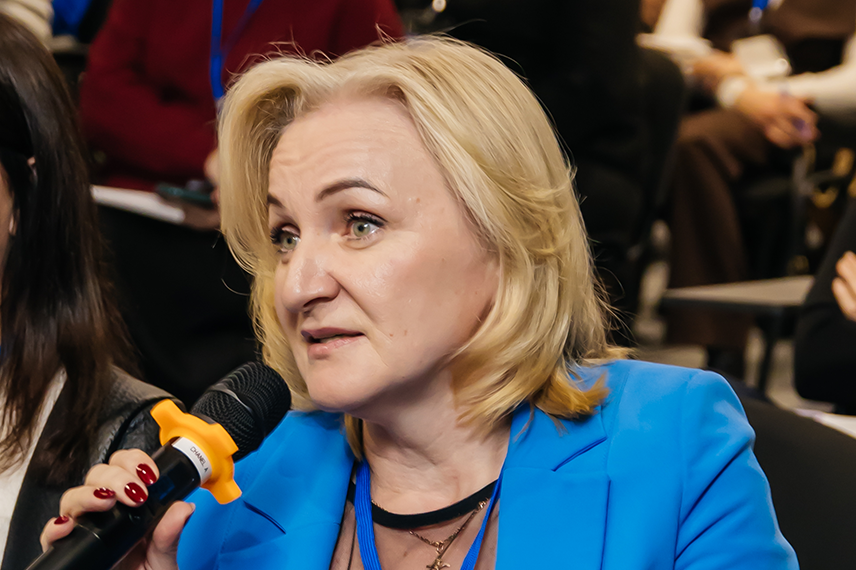
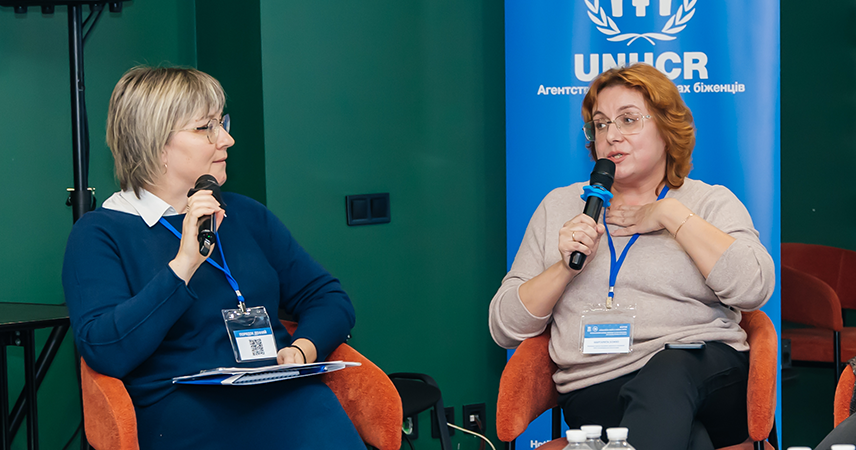
How is the social sphere being transformed in wartime? How can social services be developed for the most vulnerable segments of society? Why are intersectoral communication and cooperation important? These questions were discussed in detail at the forum “The Social Sphere During Wartime: Regional Experience, Challenges, and Prospects.”
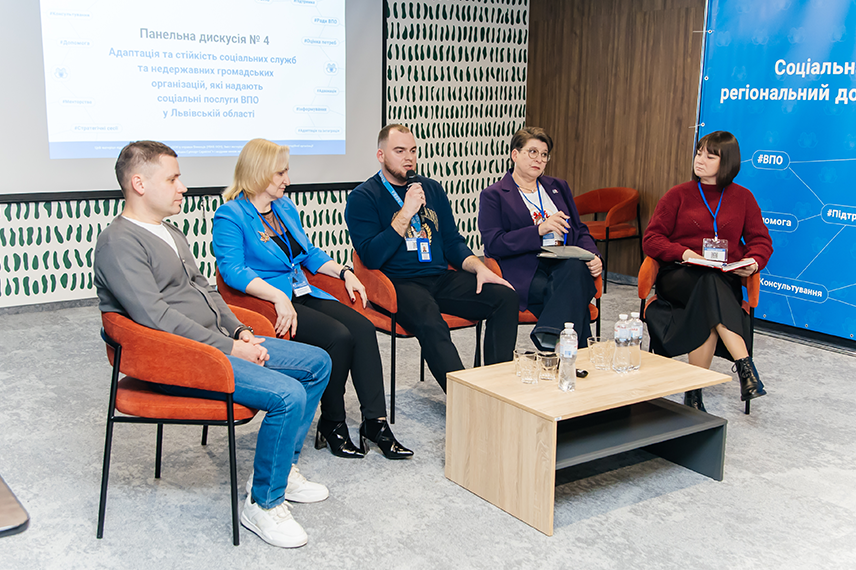
The event was attended by representatives of government agencies, local authorities, civil society organizations, and international partners working to strengthen the social resilience of communities. Discussions focused on successful practices in organizing social services in communities in Lvivska Oblast during wartime:
- Adapting the social protection system to new challenges;
- Effective models of support for IDPs, persons with disabilities, and older persons;
- The “money follows the person” principle in the context of interagency cooperation, financing, and service management.
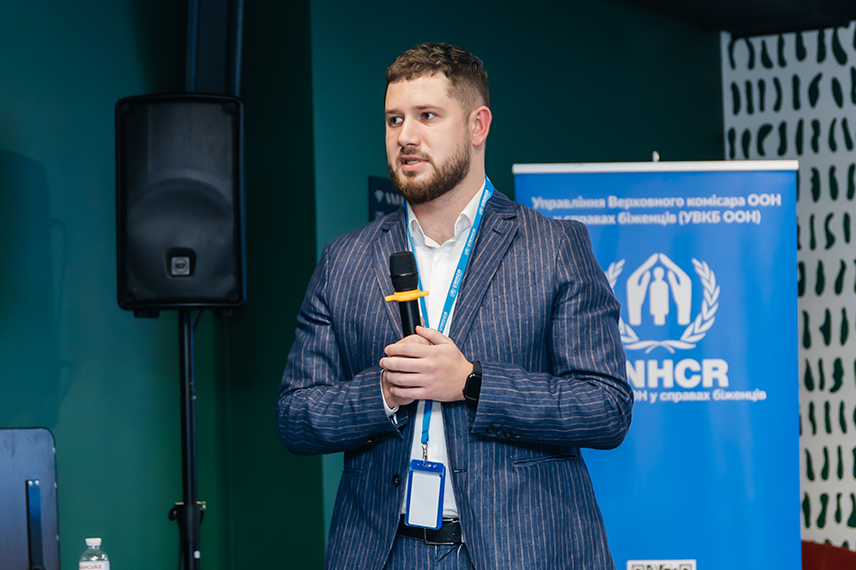
Nadiia Vakhovska, a community protection specialist at the UNHCR Head Office, noted that, “In its social protection work, UNHCR pays particular attention to the most vulnerable groups, namely internally displaced elderly people and people with disabilities. We strive to contribute to the development of services designed to support these groups. At the national level, we work closely with the Ministry of Social Policy of Ukraine — together we are looking for solutions to improve the social services system, supporting the implementation of the Ministry’s pilot projects in terms of preparing premises for the provision of supported living services, developing a methodology for social adaptation in state sanatoriums in Truskavets and Myrhorod, and developing a model for supporting internally displaced persons throughout their journey. We also support the work of social facilitators who provide basic social support to older people and people with disabilities, becoming an additional resource for social protection institutions.”
Olena Fartushna, head of the expert group on the protection of the rights of specific social groups and the elderly at the Directorate for Social Services Development of the Ministry of Social Policy of Ukraine, also focused on protecting IDPs who are most in need of assistance — the elderly, people with disabilities, and those with temporary illnesses. The expert explained the algorithm for the work of transit points, where a social worker must assess the needs of the people who have arrived, and a physician must examine them and provide recommendations on the necessary support.
Valeriia Vershynina, executive director of the Stabilization Support Services Charitable Foundation, emphasized, “The comprehensive implementation of social adaptation services and the creation of conditions for the fastest possible restoration of economic independence for people who are currently forced to relocate are critically important tasks. But we must not forget those who cannot regain their economic capacity and will need social protection and support throughout their lives. Unfortunately, the consequences of this war will be felt for decades. Our task is to develop mechanisms and create conditions in which people can overcome these consequences and rebuild their lives.”
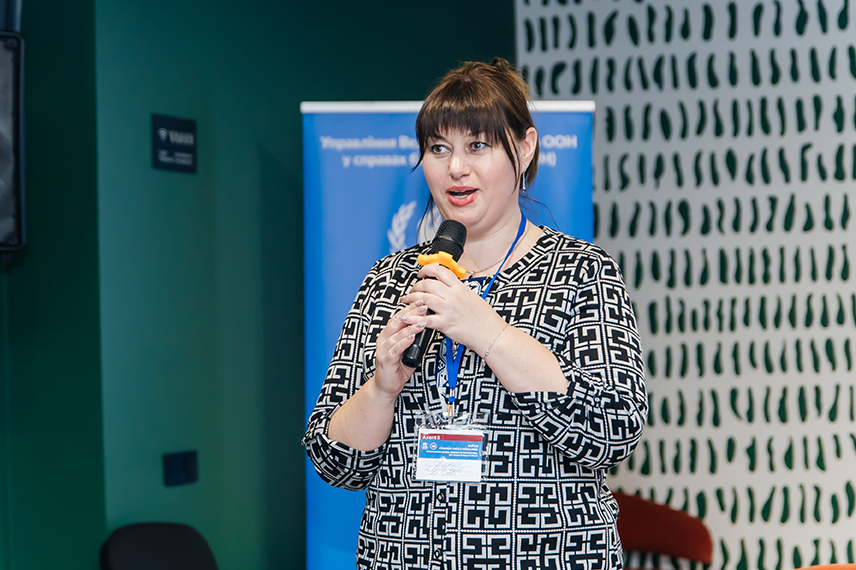
Lesia Dumyak, director of the Social Services Center of the Stryi City Council, shared her experience of developing a network of supported living centers in her community: “At the beginning of the full-scale war, we had 13,000 internally displaced persons. Many left, but people with disabilities and older people remained. And they need effective help. First, we studied the community’s needs, creating gender and social passports that helped us identify areas that needed development. The first was working with families with children with disabilities. We opened a day care center for them. The second was working with older adults and individuals with disabilities who require assisted living services. Thanks to donor support, we created the necessary spaces for this, including a small house for nine people. We wanted to create a home-like environment with a kitchen, dining room, and bedrooms, where each person has not only a bed with a nightstand, but also their own closets, small refrigerators — everything they need for a more or less comfortable life.”
During the forum, numerous proposals were made to improve the social protection system. Among them was the idea of training those who wish to provide social services.
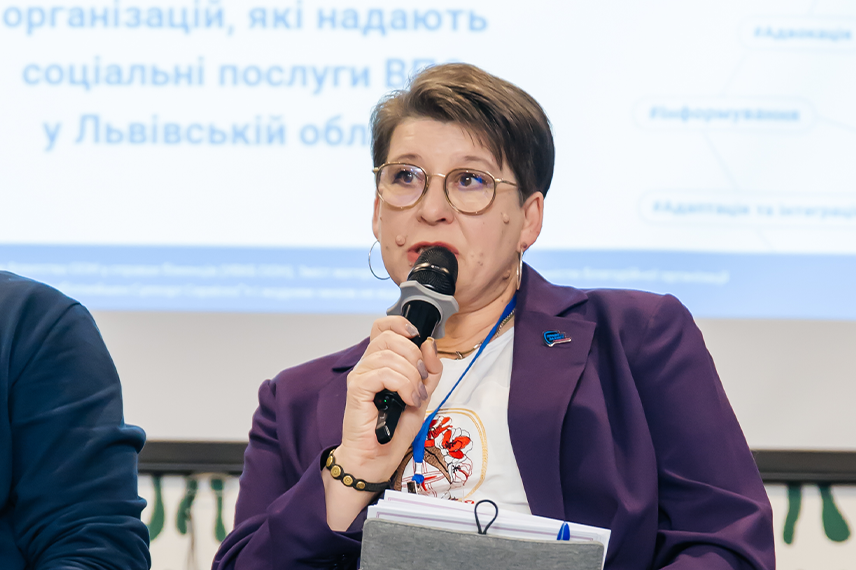
“I think it would be wonderful to consider training options for members of the public who want to work in the social sector in accordance with government requirements. Creating a school where people could learn how to be a quality social service provider, how to set up an organization that has to report, and what quality social services are. We have the opportunities and resources to join such a team. I think this would strengthen civil society and bring services closer to consumers,” says Valentyna Bartoshyk, director of the humanitarian policy department of the Lviv City Council.
This is the seventh forum for representatives of the social sector that we have held this year. We are strengthening the social protection system through the Support to the Capacity of Government Institutions and Local Communities to Strengthen Social Protection Systems in Ukraine project, which is implemented with the support of UNHCR, the UN Refugee Agency in Ukraine. The final event in this series is scheduled to take place in December.