
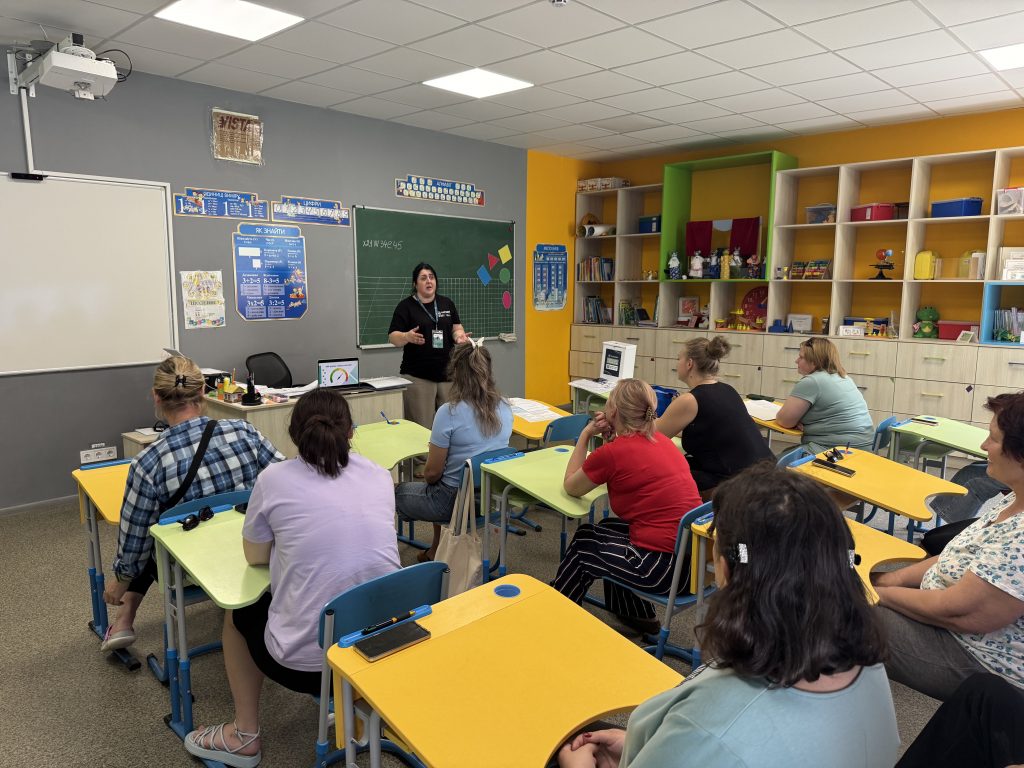
Emotional exhaustion, constant uncertainty about the future, and anxiety for one’s own life and the lives of relatives define the daily reality for residents of frontline and de-occupied communities. Nearly all of these individuals require external help and support. To meet this need, our Foundation organizes mobile teams that provide free psychological, legal, and social support as part of the Lifesaving: Protection, Shelter, and WASH for War-Affected Regions project.
Psychological assistance is a cornerstone of this work. Teams of experienced crisis counselors travel to areas that lack stationary services, teaching people how to cope with stress, regulate their emotions, restore inner balance, and support themselves and others.
In the Bilenkivska and Novooleksandrivska communities of Zaporizka Oblast, for instance, counselor Olena Korol conducts “Stress and Self-Help” sessions two to three times a month. In small groups of up to 10, participants practice breathing techniques, engage in art therapy, and discuss pressing concerns like fatigue, anxiety, parenting challenges, and relationship tensions.
“Some participants return to us several times because they simply lack live communication, a sense of support, and answers to personal questions,” says Olena. After the sessions, many of them share how breathing exercises help them calm down during air alerts, and they, in turn, teach this to their neighbors.” All participants also have access to up to five individual consultations — an offer that people are actively embracing.
Olha Sobolieva, the supervisor of the mobile team counselors, notes a significant trend: over the last few months, requests for psychological help have surged by 30%, leading to waiting lists in all three oblasts. The most common issues raised include anxiety, mental health struggles, the impact of war, and family conflicts.
“At the midpoint of the project, we are already seeing the positive changes that beneficiaries share with us,” Olha shares. “There was a case where, after consultations with a counselor, a woman changed her approach to family conflicts and noticed the atmosphere at home became much calmer. We have many such stories where our help proved to be timely and necessary. This greatly motivates us to work with even greater dedication.”
These mobile team services are available in the frontline communities of Zaporizka, Mykolaivska, and Sumska oblasts through the end of November. Information on the teams’ locations and hours is regularly posted on the official websites of local government bodies. Help can also be sought privately by calling the free hotline: 0 800 33 27 40 or by completing the form at the following link: https://ee-eu.kobotoolbox.org/x/52AGOfHX
The project is implemented by the Charity Foundation “Stabilization Support Services” in partnership with the charitable organization Malteser International and with support from Aktion Deutschland Hilft.