
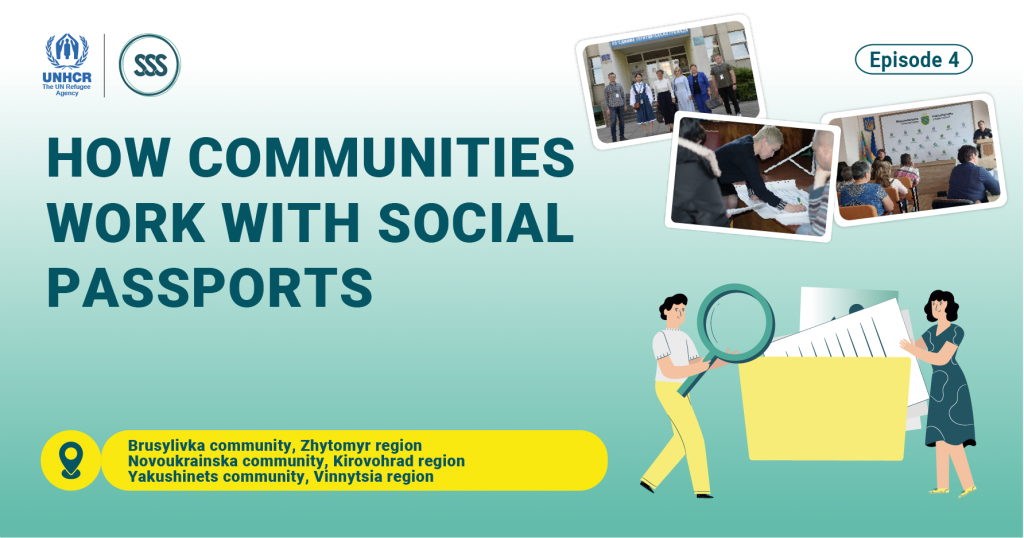
What is needed to ensure that social services in a community truly meet the needs of its residents? A clear understanding of the situation and a strategic approach. That is precisely why communities develop a social passport — an instrument that helps assess resources, identify priority challenges, and plan effective solutions.
In 2023–2024, we supported communities in analyzing the quality of social services, organized workshops on compiling social passports, and facilitated the development of strategic plans for the development of the social protection system.
In the fourth installment of our special project, we share the successes achieved by the Brusylivska, Novoukrayinska, and Yakushynetska communities through the updating of their social passports.
Our Support for the Communities in 2023-2024:
- Studied the accessibility and quality of social services available in the communities.
- Conducted workshops for social system workers and local authorities on compiling social passports.
- Updated and designed social passports.
- Helped develop medium-term plans for the development of the social protection system.
A social passport is an identity document containing information about a community’s resources and social characteristics that enables an assessment of its potential.
Соціальний паспорт — робочий документ, що містить інформацію про ресурси та соціальні особливості громади й дає змогу оцінити її потенціал.
Experience of the Brusylivska Community (Zhytomyrska Oblast)
Results achieved by communities after research and development of the documents:
- Opened a health and social rehabilitation room;
- Created an additional temporary housing facility for IDPs;
- Secured a grant for the renovation of a dining hall at the temporary housing facility;
- Expanded practical psychologist services;
- Established the Veterans’ Hub municipal institution;
- Incorporated five social protection and social service development projects into the Community Development Strategy until 2027.
Svitlana Prykhodko, Deputy Mayor for Government Affairs:
“The implementation of this project has been a powerful impetus for the development of the social sector in the Brusylivska community, contributing to an improved quality of life for both local residents and internally displaced persons.”
Mariia Sharamko, Head of the Social Protection Department of the Brusyliv Settlement Council:
“Updating the community’s social passport, conducting sociological research, and developing a social sector strategy are just some of the Brusylivska community’s achievements within this project. Thanks to it, our community received modern equipment, enhanced the qualifications of social workers, and created comfortable living conditions for internally displaced persons.”
Valentyna Mazurenko, Director of the Social Services Center of the Brusyliv Settlement Council:
“The partnership between the Brusylivska community and the CF “Stabilization Support Services” is a vivid example of successful cooperation, resulting in the increased resilience of the social protection system. Through the joint efforts of the community and the charitable foundation, we have not only mitigated the negative effects of the war but also laid a strong foundation for the further development of the social sector.”
Experience of the Novoukrayinska Community (Kirovohradska Oblast)
Results achieved by communities after research and development of the documents:
- Launched physical rehabilitation and physiotherapy services and initiated the establishment of a rehabilitation unit at the city hospital;
- Created the Resilience Center, offering training on self-care, parenting, and burnout prevention;
- Established the Parents’ Strength School, where parents receive psychological and social specialist support on parenting issues;
- Introduced early intervention services.
Tetiana Oliferenko, Head of the Social Protection Department of the Novoukrainka City Council:
“Thanks to the social passport, we can utilize data on community needs and structure. This enables us not only to plan social programs effectively but also to respond promptly to residents’ requests.”
Experience of the Yakushynetska Community (Vinnytska Oblast)
Results achieved by communities after research and development of the documents:
- Introduced a new social service — psychological support for people in difficult life circumstances, war veterans, and those affected by the war;
- Created a database of families, individuals, and resources, required to prevent difficult life situations;
- Improved the village council’s website to simplify access to social service information;
- Established an Interaction and Gender-Based Violence Prevention Space;
- Engaged district heads in social service provision, making these services more accessible and effective.
Larysa Melnychuk, Deputy Head of the Social Protection and Healthcare Department of the Yakushyntsi Village Council:
“Analyzing the state of the social sector and creating the social passport have significantly improved existing services, facilitated the introduction of new ones, and helped attract additional resources and partners.
The new services — psychological support, educational programs, and social initiatives — meet the current needs of our residents.
Social sector analysis creates opportunities for cooperation with other organizations, institutions, and communities, allowing for a comprehensive approach to solving social issues. Close monitoring of the community’s social situation and needs enables rapid adaptation of programs and services to emerging challenges.
Overall, the work on the social passport can become the foundation for effective social sector management, ensuring services align with residents’ needs and are delivered at a higher quality.”
Check out the social passports we helped update here: bit.ly/4ggkSi5
This publication was prepared by the Charity Foundation “Stabilization Support Services” with funding from UNHCR, the UN Refugee Agency in Ukraine. The content of this publication is solely the responsibility of the CO CF SSS and does not reflect the views of the Agency.
The information is current as of January 13, 2025.