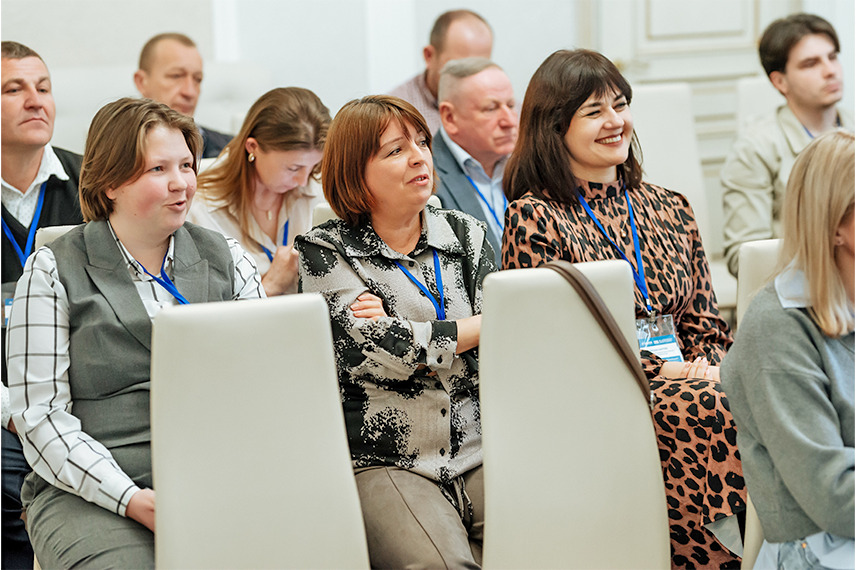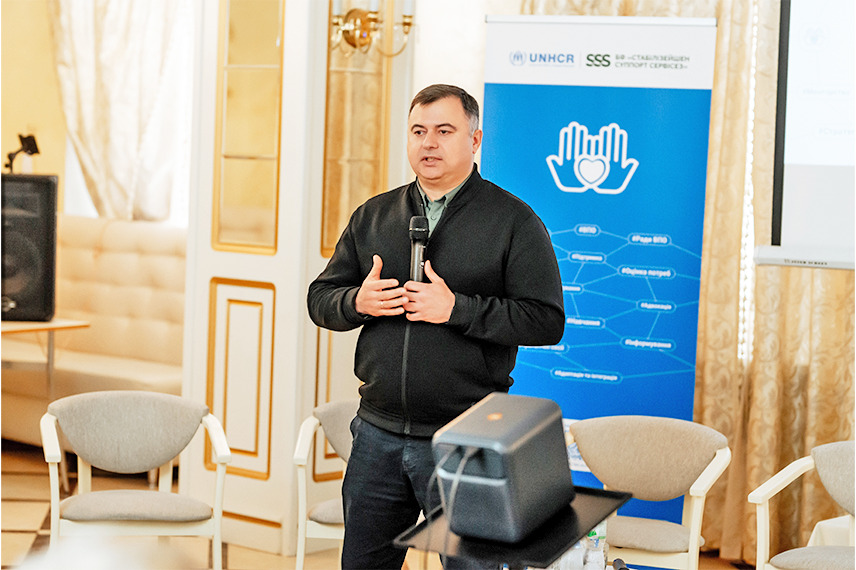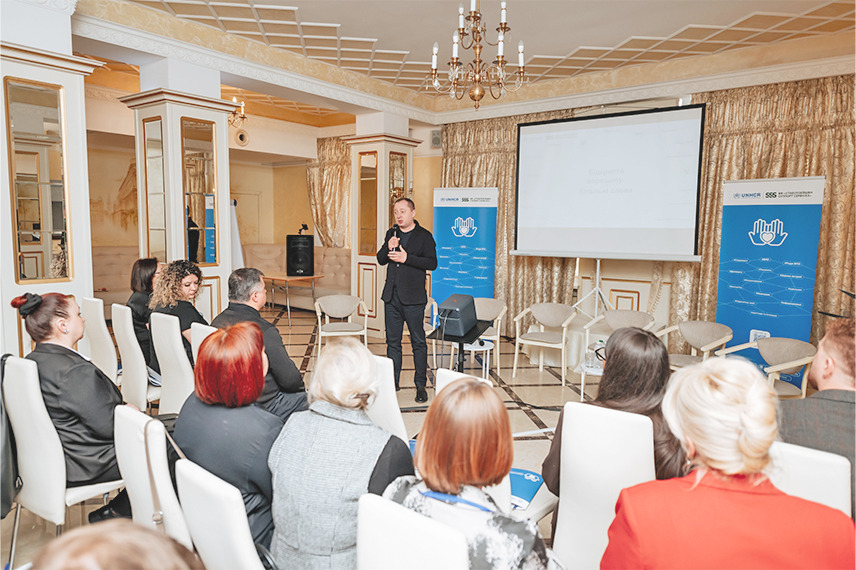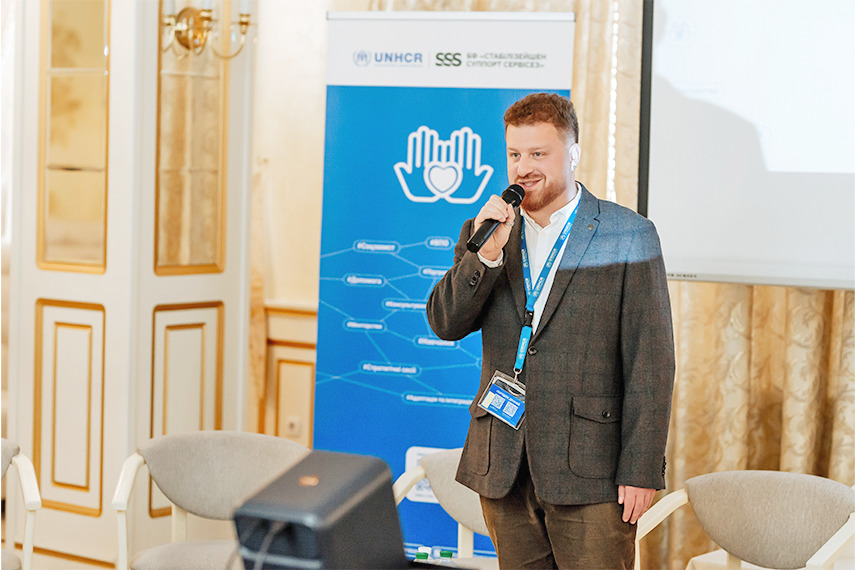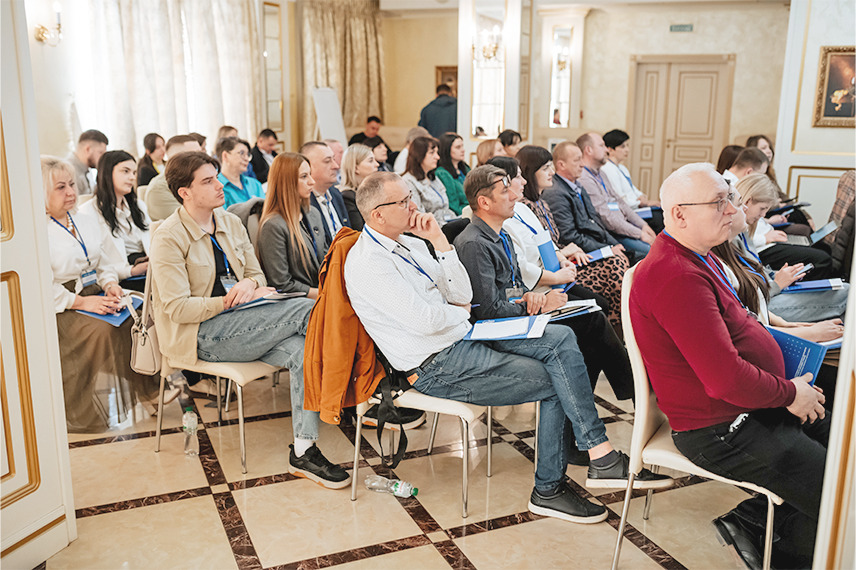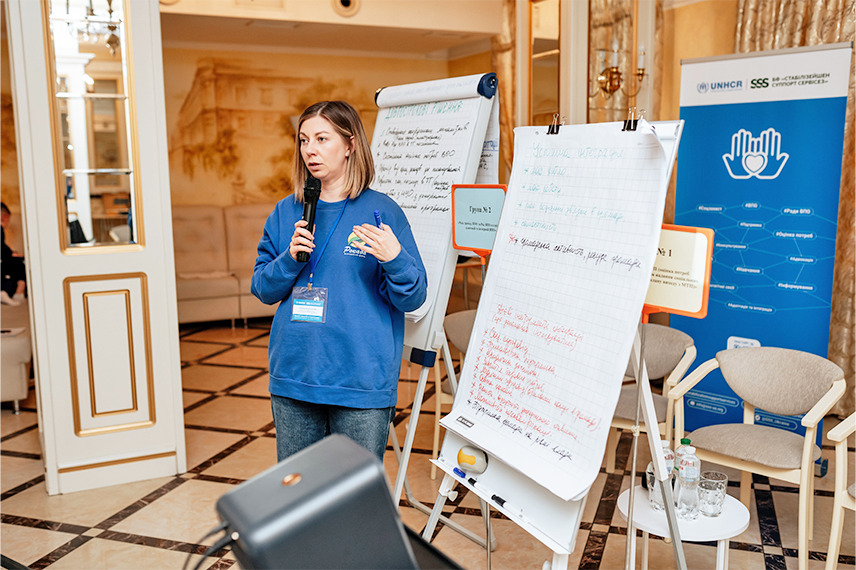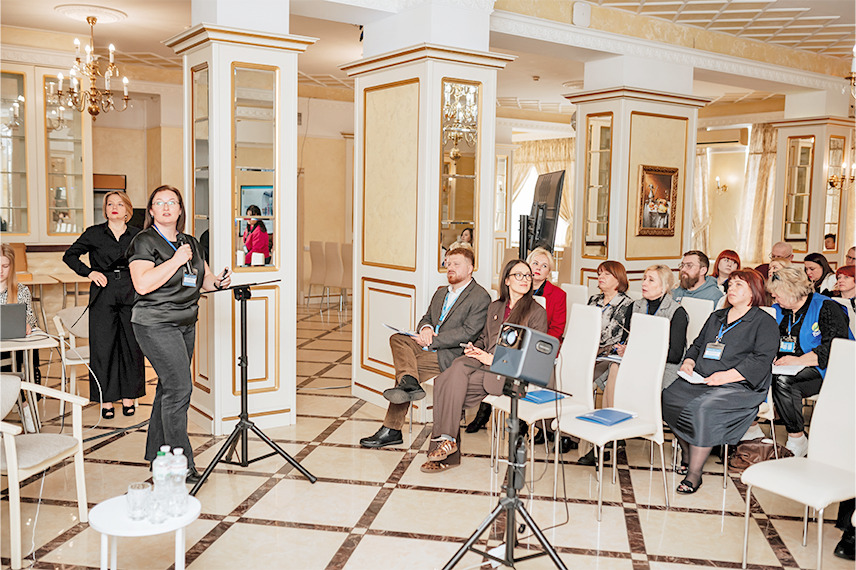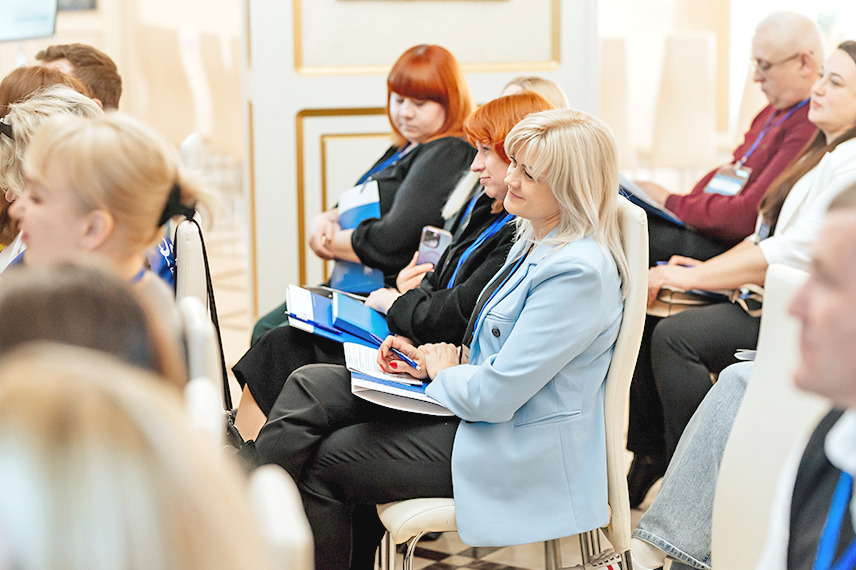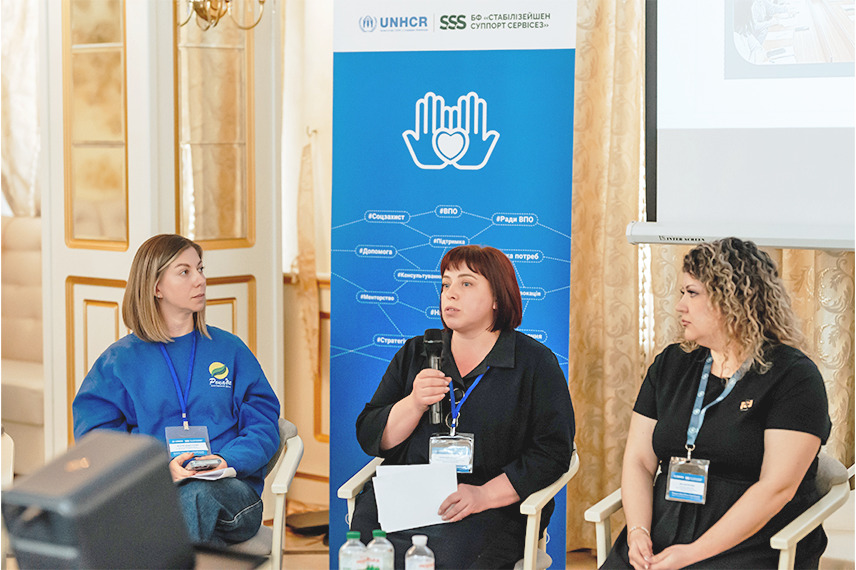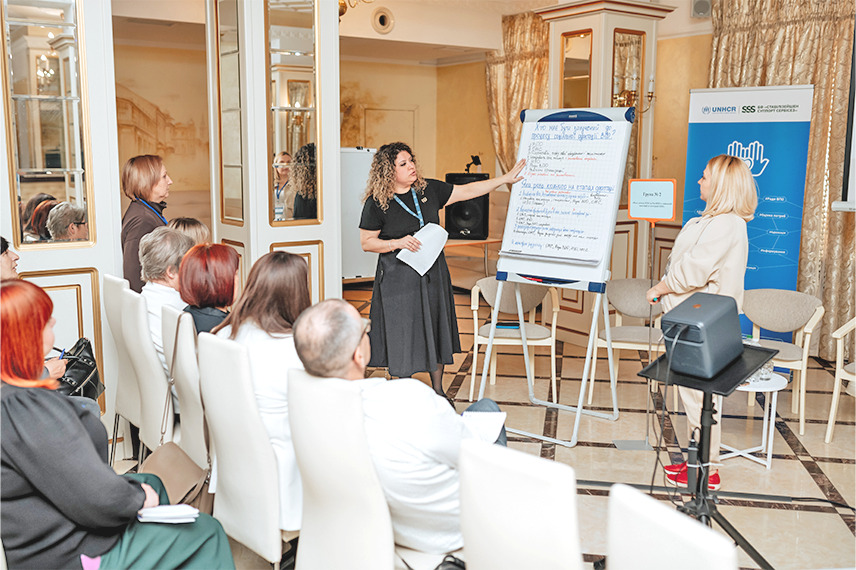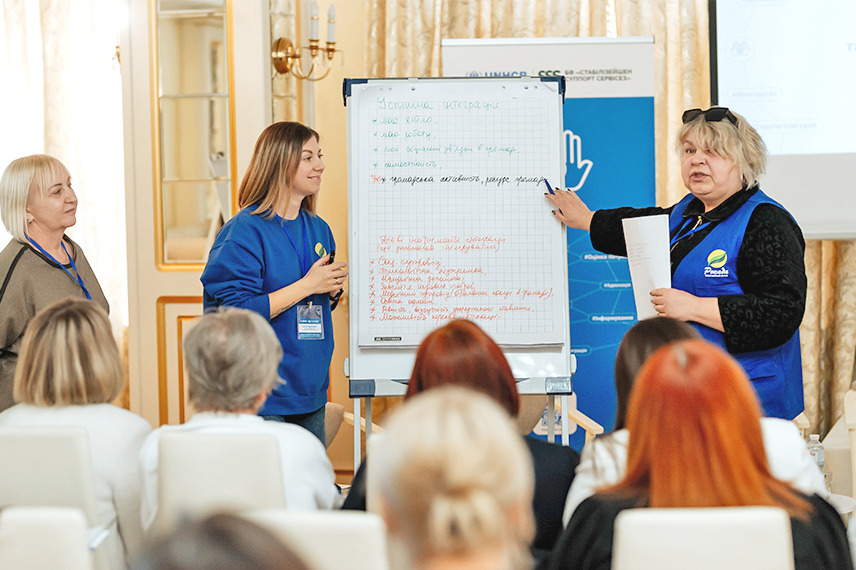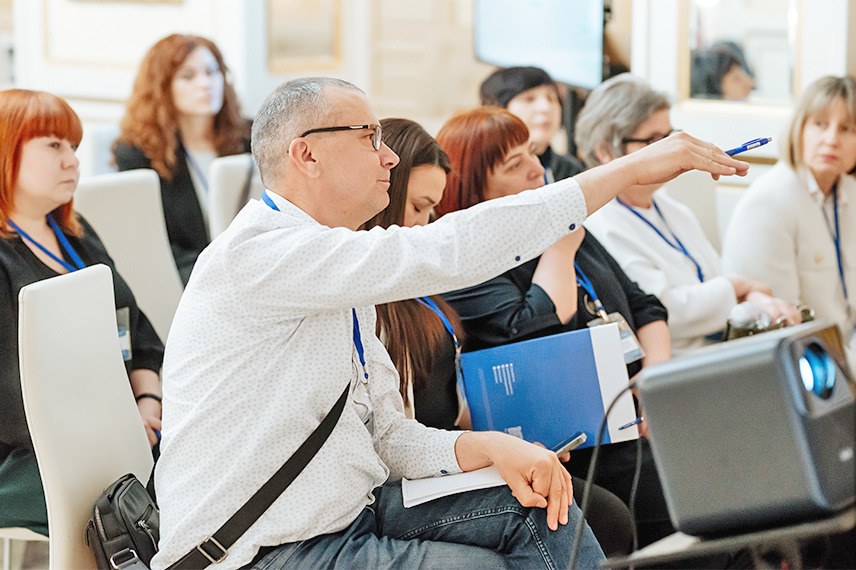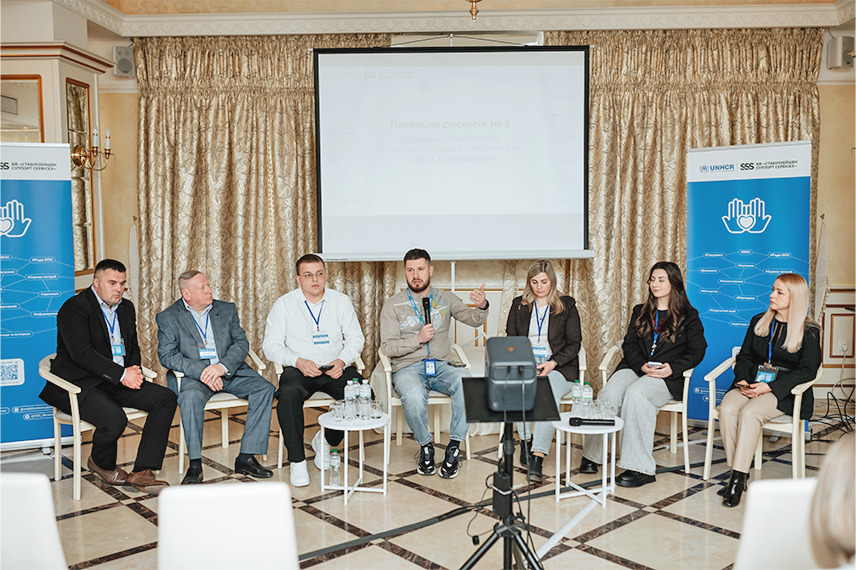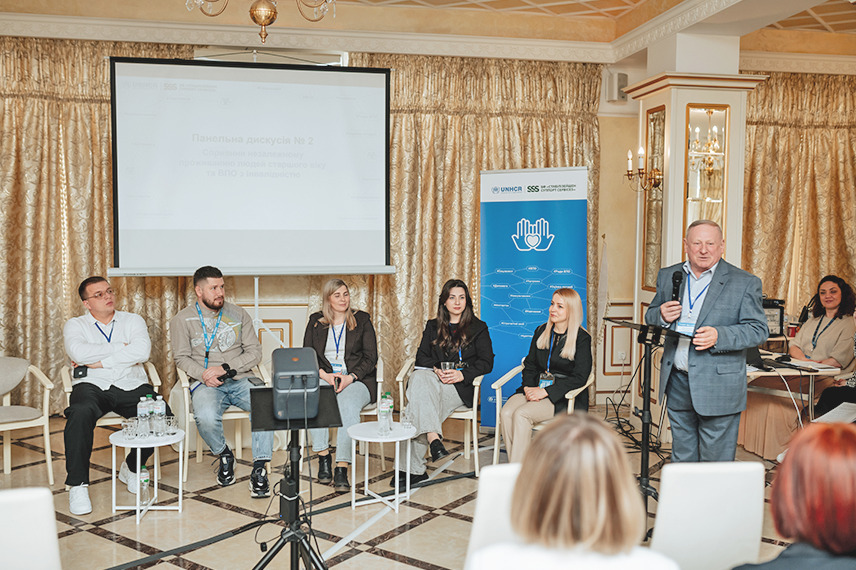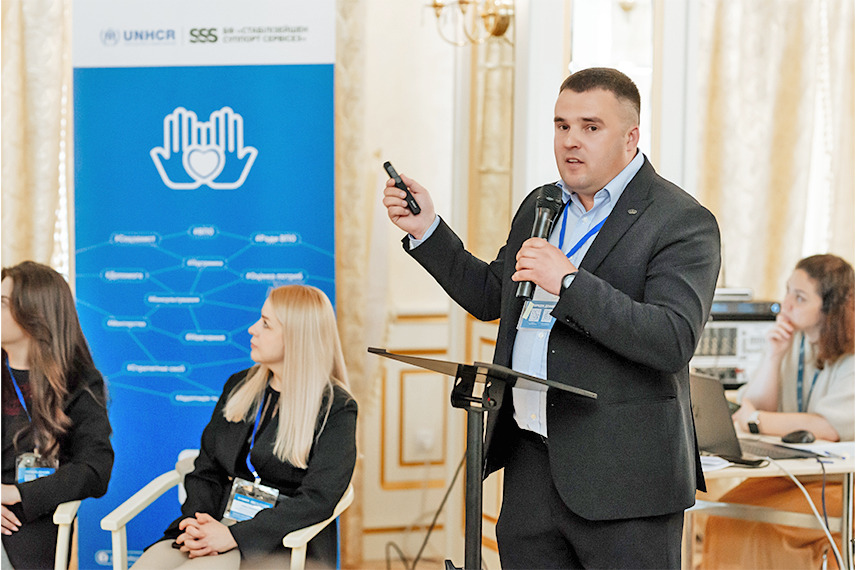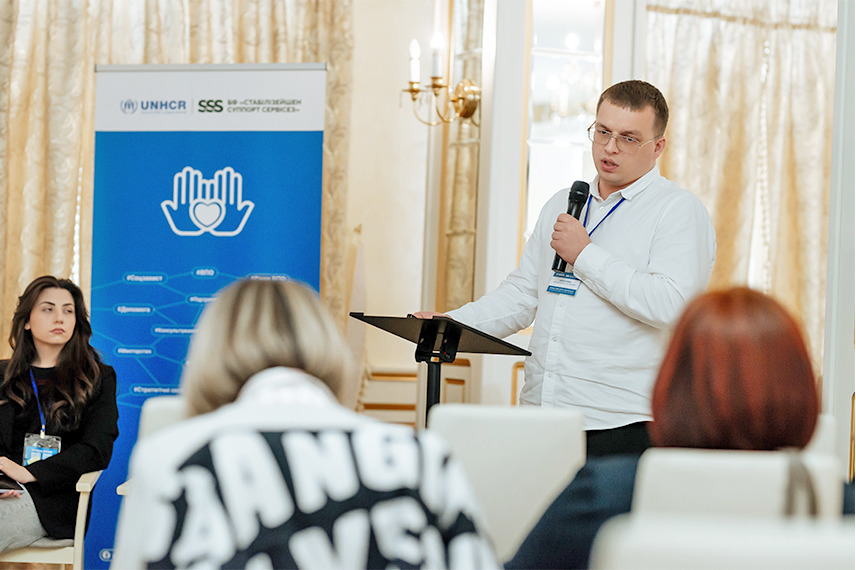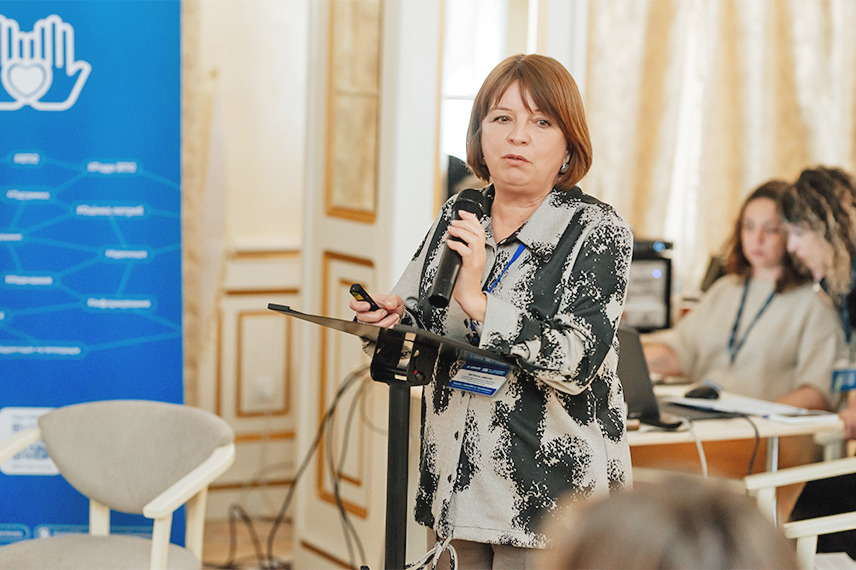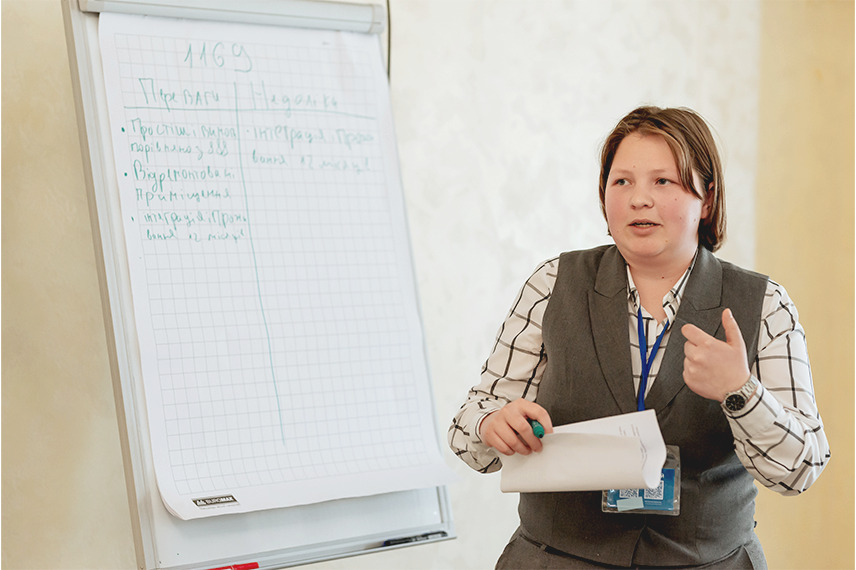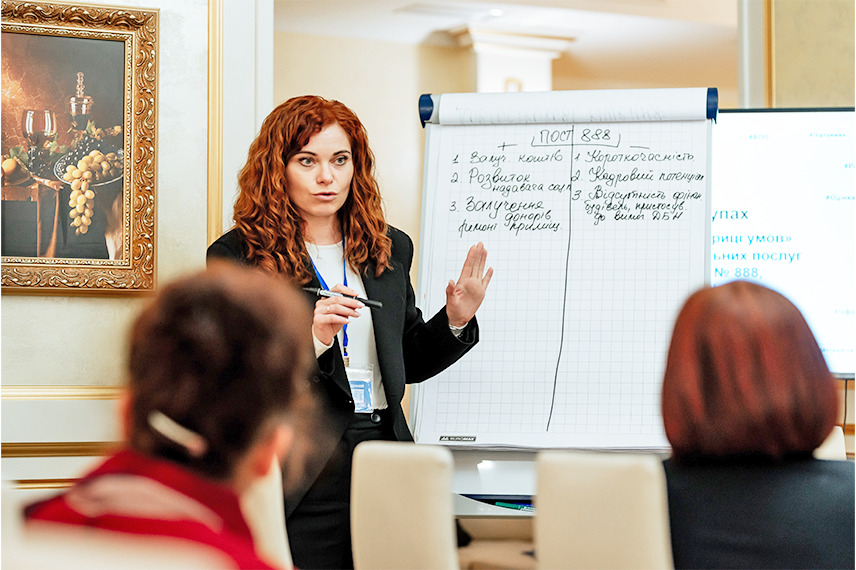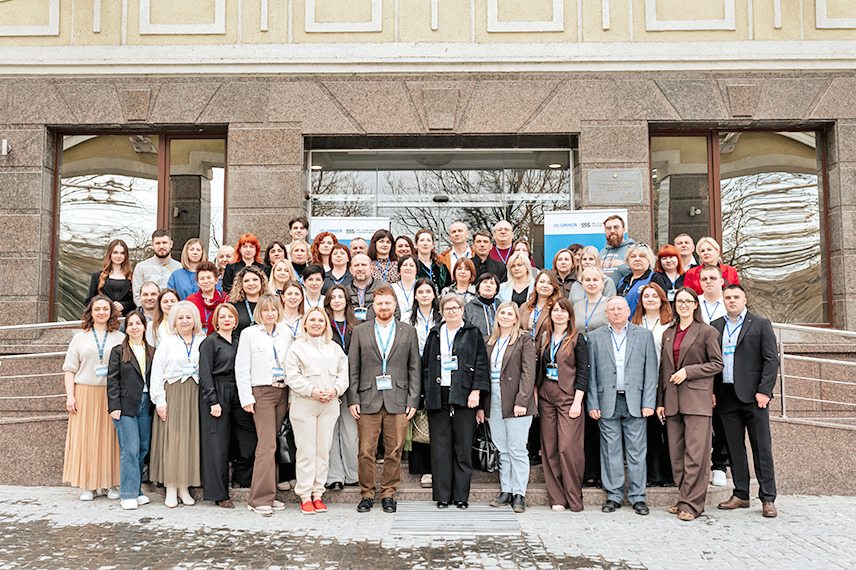
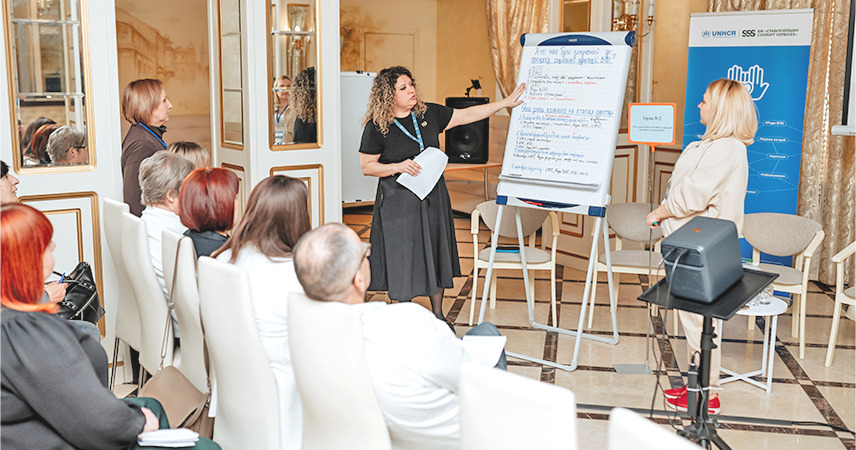
In Ternopil, the workshop “IDP Path in Ternopilska Oblast: From Emergency Aid to Sustainable Integration” took place. Around 70 participants gathered on March 27 on a single platform to develop effective solutions for supporting IDPs in Ternopilska Oblast, ranging from emergency response to long-term integration strategies.
The event was organized by the Charity Foundation “Stabilization Support Services” within the framework of a project to strengthen the capacity of the social protection system, implemented with the support of UNHCR, the UN Refugee Agency in Ukraine.
During the event, two panel discussions and two practical group sessions were held. The focus of the discussions was on the positive experiences of hromadas and non-governmental organizations in providing social support to internally displaced persons.
Representatives of UNHCR, the UN Refugee Agency in Ukraine, local authorities, and the civil society sector joined the event. Notably, speakers at the workshop included Taras Pastukh, head of the Ternopilska Oblast Military Administration, Ihor Hirchak, secretary of the Ternopil City Council, Pavlo Kutana, protection officer at the UNHCR office in Lviv, Andrii Bezpaliuk, durable solutions officer at the UNHCR office in Lviv, and Iryna Semanyshyn, director of the Ternopil City Territorial Center for Social Services (Provision of Social Services).
The forum was opened by Taras Pastukh, head of the Ternopilska Oblast Military Administration.
“One of the greatest challenges is to provide support to people who are fleeing the war today, who want to preserve and restore their previous lives. We understand that for many of them, Ternopilska Oblast will become home for a long period. Therefore, it is important for all government bodies to cooperate so that integration into our hromadas is as comfortable as possible for them. It is necessary to create all relevant institutions on the ground that must respond to their needs. This event is not about reports, but about practical skills. On the ground, you see what the government is doing and, on the other hand, you hear from the people whether it works or not. Your work today will serve as feedback to the authorities regarding what needs to be improved. We are ready to immediately put the results you develop into practice to provide quality service for the people who have already become like family to us.”
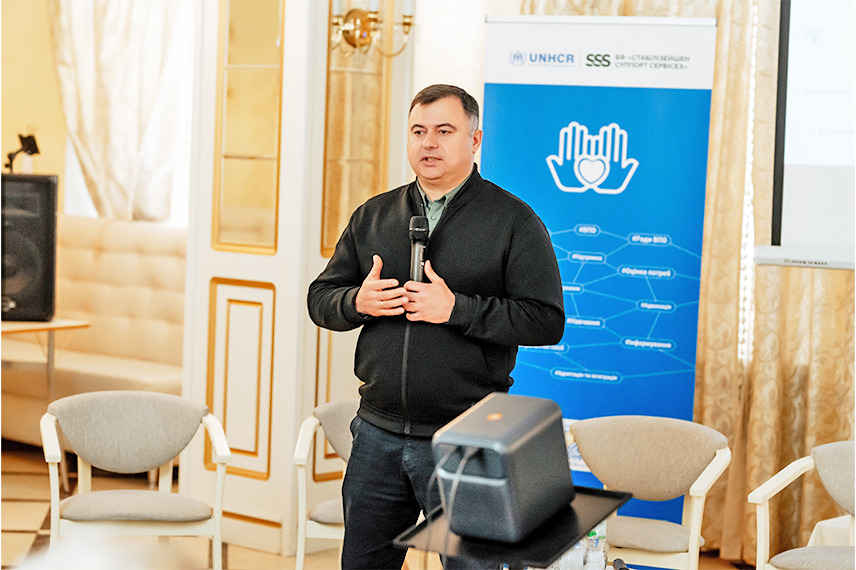
Which social adaptation tools for internally displaced persons are effective? This topic was one of the key themes of the event. Pavlo Kutana, protection officer at the UNHCR office in Lviv, spoke about the strategy for the social adaptation of IDPs in TACs developed by UNHCR for 2026: “The social adaptation of IDPs in temporary accomodation centers is an individual, step-by-step process that helps a person transition to a more sustainable life outside the TACs. This involves searching for long-term solutions for IDPs: access to housing, stable income, hromada integration, and a path to an independent, fulfilling life. The strategy focuses both on individual solutions for a displaced person or an entire family through case management, and on systemic changes at the hromada level and increasing their capacity.
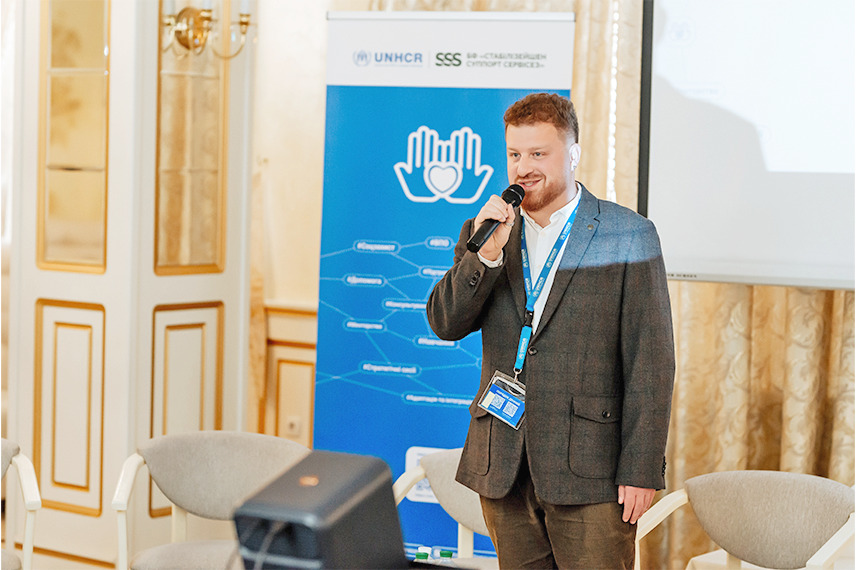
The key tools for its implementation are a comprehensive assessment of the needs and capacities of the person or family. The second component is working with hromadas: strengthening local social services, involving resilience centers, civil society organizations, and developing a network of social facilitators. A significant role is also played by Universities of the Third Age, which promote active aging, social inclusion, and skill development among older people. No less important is the harmonious coordination between humanitarian partners, social service providers, employment centers, and TAC management.
The success of social adaptation is not just leaving a TAC, but a person’s ability to live independently, fulfill their potential, and fully integrate into the hromada.”
Oleh Voronka, deputy director of the department and head of the Social Guarantees Administration of the Social Protection Department of the Ternopilska Oblast Military Administration, spoke about the main challenges faced by elderly IDPs in Ternopilska Oblast.
“Elderly IDPs in Ternopilska Oblast face a range of serious challenges: a lack of stable and affordable housing, complicated access to medical services and medications, difficulties in obtaining up-to-date information due to low digital literacy, financial vulnerability, and social isolation due to the loss of familiar connections and the difficulty of integrating into a new hromada. These challenges significantly deteriorate their quality of life.
There are 232 IDPs living in social protection facilities in the oblast. A significant problem remains the lack of vacant places for housing IDPs in these facilities. Because of this, a large portion of elderly IDPs are forced to settle in TACs. However, these centers do not provide for the presence of qualified staff who can ensure proper care and create appropriate living conditions for elderly people.
Social adaptation and integration of elderly people into the hromada during the war is critically important, as it reduces isolation and loneliness, ensures access to vital services, supports mental resilience, promotes mutual aid, prevents marginalization, strengthens hromada resilience, and preserves human dignity. Together, this affects not only the well-being of elderly people but also the cohesion and survival of the entire society.”
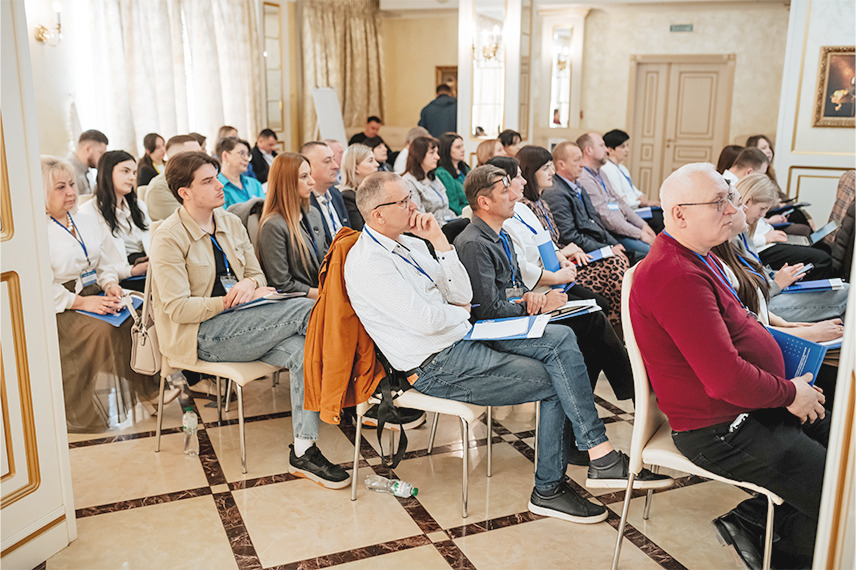
Yuliana Hasanbekova, coordinator for the development of social passports at the CF SSS, also emphasized the role of communities in supporting IDPs.
“Internal displacement remains our reality, but the vector of IDP needs has shifted significantly. While in 2022, we were putting out the fire of primary needs, today we are dealing with issues of integration, which requires new adapted initiatives. The time has come for targeted managerial decisions at the hromada level. The role of hromadas in the adaptation and integration of IDPs is paramount. The closest government entity to a person is the hromada. It is at this level that a person’s needs are identified, solutions to meet them are sought, resources and partners are found, and this is where local social policy takes shape.”
Workshop results:
- Analyzed the stages of IDP support at the level of Ternopilska Oblast — from the moment of initial registration to adaptation and integration into the hromada — and determined who and how should ensure IDP guidance at all stages.
- Developed mechanisms for social work in temporary accommodation centers (TACs) so that the people living there have the opportunity to receive the full range of social services.
- Identified a needs matrix to help develop social services in hromadas, particularly services for social adaptation, facility-based care, assisted living, and shelter provision.
The workshop “IDP Path in Ternopilska Oblast: From Emergency Aid to Sustainable Integration” made it possible to hear from hromadas, institutions, and non-governmental organizations working with displaced Ukrainians and to use their experience to develop sustainable solutions for supporting IDPs in Ternopilska Oblast.