
“People of Social Protection” is an annual special project that tells the stories of social protection institutions in various regions of Ukraine. The opening interview of the 2025 series is with Yurii Strilchuk, Deputy Director of the Territorial Center for Social Services (Provision of Social Services) of Dubno (Rivnenska Oblast). He has been working in the field of social work for 26 years and has held this position since 2023.
“A social worker is a mediator between a person and their problems,” says Yurii. Behind this concise phrase lies methodical work with and for the people under the Territorial Center’s care. To meet the institution’s needs and provide quality social services, the Territorial Center actively cooperates with the civil society sector.
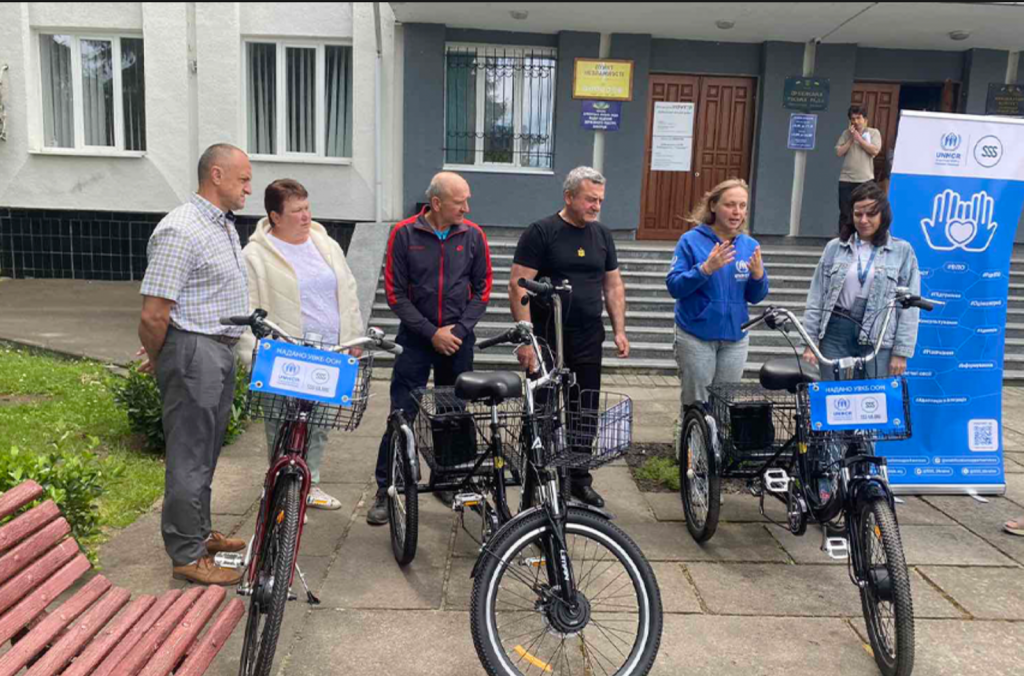
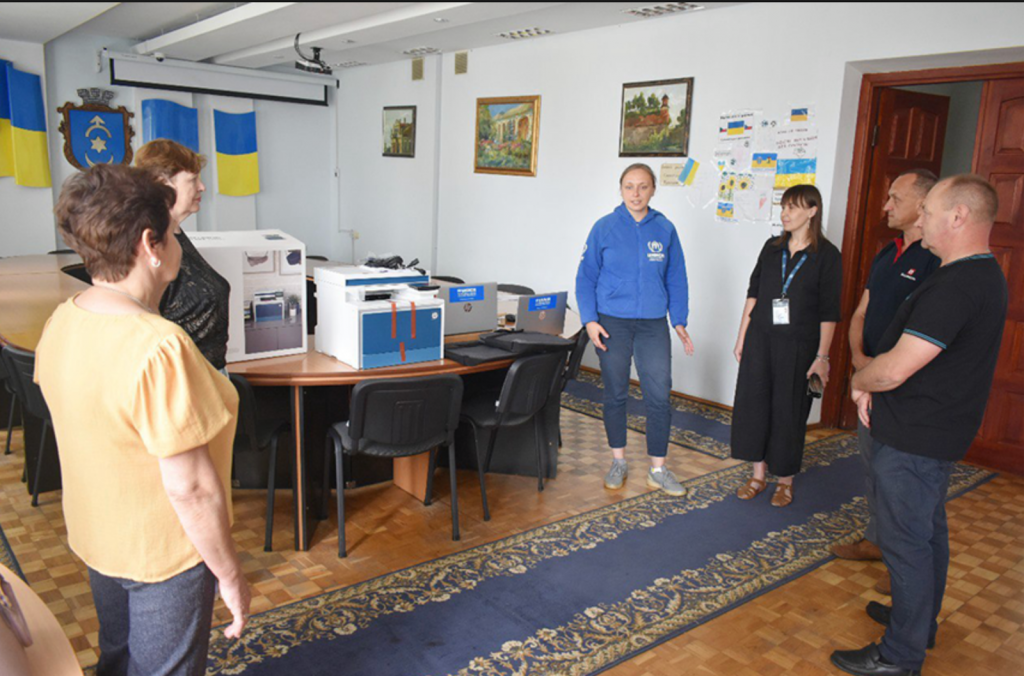
This year, with the support of UNHCR, the UN Refugee Agency in Ukraine, we handed over three e-bikes to the Territorial Center for Social Services (Provision of Social Services) of Dubno. Thanks to these, social workers and a specialist in comprehensive building maintenance and repair can reach aid recipients in different parts of the city more quickly. Additionally, the Territorial Center received two computers and a printer from UNHCR, which helped optimize document flow.
In an interview with our Foundation, Yurii Strilchuk spoke about the services available at the Territorial Center, specifically, the transport services introduced this year. We also discussed the needs of IDPs living in Dubno, the needs of the Territorial Center, and its plans for 2026. Among them is the resumption of the University of the Third Age, where older people will be able to acquire new knowledge and skills, lead an active lifestyle, broaden their horizons, and make new acquaintances.
About the Territorial Center
Yurii, could you please tell us about the Dubno community? How many displaced persons has it hosted?
As far as chronicles go, Dubno has been known since 1100. It is one of the oldest cities in the Volyn region, which has long been a center of significant historical and political events, trade routes, and the spiritual life of the region. Dubno is included in the list of the “7 Wonders of Ukraine” due to its castle, one of the oldest and most impregnable in the country. It served as the residence of the Princes of Ostroh and was never seized by direct assault.
The Dubno City Territorial Community was created in 2020. The community is home to 38,707 people. Since the beginning of the full-scale invasion, it has hosted over 4,000 IDPs. Currently, 1,599 IDPs reside in the community, two of whom are registered with the Territorial Center.
What are the key areas of work of the Dubno Territorial Center for Social Services (Provision of Social Services)?
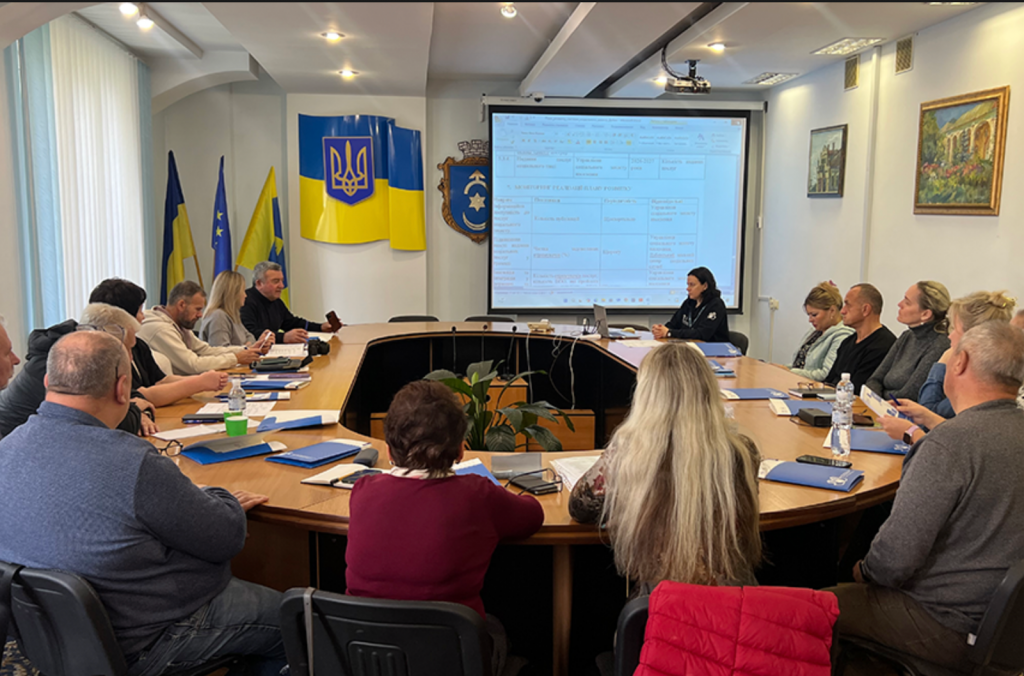
The Territorial Center was established in 1994 to provide social services to individuals in challenging life circumstances who require external support. We provide the full spectrum of services necessary to maintain a dignified standard of living for older people living in Dubno who have found themselves in difficult life circumstances. We identify and serve older people, persons with disabilities, veterans, combatants, and internally displaced persons who require social support.
The institution has four departments employing 57 people, 39 of whom are social workers.
Two home care departments serve older people and adults with disabilities who are unable to care for themselves and require assistance and social services at home.
The care department serves those who require social, domestic, and psychological support and services. These services help eliminate restrictions on daily functioning, prevent the emergence and development of potential diseases, support health and social independence, and restore knowledge, abilities, and skills for orientation at home, housekeeping, self-care, and behavior in society, thereby facilitating the development of a person’s versatile interests and needs. Additionally, our department organizes leisure and recreational activities for its beneficiaries.
The department responsible for organizing targeted natural and monetary assistance helps people receive various types of aid. Employees of this department perform minor repairs for their beneficiaries, prepare their households for winter, deliver fuel, and cut and chop firewood. Additionally, the department provides clothing repair and tailoring services, as well as the rental of rehabilitation devices.
About Support for IDPs
What are the main needs of IDPs in the Dubno community?
Among the problems faced by displaced persons in the Dubno community, I would like to highlight social maladjustment, a lack of housing, and domestic difficulties. Local authorities are making efforts to resolve the issues by providing temporary housing and essential items to everyone in need.
We currently have an urgent need for clothing and footwear, food products, hygiene items, diapers for both children and adults, bedding (including pillows, blankets, etc.), children’s toys, stationery, educational gadgets, household furniture, and appliances.
To integrate IDP children into community life, we regularly host children’s events that involve local children. 90% of IDP children attend preschools and schools in Dubno.
About the Needs of the Territorial Center
What has been the greatest success and challenge in the Territorial Center’s work since the beginning of the full-scale invasion?
Internally displaced persons have access to all services of the Territorial Center. Moreover, in the event of a threat to life or health and during martial law, social services can be obtained through a simplified emergency (crisis) procedure. A “clothing bank” operates permanently at the Territorial Center, which can be used by older people, persons with disabilities, war veterans, combatants, and internally displaced persons. Additionally, displaced persons can receive psychological assistance here.
Since the beginning of the full-scale invasion, the Territorial Center’s team has been working cohesively, like one family, despite the numerous challenges of today, including shortages of human resources and material provisions.
One of this year’s achievements is the implementation of transport services at the Territorial Center for community residents with musculoskeletal disorders, visual impairments, or impairments affecting other organs and systems who are incapable of self-care and cannot move independently.
About the Needs of the Territorial Center
This year, our foundation, together with UNHCR, handed over e-bikes to the Territorial Center. How does such assistance facilitate its work?
The extent of our city is 12 kilometers. Most of the Territorial Center’s beneficiaries reside in the detached housing sector, where public transportation is unavailable. In June 2025, thanks to the Charity Foundation “Stabilization Support Services,” the Territorial Center received two three-wheeled and one two-wheeled e-bike. The three-wheeled bicycles are used by two social workers who work in large areas and must travel across the entire city, often with their hands full. The two-wheeled bicycle was given to the specialist in comprehensive building maintenance and repair. He performs minor repairs, mows the grass, and chops and cuts firewood for beneficiaries throughout the city. Thanks to charitable assistance, we were able to expedite the provision of services and alleviate the physical burden on our workers. We are deeply grateful to our benefactors for their support.
This year, we also received modern office equipment from UNHCR, the UN Refugee Agency in Ukraine, including two laptops and a professional printer. Modern conditions require the active use of computers and information technologies in various spheres of life. Computerization makes processes more efficient, automates tasks, and facilitates access to information. We are grateful that UNHCR has once again helped resolve the Territorial Center’s material and technical needs.
What else could improve the work of the Territorial Center?
The purchase of sports equipment would help address issues related to physical activity and physical culture, as well as provide health sessions for older people.
Of course, financial incentives for those who work there could also improve the Territorial Center’s work. Social workers often have to work hard for a minimum wage. They must cope with a large volume of physical and emotional work, which depends on the number of beneficiaries, their living conditions, and the specifics of the services. Additionally, they must constantly move around and take responsibility for the lives and health of the beneficiaries.
About Social Work
What are the main qualities of specialists in the social protection sector?
Mostly, people imagine a social protection system employee as a person sitting at a computer, surrounded by stacks of papers on all sides, constantly demanding yet another certificate or copy from visitors. In reality, social work is aimed at helping individuals who have found themselves in challenging life circumstances and providing social support to the most vulnerable segments of society.
A social worker is a professional who acts as a mediator between a person and their problems. Their attention, care, and help restore a person’s lost social functions, rehabilitate them in the eyes of others, return them to a full life, support them in crisis situations, and help them express themselves, assess their own capabilities, and make decisions.
The indispensable attributes of social sphere specialists include knowledge and experience, the ability to provide support, and the capacity to establish rapport with beneficiaries. And also, of course, consistency and persistence, patience and endurance, self-control, and genuine interest. These individuals must strive to improve their beneficiaries’ lives.
About Plans for Next Year
Please share the Territorial Center’s plans for 2026. Which areas would you like to develop?
There are many plans, of course, and even more ambitions. Whether they come true depends mainly on adequate material provision. That is why we plan to continue expanding cooperation with charitable, religious, and civic organizations.
We plan to resume the University of the Third Age’s work. It offers older people a unique opportunity to explore new horizons, stay active, broaden their worldview, and connect with like-minded individuals.
In particular, courses at the Faculty of Fundamentals of Medicine and Healthy Lifestyle will contribute to preserving health, increasing energy, and improving the quality of life. However, sports inventory and equipment are necessary for them.
The IT Department will enable individuals to acquire modern digital skills and access valuable knowledge, empowering them to remain active in the digital environment, stay connected with loved ones, and pursue their hobbies. Computer equipment is necessary for its functioning.
The Department of Literature and Arts will unite all who strive to express themselves creatively, broadening their worldview and knowledge in the realms of literature, art, and culture. This faculty will facilitate the development of creative abilities, support emotional well-being, and provide opportunities for personal growth.
In accordance with the National Strategy for Creating a Barrier-Free Space for the Territorial Center, we must adapt the premises and adjacent areas to universal design standards, making them accessible to all social groups, particularly persons with disabilities and older adults. To achieve this, we need to arrange access roads, parking, and pedestrian paths, as well as renovate the premises.
To improve the working conditions of our team and enhance the quality of social services, it is necessary to update the material and technical base of the Territorial Center by purchasing computer equipment, furniture, stationery, and tools.
We support social protection institutions through the Support to the Capacity of Government Institutions and Local Communities to Strengthen Social Protection Systems in Ukraine project, implemented with the support of UNHCR, the UN Refugee Agency in Ukraine.